
Iseropus
Förster, 1869
Species Guides
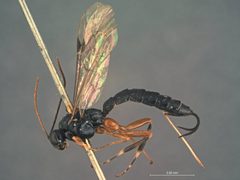
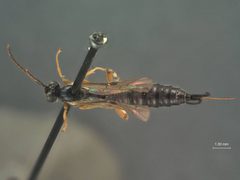
2Iseropus is a of ichneumon wasps comprising approximately nine described . Members are ectoparasitoids of lepidopteran , with documented associations including pupal of noctuid and larval parasitism of pyralid moths. The genus exhibits a broad distribution across multiple continents, with species described from the Americas, Europe, and Asia. Some species have been studied for their venom-mediated manipulation of host lipid metabolism.

Pronunciation
How to pronounce Iseropus: /ˌaɪsəˈroʊpəs/
These audio files are automatically generated. While they are not always 100% accurate, they are a good starting point.
Images
Distribution
Records indicate presence in Colombia, Rica, Japan, Taiwan, the United States (California), and parts of Europe including Denmark, Norway, and Sweden. Distribution varies by : Iseropus gulensis is known from Colombia; Iseropus kuwanae from Japan; Iseropus californiensis from California; Iseropus orientalis from Taiwan and Japan; Iseropus stercorator from Europe.
Host Associations
- Galleria mellonella - ectoparasitoidLarval ; venom induces lipid metabolic changes in host
- Lichnoptera gulo - pupal is a noctuid defoliator of Cupressus lusitanica and Pinus patula in Colombia
Life Cycle
Ectoparasitoid development on larvae or pupae. Iseropus kuwanae is gregarious. Host nutritional manipulation via venom occurs before oviposition to support offspring development.
Behavior
Envenomates larvae prior to oviposition, inducing physiological changes in host lipid metabolism including increased triglyceride levels in . Venom contains phospholipase A₂ which affects host composition.
Ecological Role
of lepidopteran larvae and pupae; contributes to of including agricultural and forestry pests.
Human Relevance
Potential agent for pest . Iseropus gulensis parasitizes a defoliator of plantation conifers in Colombia. Iseropus kuwanae has been studied as a model for understanding - nutritional interactions and venom biochemistry.
Similar Taxa
- Other Ichneumonidae generaIseropus can be distinguished by specific associations and ectoparasitoid ; precise morphological diagnostic features require taxonomic keys not provided in available sources
More Details
Taxonomic history
The was established by Förster in 1869. Nine are currently recognized, with descriptions spanning from 1793 (Iseropus stercorator, originally described in Ichneumon) to 2006 (Iseropus hylesiae).
Venom biochemistry
Iseropus kuwanae venom phospholipase A₂ has been demonstrated to alter lipid metabolism, specifically affecting linoleic acid, α-linolenic acid, and oleic acid levels in Galleria mellonella larvae. Silencing of host phospholipase A₂ impairs offspring development, demonstrating the critical role of venom-mediated nutritional manipulation.
Host range variation
within Iseropus show variation in stage specificity: Iseropus gulensis attacks pupae, while Iseropus kuwanae attacks larvae. This suggests divergent strategies within the .
Sources and further reading
- BugGuide
- Wikipedia
- GBIF taxonomy match
- iNaturalist taxon
- NCBI Taxonomy
- Catalogue of Life
- Una Nueva Especie de Iseropus (Hymenoptera: Ichneumonidae) Parásito de Pupas de Lichnoptera Gulo H.-S. (Lepidoptera:Noctuidae) En Colombia
- Transcriptome analysis and functional study of phospholipase A2 in Galleria mellonella larvae lipid metabolism in response to envenomation by an ectoparasitoid, Iseropus kuwanae