
Casinaria
Holmgren, 1859
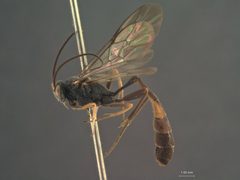
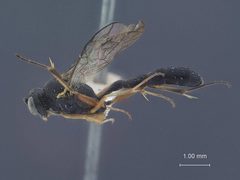
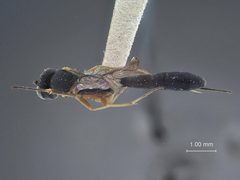
Casinaria is a of koinobiont endoparasitoid in the Ichneumonidae, first described by Holmgren in 1859. The genus has distribution with over 150 described . Members are primarily of Lepidoptera, with some species documented attacking specific including geometrids and noctuids. Several species have been reared from forest pest species, suggesting potential value in programs.
Pronunciation
How to pronounce Casinaria: //ˌkæ.sɪˈnɛə.riː.ə//
These audio files are automatically generated. While they are not always 100% accurate, they are a good starting point.
Identification
Casinaria are distinguished from related Campopleginae by combinations of characters including: propodeal structure, fore wing venation patterns, and details of the metasomal petiole. Specific identification requires examination of minute morphological features such as patterns on the mesoscutum and scutellum, flagellomere proportions, and coloration of and . The genus is morphologically diverse; some species have sculpture on and with densely punctate mesoscutum, while others show smoother .
Images
Habitat
Diverse terrestrial including forests, woodlands, and shrublands. Collection records span temperate and tropical regions. Specific habitat associations depend on availability; forested areas support parasitizing arboreal Lepidoptera.
Distribution
. Documented from: North America (Canada, USA), South America (Argentina, Brazil), Europe (widespread including Scandinavia), Asia (Iran, India, Japan, China, Taiwan, Philippines, Indonesia, New Guinea), Australia, and New Zealand. Distribution records from GBIF include Denmark, Norway, and Sweden.
Seasonality
periods vary by and latitude. In Iran, available data suggest some species are while others are . Temperate species likely active primarily during warmer months.
Host Associations
- Melanolophia imitata - Geometrid ; of C. melanolophiae in British Columbia
- Lepidoptera - General order for ; koinobiont endoparasitoid development
Life Cycle
Koinobiont endoparasitoid development within Lepidopteran . Specific larval development details not documented at level. Voltinism varies: some , others .
Ecological Role
of Lepidopteran larvae, contributing to of . Some species associated with forest pest moths, indicating potential role in natural .
Human Relevance
Potential value in forest pest management; C. melanolophiae reared from Melanolophia imitata by Canadian Forest Division. No direct economic uses documented.
Similar Taxa
- DusonaBoth in Campopleginae; distinguished by propodeal and petiolar
- CampoletisRelated campoplegine with similar ; separated by wing venation and abdominal structure
More Details
Taxonomic history
established by Holmgren in 1859. Major revisions include New Zealand fauna by Ward (2022) describing ten new , and numerous recent species descriptions from Asia by Han, van Achterberg & Chen (2021) and Vas (2019-2021).
Collection methods
Specimens collected using in Iran and through rearing programs in North America. iNaturalist records exist but is under-observed due to small size and specialized identification requirements.
Sources and further reading
- BugGuide
- Wikipedia
- GBIF taxonomy match
- iNaturalist taxon
- NCBI Taxonomy
- Catalogue of Life
- A new species of Casinaria from British Columbia (Hymenoptera: Ichneumonidae)
- Casinaria Holmgren and Dusona Cameron (Hymenoptera: Ichneumonidae) in Iran: distribution extension
- New species of Casinaria and a key to the genera of Campopleginae (Hymenoptera: Ichneumonidae) in New Zealand