
Agrypon
Förster, 1860
Species Guides
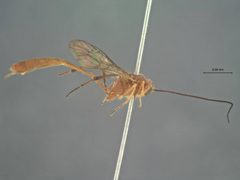
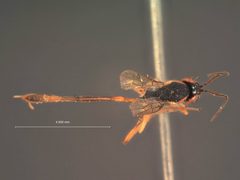
2Agrypon is a of ichneumonid described by Arnold Förster in 1860. within this genus are solitary larval-pupal endoparasitoids that develop within caterpillars of various lepidopteran . At least one species, A. flaveolatum, has been introduced as a agent for pest management.
Pronunciation
How to pronounce Agrypon: /ˈæɡrɪˌpɒn/
These audio files are automatically generated. While they are not always 100% accurate, they are a good starting point.
Identification
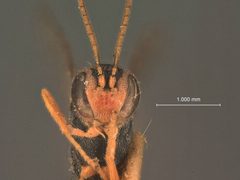
within Agrypon can be distinguished from closely related by morphological characters and morphometric analyses of antennal annuli counts. For example, A. flaveolatum was differentiated from native North American species A. provancheri and A. alaskensis using these methods.
Images
Distribution
distribution. Specific have been recorded in the western Palearctic (A. polyxenae), with introductions to Nova Scotia and British Columbia, Canada (A. flaveolatum). Distribution records from GBIF include Denmark, Norway, and Sweden.
Host Associations
- Operophtera brumata - winter moth; introduced control target in Canada
- Zerynthia polyxena - most common for A. polyxenae
- Zerynthia rumina - recorded in Spain
- Zerynthia cassandra - suggested presence in Italy
Life Cycle
Solitary larval-pupal endoparasitoid developing within caterpillars.
Ecological Role
agent. Agrypon flaveolatum was introduced to control winter moth on apple and oak trees in Canada.
Human Relevance
Used in programs. Agrypon flaveolatum was introduced from Europe to Nova Scotia and British Columbia specifically to manage winter moth (Operophtera brumata) on commercially important apple and oak trees.
Similar Taxa
- Agrypon provancheriClosely related native North American distinguished from A. flaveolatum by antennal annuli counts and morphological characters
- Agrypon alaskensisClosely related native North American distinguished from A. flaveolatum by antennal annuli counts and morphological characters
Sources and further reading
- BugGuide
- Wikipedia
- GBIF taxonomy match
- iNaturalist taxon
- NCBI Taxonomy
- Catalogue of Life
- STATUS OF THE PARASITE AGRYPON FLAVEOLATUM (GRAVENHORST) (HYMENOPTERA, ICHNEUMONIDAE), INTRODUCED TO CONTROL THE WINTER MOTH IN NOVA SCOTIA AND BRITISH COLUMBIA
- AGRYPON POLYXENAE (SZÉPLIGETI, 1899) (HYMENOPTERA: ICHNEUMONIDAE: ANOMALONINAE); NEWLY RECORDED PARASITOID OF ZERYNTHIA POLYXENA (DENIS & SCHIFFERMÜLLER, 1775) (LEPIDOPTERA: PAPILIONIDAE: PARNASSIINAE) IN THE FAUNA OF SERBIA