
Helcon
Nees, 1812
Species Guides
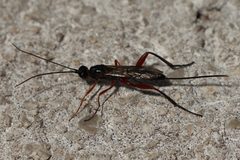
1Helcon is a of in the Braconidae, first described by Nees in 1812. Members of this genus belong to the Helconinae, a group characterized by their association with wood-boring larvae as . The genus is found in temperate regions of the Northern Hemisphere, with documented occurrences in Scandinavia. As with other braconid wasps, in Helcon are likely solitary parasitoids, though specific biological details for most species remain poorly documented.
Pronunciation
How to pronounce Helcon: /ˈhɛlkɒn/
These audio files are automatically generated. While they are not always 100% accurate, they are a good starting point.
Identification
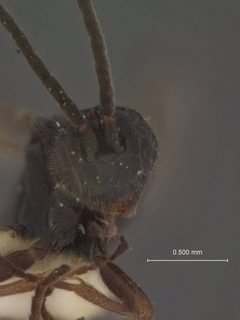
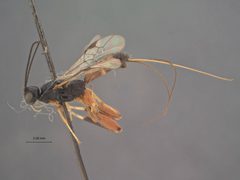
Helcon can be distinguished from other braconid by the combination of: a complete, non-abbreviated areolet in the forewing (a small closed near the wing base); a pronotum that does not reach the tegula; and with 16-20 flagellomeres. The genus is placed in Helconinae, which is characterized by a somewhat robust body form and reduced wing venation compared to more basal braconid groups. Separation from the closely related genus Cenocoelius requires examination of hind wing venation and ovipositor structure.
Images
Habitat
Forested and woodland where wood-boring beetles (Cerambycidae, Buprestidae) occur. are often found in association with dead or dying wood, which serves as the habitat for their larval . Specific microhabitat preferences within this are not well documented.
Distribution
Documented from Denmark, Norway, and Sweden based on occurrence records. The has a broader temperate Northern Hemisphere distribution, with additional records from Europe and North America, though precise range boundaries are not established.
Host Associations
- Cerambycidae - Wood-boring larvae; specific records are sparse for most Helcon
- Buprestidae - Wood-boring larvae; associations inferred from -level
Ecological Role
of wood-boring larvae, contributing to of these insects in forest . This role may influence wood decomposition dynamics and nutrient cycling in dead wood .
Similar Taxa
- CenocoeliusAlso in Helconinae with similar associations; distinguished by hind wing venation details and ovipositor
- DiospilusOverlapping distribution and ; Diospilus has a different forewing areolet configuration and generally more slender body form
- BraconSuperficially similar braconid wasps; Bracon belongs to Braconinae with different wing venation (absent or reduced areolet) and typically attacks Lepidoptera larvae rather than wood-boring beetles
More Details
Taxonomic history
The Helcon was established by Nees von Esenbeck in 1812 and has served as the type genus for Helconinae. The subfamily has undergone significant taxonomic revision, with some former helconine genera reassigned to other subfamilies based on molecular phylogenetic studies.
Species diversity
The contains approximately 20-30 described globally, though this number is approximate due to ongoing taxonomic revision and poor documentation for many Palearctic and Nearctic species.