
Diospilus
Haliday, 1833
Diospilus is a of in the Braconidae, Brachistinae. The genus has distribution. At least one , D. capito, is a parasitoid of pollen beetles (Meligethes spp.) in agricultural systems, particularly in rape and mustard crops. Species within this genus are small braconid wasps, though detailed morphological descriptions for the genus as a whole are limited.
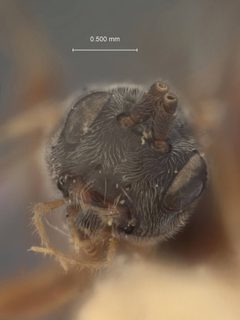
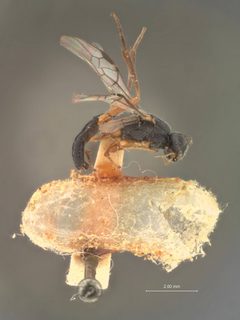
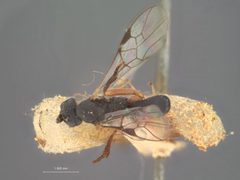
Pronunciation
How to pronounce Diospilus: //daɪˈɒspɪləs//
These audio files are automatically generated. While they are not always 100% accurate, they are a good starting point.
Images
Habitat
Agricultural systems, particularly fields of Brassicaceae crops including rape (Brassica napus) and white mustard (Sinapis alba). Associated with soil environments where larvae pupate.
Distribution
distribution. Documented from Denmark, Norway, and Sweden (GBIF records). D. capito specifically studied in Finnish and Swedish .
Host Associations
- Meligethes aeneus - Pollen beetle, rape blossom beetle; larvae parasitized, pupate in soil
- Meligethes viridescens - Pollen beetle
Life Cycle
larvae develop within larvae. occurs in soil following host pupation. follows host pupation.
Ecological Role
agent of pollen beetle pests in agricultural systems. influenced by plant affecting rates.
Human Relevance
Potential biocontrol agent for pollen beetle management in oilseed rape and mustard crops. Highly susceptible to the bio- Metarhizium anisopliae, which may negatively impact when applied for control.
Similar Taxa
- Phradis morionellusCo-occurring of Meligethes aeneus in same agricultural systems; D. capito shows higher susceptibility to Metarhizium anisopliae (76% vs. 17% latent infection rates)
More Details
Host plant effects on parasitism
Field studies show rates by D. capito vary with plant : significantly higher likelihood of parasitism for larvae on Sinapis alba (8-29% parasitism recorded) than on Brassica napus. This effect appears mediated by plant semichemical or morphological properties rather than host size or survival differences.
Susceptibility to bio-insecticides
D. capito exhibits high susceptibility to latent by Metarhizium anisopliae (76% infection rate, range 72-100%) following indirect exposure via treated soil during . This contrasts with co-occurring Phradis morionellus (17% infection rate), suggesting differential impacts of applications on parasitoid composition.
Sources and further reading
- BugGuide
- Wikipedia
- GBIF taxonomy match
- iNaturalist taxon
- NCBI Taxonomy
- Catalogue of Life
- Effects of Metarhizium anisopliae on the pollen beetle Meligethes aeneus and its parasitoids Phradis morionellus and Diospilus capito
- Effects of host plant species on the interaction between the parasitic wasp Diospilus capito and pollen beetles ( Meligethes spp.)