
Brachistinae
Tribe Guides
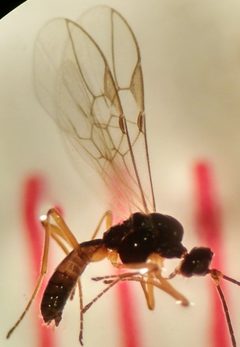
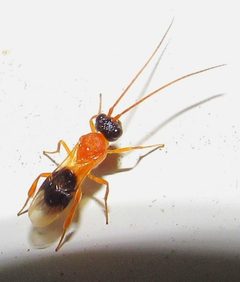
3Brachistinae is a of within Braconidae. Members are koinobiont endoparasitoids, primarily attacking coleopteran including weevils (Curculionidae). The subfamily has undergone significant taxonomic revision: historically treated as tribes within Helconinae, then split with Blacinae, before Blacinae was synonymized under Brachistinae based on 2011 phylogenetic evidence. The Nealiolus has demonstrated potential as a agent against pest weevils. Fossil representatives are known from late Eocene Baltic amber.
Pronunciation
How to pronounce Brachistinae: //ˌbrækɪˈstaɪniː//
These audio files are automatically generated. While they are not always 100% accurate, they are a good starting point.
Images
Habitat
Agricultural settings with cultivated plants; forest environments (fossil evidence from Baltic amber). Collections span Mediterranean, Aegean, Central Anatolia, Black Sea, Marmara, and eastern Anatolia regions in Turkey, with highest in the Black Sea region.
Distribution
Palearctic: Turkey (70 documented, with 38 species in five recorded in one study), eastern Anatolia (Bingöl, Bitlis, Muş, Van provinces); China. Neotropical: South America (Brazil). Fossil: late Eocene Baltic amber deposits.
Seasonality
Specimens collected in Turkey spanning 1982–2010 and 2015–2019; no specific seasonal activity patterns documented.
Host Associations
- Phymatophosus squameus - Coleoptera: Curculionidae; larvae in stems of Sechium edule (chayote)
- Conotrachelus sp. - Coleoptera: Curculionidae; larvae in fruits of Plinia cauliflora (jaboticaba)
- Cotton boll weevil (Anthonomus grandis) - potential targetimplied from literature; not confirmed record
Life Cycle
Koinobiont endoparasitoid development within coleopteran . Specific developmental stages and timing not documented in available sources.
Ecological Role
agent of agricultural pests, particularly weevils (Curculionidae) damaging economically valuable plants.
Human Relevance
Similar Taxa
- HelconinaeFormerly contained Brachistinae as tribes; distinguished by phylogenetic placement and revised tribal composition
- BlacinaeHistorically separate now synonymized under Brachistinae; 2022 phylogenomic studies found Dyscoletes distant and incertae sedis, indicating ongoing taxonomic refinement
More Details
Taxonomic history
formerly classified as tribes (Diospilini, Brulleiini, Brachistini) under Helconinae. Blacini split as separate Blacinae, subdivided into six tribes. Brachistinae established when Helconinae tribes Diospilini, Brulleiini, Brachistini were split out. Blacinae synonymized under Brachistinae per Sharanowski et al. 2011 phylogenetic study showing monophyly. Jasso-Martínez et al. 2022 phylogenomics found Dyscoletes not monophyletic with other Brachistinae, rendering it incertae sedis and highlighting phylogenetic weaknesses due to omitted genera.
Documented genera
Eubazus, Chelostes, Foersteria, Polydegmon, Schizoprymnus (Turkey); Nealiolus (South America); Taphaeus, Eubazus, Blacus (fossil). Seven new Schizoprymnus described from China.
Sources and further reading
- BugGuide
- Wikipedia
- iNaturalist taxon
- NCBI Taxonomy
- Two new species of Nealiolus Mason (Hymenoptera, Braconidae, Brachistinae) reared from pest weevils (Coleoptera, Curculionidae)
- Considerations on the Brachistini fauna of Turkey (Hymenoptera: Braconidae: Brachistinae), with some taxonomic and distributional notes
- New species of braconid parasitoid wasps from the subfamilies Doryctinae and Brachistinae from late Eocene Baltic amber
- Contribution to the parasitoid fauna of Turkey with a new brachistine species, Schizoprymnus (Schizoprymnus) cani Koldaş sp. n. (Braconidae: Brachistinae: Hymenoptera)
- Taxonomic studies on the Brachistini (Hymenoptera, Braconidae, Brachistinae) fauna of the eastern Anatolia region (Bingöl, Bitlis, Muş and Van) from Turkey
- The Genus Schizoprymnus Förster, 1863 (Hymenoptera, Braconidae, Brachistinae) from China, with Descriptions of Seven New Species.