
Aridelus
Marshall, 1887
Species Guides
1Aridelus is a of braconid wasps in the Euphorinae, comprising approximately 40 described with distribution but greatest diversity in tropical regions. These are solitary koinobiont endoparasitoids of heteropteran , primarily targeting nymphs and of stink bugs (Pentatomidae) and related . Several species have been investigated for potential against agricultural pests, particularly Nezara viridula.
Pronunciation
How to pronounce Aridelus: //ˌæˈrɪ.də.ləs//
These audio files are automatically generated. While they are not always 100% accurate, they are a good starting point.
Identification
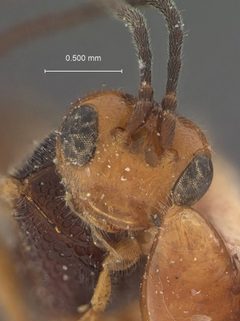
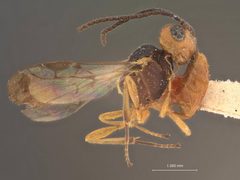
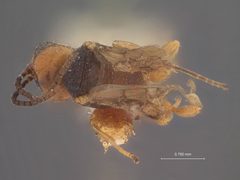
Members of Aridelus can be distinguished from other euphorine braconids by their petiolated metasoma with a short ovipositor, adapted for ovipositing into nymphs and of heteropteran . Females typically have a distinct body shape with elongated metasoma. -level identification requires examination of morphological characters detailed in regional keys; six species are recorded from Japan (A. dubius, A. egregius, A. elasmuchae, A. flavicans, A. rufotestaceus, A. rutilipoides).
Images
Distribution
, with highest diversity in tropical regions. Recorded from Japan (Hokkaidô, Honshû, Shikoku, Kyûshû), Russian Far East, Western Palaearctic region, China, Korea, Taiwan, Germany, Italy, United States, Madeira, New Zealand, and Malta.
Host Associations
- Nezara viridula - primary preferred of A. rufotestaceus; all nymphal stages and accepted
- Homoeocerus unipunctatus - A. flavicans reared from this alydid in Japan
- Riptortus pedestris - A. flavicans reared from this alydid in Japan; represents newly recorded (Alydidae) for
- Glaucias subpunctatus - A. rufotestaceus reared from this pentatomid in Japan
- Glaucias amyoti - A. rufotestaceus record
- Euschistus servus - A. rufotestaceus record
- Euschistus quadrator - A. rufotestaceus record
- Chinavia hilaris - A. rufotestaceus record (as Acrosternum hilaris)
- Piezodorus guildinii - A. rufotestaceus record
- Halyomorpha halys - unsuitable oviposition observed by A. rufotestaceus but no successful development; cocoons and larvae absent
- Elasmucha putoni - A. elasmuchae record (Acanthosomatidae)
Life Cycle
Solitary koinobiont endoparasitoid. Females lay into nymphs or of heteropteran . Larval development occurs within the living host; occurs outside the host in silk cocoons. For A. rufotestaceus at 25°C, development from egg to adult averages 40–45.5 days depending on host stage, with shortest development time in third instar nymphs. Second instar nymphs yield highest cocoon and adult production despite longer development time. is thelytokous parthenogenetic (females only) in at least some .
Behavior
activity pattern observed in most ; A. dubius has been collected at night in light traps. Females use a short ovipositor to pierce for deposition. At 25°C, A. rufotestaceus accepts all mobile host stages but shows optimal on second instar nymphs. Temperature of 28°C is detrimental to development. are affected by presence of flowering plants, which may influence their and field effectiveness.
Ecological Role
of heteropteran , primarily stink bugs (Pentatomidae) and related including Acanthosomatidae, Alydidae, Plataspidae, and Scutelleridae. Natural rates in field conditions are low (<5% to 21.7%), though laboratory parasitism rates reach 85–95%. Potential agent for agricultural pest stink bugs.
Human Relevance
Investigated as agent against pests, particularly Nezara viridula (southern green stink bug) and related agricultural pests. Rearing methods have been developed for A. rufotestaceus, with recommendations for using second instar nymphs as at 25°C. Not suitable for control of Halyomorpha halys (brown marmorated stink bug) due to failed development despite oviposition attempts.
Similar Taxa
- Other Euphorinae generaAridelus distinguished by petiolated metasoma with short ovipositor specifically adapted for heteropteran ; other euphorines typically attack different host groups (e.g., Coleoptera, Heteroptera, or Diptera)
- PeristenusBoth are euphorine braconids attacking heteropteran , but Peristenus are -larval of mirid plant bugs, whereas Aridelus attacks nymphs and of pentatomoid bugs
Sources and further reading
- BugGuide
- GBIF taxonomy match
- iNaturalist taxon
- NCBI Taxonomy
- Catalogue of Life
- Flowering plant effects on adults of the stink bug parasitoid Aridelus rufotestaceus (Hymenoptera: Braconidae)
- The genus Aridelus Marshall (Hymenoptera, Braconidae, Euphorinae) from Japan, with description of a new species
- Host stage and temperature for the rearing of Aridelus rufotestaceus (Hymenoptera: Braconidae), with notes on acceptance and suitability of 2 stink bug species