
Peristenus
Förster, 1862
Peristenus is a of braconid wasps in the Euphorinae, comprising approximately 30 described of larval endoparasitoids. Species in this genus specialize primarily on nymphal stages of plant bugs (Miridae), particularly Lygus spp., and have been widely studied and deployed as agents in North American agriculture. Several European species, notably P. digoneutis and P. relictus, were intentionally introduced to manage Lygus plant bug pests in crops such as strawberries and alfalfa. The genus exhibits -specific associations with mirid bugs, with most species targeting particular host genera or species.
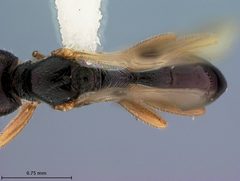
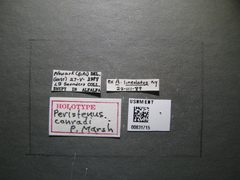
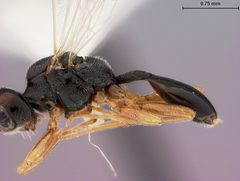
Pronunciation
How to pronounce Peristenus: //pɛˈrɪstɛnəs//
These audio files are automatically generated. While they are not always 100% accurate, they are a good starting point.
Identification
Peristenus are small braconid wasps, typically 2-4 mm in length. They can be distinguished from related euphorine by combinations of morphological characters including antennal segment count, wing venation patterns, and ovipositor structure. Species-level identification requires examination of detailed morphological features such as capsule structure, mesosoma proportions, and male genitalia. Molecular markers have been developed for distinguishing among species in programs, particularly for P. digoneutis and P. relictus.
Images
Habitat
Agricultural systems, particularly alfalfa fields, strawberry production areas, and hay crops where mirid bugs occur. Native occupy natural and semi-natural supporting populations of Lygus and related mirid . Introduced populations establish in managed agricultural landscapes with suitable host plant .
Distribution
Native distribution includes the Palearctic region, with records from Europe (Denmark, Norway, Sweden, Poland, United Kingdom) and Turkey. Several have been introduced and established in North America, particularly P. digoneutis and P. relictus in the United States (California, northeastern states) and Canada (Quebec). GBIF records document presence in Denmark, Norway, and Sweden.
Seasonality
Activity patterns correspond with nymphal development of mirid bugs. In temperate agricultural systems, peak occurs during summer months when Lygus nymph are abundant. P. relictus has shown sustained population persistence over 12+ years in California release sites with measurable seasonal dynamics.
Host Associations
- Lygus spp. (Hemiptera: Miridae) - primary L. hesperus, L. lineolaris, and other Lygus are principal for multiple Peristenus species; nymphal stages parasitized
- Apolygus lucorum (Hemiptera: Miridae) - Documented for P. spretus and P. relictus in Asia and studies
Life Cycle
Larval endoparasitoid development within mirid nymphs. females oviposit into host nymphs; larvae develop internally, consuming host tissues and eventually killing the host. Developmental varies with host instar, with and progeny affected by nymphal stage at oviposition. occurs within the host remains or externally. time and voltinism vary by and climate.
Behavior
use olfactory cues to locate ; P. pseudopallipes has been documented using Erigeron flowers as food sources and attractive odor sources. Females actively search for host nymphs within vegetation. occurs between sympatric exploiting the same host species, as demonstrated between P. spretus and P. relictus on A. lucorum.
Ecological Role
larval regulating of plant bugs in agricultural and natural systems. Serves as for hyperparasitoids in the ichneumonid Mesochorus. introductions have demonstrated substantial suppression of Lygus pest populations, with P. relictus establishment in California associated with >95% reduction in L. hesperus populations in weeds and alfalfa, and >70% reduction in strawberry over 10-year simulations.
Human Relevance
Significant economic value as agents of Lygus plant bug pests in North American agriculture. P. relictus establishment in California organic strawberry estimated to avert $1,901 per acre in value loss from L. hesperus damage. P. digoneutis and P. relictus introduced for ; P. stygicus evaluated as potential introduction candidate. Susceptibility to neonicotinoid (imidacloprid, thiamethoxam) documented, creating potential conflict with chemical pest management.
Similar Taxa
More Details
Biological Control Establishment
P. relictus successfully established in California's Monterey Bay region and is now the primary nymphal of L. hesperus, whereas P. digoneutis has rarely been recovered despite release efforts. Twelve-year longitudinal studies confirm sustained persistence of P. relictus.
Taxonomic Complexity
-level historically problematic; recent revisions based on reared material have described multiple new species and resolved synonymies. Molecular identification tools developed to distinguish morphologically similar species in contexts.
Sources and further reading
- BugGuide
- Wikipedia
- GBIF taxonomy match
- iNaturalist taxon
- NCBI Taxonomy
- Impact of two neonicotinoid insecticides on the parasitoids of Apolygus lucorum: Peristenus spretus and Peristenus relictus
- Interspecific competition between Peristenus spretus and Peristenus relictus (Hymenoptera: Braconidae), larval parasitoids of Apolygus lucorum (Hemiptera: Miridae)
- Interpreting the host range of Peristenus digoneutis and Peristenus relictus (Hymenoptera: Braconidae) biological control agents of Lygus spp. (Hemiptera: Miridae) in North America
- Developmental Biology and Morphology of Peristenus digoneutis Loan (Hymenoptera: Braconidae: Euphorinae)
- Host plant effects: Parasitism success of Peristenus digoneutis on lygus bugs in canola and alfalfa
- Survey of Peristenus spp. (Hymenoptera: Braconidae) parasitoids in the Monterey Bay region of California
- Systematics and Biology of Four Polish Species of Peristenus Foerster (Hymenoptera: Braconidae, Euphorinae) 1
- Post-release trends in the lygus parasitoidPeristenus relictus in the Monterey Bay region of California, a 12 year study
- Quantifying the economic impact of Peristenus relictus establishment on host Lygus hesperus populations in California organic strawberry
- Review of the Nearctic species of Leiophron and Peristenus (Hymenoptera: Braconidae: Euphorinae) parasitizing Lygus (Hemiptera: Miridae: Mirini)
- Biology of Peristenus stygicus1 from Turkey, a Potential Natural Enemy of Lygus Bugs 1 in North America
- Hyperparasitism by Mesochorus spp. (Hymenoptera: Ichneumonidae) in Peristenus sp. (Hymenoptera: Braconidae) and development of PCR primers for hyperparasitoid detection
- Parasitism efficiency and progeny fitness of Peristenus spretus Chen et van Achterberg vary with nymphal instar of host, Apolygus lucorum (Meyer-Dür)
- Erigeron Flowers as a Food and Attractive Odor Source for Peristenus pseudopallipes, a Braconid Parasitoid of the Tarnished Plant Bug1
- Effect of Host Instar on Measuring Parasitism of Lygus spp. (Hemiptera: Miridae) Nymphs by Peristenus spp. (Hymenoptera: Braconidae)