
Dieunomia
Cockerell, 1899
Species Guides
4- Dieunomia bolliana
- Dieunomia heteropoda(Giant Sweat Bee)
- Dieunomia nevadensis(Nevada nomia)
- Dieunomia triangulifera
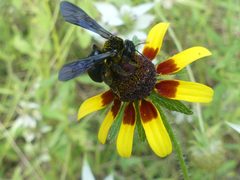
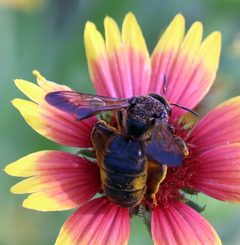
Dieunomia is a of sweat bees in the Halictidae, containing approximately nine described . These bees are among the largest in their family, second only to the genus Nomia. They are relatively uncommon and exhibit specialized ecological relationships with their pollen sources.

Pronunciation
How to pronounce Dieunomia: //ˌdaɪ.juˈnoʊ.mi.ə//
These audio files are automatically generated. While they are not always 100% accurate, they are a good starting point.
Identification
Large size relative to other Halictidae; wing with two submarginal ; basal with only weakly bent vein; males possess greatly dilated middle . Larger than almost all other Halictidae except Nomia.
Images
Habitat
Hard-packed soil for nesting; dense nesting have been documented.
Distribution
North America; documented from southwestern Michigan, northeastern Kansas, and other regions. Dieunomia heteropoda represents the first record of Nomiinae for Michigan.
Seasonality
Activity synchronized with blooming of primary pollen sources; timed to coincide with local bloom periods of plants.
Diet
Pollen ; at least D. triangulifera specializes on Helianthus annuus (sunflower) pollen.
Host Associations
- Helianthus annuus - pollen sourcePrimary pollen source for D. triangulifera; closely synchronized with bloom period
Life Cycle
Solitary nesting; females excavate burrows in soil and construct nests containing multiple provisioned with pollen masses.
Behavior
Nests in dense ; males patrol and hover in search of females, actively pursuing females in for mating; foraging activity closely synchronized with pollen availability, with more trips made when pollen is abundant.
Ecological Role
; pollinator of sunflowers and potentially other Asteraceae.
Similar Taxa
- NomiaSimilar large size within Halictidae; Dieunomia is larger than almost all other Halictidae except Nomia; both in Nomiinae
- DufoureaBoth reviewed together in regional surveys; Dufourea in Rophitinae, Dieunomia in Nomiinae
Sources and further reading
- BugGuide
- Wikipedia
- GBIF taxonomy match
- iNaturalist taxon
- NCBI Taxonomy
- Catalogue of Life
- Behavior and Phenology of a Specialist Bee (Dieunomia) and Sunflower (Helianthus) Pollen Availability
- Communal Nesting in a North American Pearly-Banded Bee, Nomia tetrazonata, with Notes on Nesting Behavior of Dieunomia heteropoda (Hymenoptera: Halictidae: Nomiinae)
- Mating behaviour in the bees,Dieunomia heteropodaandNomia tetrazonata, with a review of courtship in Nomiinae (Hymenoptera: Halictidae)
- Bees of the genera <i>Dufourea</i> and <i>Dieunomia</i> of Michigan (Hymenoptera: Apoidea: Halictidae), with a key to the <i>Dufourea</i> of the eastern United States