
Odontomachus desertorum
Wheeler, 1915
Desert Trap-jaw Ant
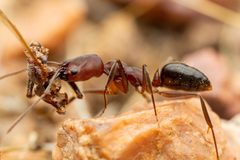
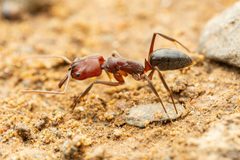
Odontomachus desertorum is a of trap-jaw in the Ponerinae, first described by Wheeler in 1915. Like other members of the , it possesses powerful, spring-loaded capable of rapid closure to capture prey or propel the ant through the air. The specific epithet 'desertorum' suggests an association with arid environments. As with most Odontomachus species, detailed natural history information for this remains limited in published literature.
Pronunciation
How to pronounce Odontomachus desertorum: //oʊˌdɒntoʊˈmeɪkəs dɪˈzɜːrtɔːrəm//
These audio files are automatically generated. While they are not always 100% accurate, they are a good starting point.
Identification
Identification to level within Odontomachus requires examination of morphological characters such as structure, shape, and petiole node form. O. desertorum can be distinguished from by subtle differences in these features, though specific diagnostic characters for this species are not well-documented in readily accessible sources. The is characterized by elongated mandibles with a distinct trigger mechanism near the base, a feature shared by all trap-jaw ants.
Images
Habitat
The specific epithet 'desertorum' (meaning 'of deserts') implies association with arid or semi-arid environments, though direct documentation for this is sparse.
Distribution
Distribution records for O. desertorum are limited. The has been documented from desert regions, consistent with its name, but precise geographic range boundaries remain poorly defined.
Behavior
As a member of Odontomachus, O. desertorum likely shares the characteristic trap-jaw mechanism: held open at 180 degrees and closed via a latch mechanism when trigger hairs are stimulated. This allows for extremely rapid strikes used in prey capture and defense. However, specific behavioral observations for this have not been documented in the provided sources.
Similar Taxa
- Odontomachus haematodusAnother trap-jaw that has been documented spreading in the southeastern United States; both share the characteristic and general body plan of the
- Odontomachus ruginodisA congeneric with documented range expansion in Florida; morphologically similar and requires careful examination for proper identification
- Odontomachus relictusA Florida trap-jaw ; shares the distinctive structure but differs in specificity and geographic range
More Details
Taxonomic note
The was described by William Morton Wheeler in 1915. Wheeler was a prominent myrmecologist who described numerous species, particularly from North America and Central America.
Data availability
As of the knowledge cutoff, detailed -level information for O. desertorum is limited in comparison to better-studied such as O. haematodus, O. ruginodis, and O. rixosus, which have been subjects of recent ecological and behavioral research.
Sources and further reading
- BugGuide
- iNaturalist taxon
- Catalogue of Life
- Grasshoppers of Colorado
- Grasshoppers of Colorado
- How an "Insect Ecologist at Heart" Got Focused on Pest Management Research
- Uncategorized | Blog - Part 17
- Powerful Trap-jaw Ants are Gaining Ground in the Southeastern United States
- Trap-Jaw Ant Jumps with Its Legs or Its Mandibles