
Platythyrea
Roger, 1863
Species Guides
1- Platythyrea punctata(Common Silvery Hunter Ant)
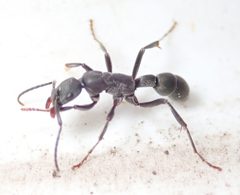
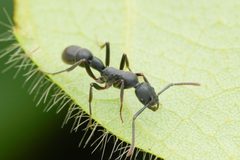
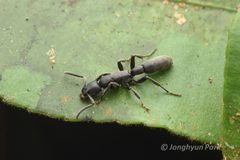
Platythyrea is a of predatory ants in the Ponerinae and the sole member of the tribe Platythyreini. range from 4–20 mm in size. The genus exhibits remarkable reproductive diversity: most have gamergates (reproductive female workers), though P. conradti has ergatoid queens instead. Some species with gamergates also produce queens. The genus has a worldwide distribution in tropical and subtropical regions.
Pronunciation
How to pronounce Platythyrea: //ˌplætɪˈθaɪriə//
These audio files are automatically generated. While they are not always 100% accurate, they are a good starting point.
Identification
Distinguished from other Ponerinae by its status as the sole member of tribe Platythyreini. can be recognized by their relatively large size range (4–20 mm) compared to many other ponerine . Reproductive strategy varies by and requires examination of colony composition: presence of gamergates versus ergatoid queens versus queens.
Images
Appearance
are small to very large in size, measuring 4–20 mm in body length. queens, when present, are similar in form to workers but possess wings.
Habitat
Tropical and subtropical regions worldwide. Specific microhabitat details are -dependent and not well documented for the as a whole.
Distribution
Worldwide distribution in tropical and subtropical regions. Documented occurrences include: Florida and Caribbean Islands (P. punctata), Puerto Rico, Rica, West Malaysian rainforest, and South Africa (P. lamellosa).
Life Cycle
Colony involves multiple strategies depending on : gamergates (mated reproductive ), ergatoid queens (wingless reproductive ants intermediate between workers and winged queens), or queens. In P. punctata, colonies are predominantly clonal with reproduction by , though occurs facultatively. Workers exhibit age-based : young workers remain in the nest with care duties, transitioning to foraging as they age. and muscle fibers thicken during the intranidal period, reaching final development in foragers.
Behavior
Predatory. display age-based division of labor: young workers perform intranidal tasks including care, while older workers transition to extranidal activities such as foraging. The timing of this transition varies among colonies; workers transitioning at younger ages show reduced longevity. Colonies of P. punctata are primarily with reduced activity. Policing and occur among workers. Larva-to- has been observed: larvae possess specialized structures enabling food transfer to adult workers. Colonies may adopt workers.
Similar Taxa
- Other Ponerinae generaPlatythyrea is distinguished by its unique tribal placement (Platythyreini) and by the presence of gamergates in most , contrasting with the more typical -based in many other ponerine ants.
More Details
Reproductive biology
The exhibits exceptional reproductive flexibility. P. punctata is notable for automictic involving central fusion of meiotic products, which maintains heterozygosity and minimizes inbreeding depression. Crossover occurs at greatly reduced rates during in this . However, is facultatively sexual: males, inseminated queens, and inseminated (gamergates) occur sporadically. In Rican of P. punctata, uninseminated workers appear incapable of thelytoky, unlike Florida/Caribbean populations. P. tricuspidata and P. quadridenta in Malaysia exhibit by workers with many sterile mated workers present; P. quadridenta can produce queens in larger colonies.
Physiological development
In P. punctata, reproductive status influences resource allocation: reproductive individuals show variation in muscle fiber development compared to non-reproductives, apparently minimizing metabolic costs unrelated to -laying. This represents a trade-off between and somatic maintenance.
Sources and further reading
- BugGuide
- Wikipedia
- GBIF taxonomy match
- iNaturalist taxon
- NCBI Taxonomy
- Catalogue of Life
- Policing and dominance behaviour in the parthenogenetic ant Platythyrea punctata
- Facultative sexual reproduction in the parthenogenetic ant Platythyrea punctata
- Larval structures associated with larva-to-adult trophallaxis in Platythyrea (Hymenoptera : Formicidae)
- Social organization ofPlatythyrea lamellosa(Roger) (Hymenoptera: Formicidae): I. Reproduction
- Colony structure and reproduction in the thelytokous parthenogenetic ant Platythyrea punctata (F. Smith) (Hymenoptera, Formicidae)
- Delayed maturation of the exoskeleton and muscle fibres in the ant Platythyrea punctata
- Reproduction and division of labour inPlatythyreacf.cribrinodis(Gerstaecker 1858) (Hymenoptera Formicidae): comparisons of individuals, colonies and species
- Microsatellites reveal clonal structure of populations of the thelytokous ant Platythyrea punctata (F. Smith) (Hymenoptera; Formicidae)
- Colony Composition of Two Malaysian Ponerine Ants, Platythyrea Tricuspidata and P. Quadridenta: Sexual Reproduction by Workersand Production of Queens (Hymenoptera: Formicidae)
- Activity Patterns and Age-dependent Changes in Behavior in the Clonal Ant Platythyrea punctata