
Monomorium minimum
(Buckley, 1867)
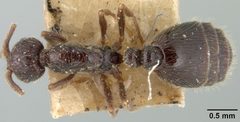
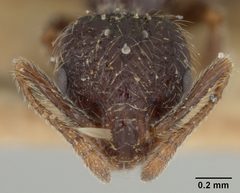
Monomorium minimum is a small myrmicine documented as an effective of mosquito in urban environments. The species has been observed removing 99.4% of Aedes aegypti eggs from experimental containers within 4 days, demonstrating significant potential for of -vectoring mosquitoes. As a member of the Monomorium, it belongs to a group often referred to as 'tramp ants' associated with human-modified .
Pronunciation
How to pronounce Monomorium minimum: /ˌmɒnəˈmɔːriəm ˈmɪnɪməm/
These audio files are automatically generated. While they are not always 100% accurate, they are a good starting point.
Images
Habitat
Diet
Aedes aegypti . The exhibits predatory on mosquito eggs in urban container .
Host Associations
- Aedes aegypti - -prey as prey
Behavior
Foraging leading to rapid removal of mosquito from containers; documented to remove 99.4% of eggs within 4 days in experimental conditions.
Ecological Role
Human Relevance
Potential agent for -vectoring mosquitoes; may contribute to reduction of Aedes-borne diseases including , , , and Zika.
Similar Taxa
- Solenopsis invictaCo-occurring foraging with similar documented predatory on Aedes aegypti in the same study
- Myrmicaria brunneaCo-occurring foraging with similar documented predatory on Aedes aegypti in the same study
- Diacamma rugosumCo-occurring foraging with similar documented predatory on Aedes aegypti in the same study
More Details
Study Context
Documented in a field experiment mimicking natural breeding for Aedes mosquitoes, demonstrating the ' role within that function as natural regulators of mosquito .
Sources and further reading
- BugGuide
- GBIF taxonomy match
- NCBI Taxonomy
- Catalogue of Life
- Revision of the Formicidae of North America | Beetles In The Bush
- During Quarantine, an Entomologist Takes a Closer Look at a New Invasive Ant Species
- When hardcore botany meets hardcore nature photography—nature geekery at its finest! | Beetles In The Bush
- What Does It Take to Detect Long-Term Insect Abundance Trends?
- Predation of Aedes aegypti Eggs By Foraging Ants Solenopsis invicta, Myrmicaria brunnea, Diacamma rugosum, and Monomorium minimum