
Crematogaster ashmeadi
Mayr, 1886
acrobatic ant, Ashmead's Acrobat Ant
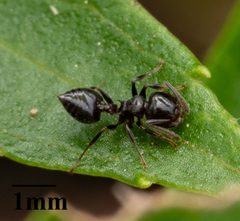
Crematogaster ashmeadi, commonly known as the acrobat , is a strictly arboreal ant native to eastern North America and widespread in the Southeastern United States. It is the most arboreal ant in pine forests of the coastal plains of northern Florida, where colonies inhabit chambers in the outer bark of living pine trees. The species exhibits specialized nesting , relying on pre-existing cavities excavated by bark-mining caterpillars rather than constructing its own galleries. are known for their distinctive trail-laying behavior using tibial gland secretions and have been observed raiding nests.
Pronunciation
How to pronounce Crematogaster ashmeadi: /ˌkrɛmətoʊˈɡæstər æʃˈmiːdaɪ/
These audio files are automatically generated. While they are not always 100% accurate, they are a good starting point.
Identification
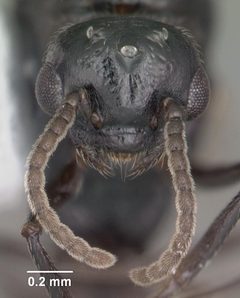
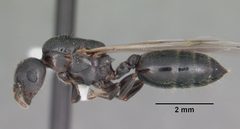
Crematogaster ashmeadi can be distinguished from other Crematogaster by its strictly arboreal habits and association with pine forests in the southeastern United States. Like other members of the , possess a characteristic -shaped that can be raised over the when alarmed, a that gives acrobat ants their . Specific morphological characters distinguishing C. ashmeadi from require examination by a .
Images
Habitat
Strictly arboreal; nests and forages almost exclusively above ground level in treetops and on lianas. In northern Florida, colonies inhabit chambers in the outer bark of living pine trees, specifically utilizing cavities abandoned by bark-mining caterpillars ( Cossidae). Newly-mated queens preferentially found colonies in abandoned galleries in dead branches of longleaf pine (Pinus palustris) saplings. Also associated with epiphytic ghost orchids (Dendrophylax lindenii) in Florida.
Distribution
Widespread in the Southeastern United States; most abundant in the coastal plains of northern Florida, particularly the Apalachicola National Forest. Native to eastern North America as one of eleven Crematogaster in the region. Distribution extends from the southeastern states westward, with records from Florida pine forests as the best-documented .
Diet
have been observed raiding nests of the paper wasp Mischocyttarus mexicanus and foraging on their . Specific dietary breadth beyond this observation is not documented.
Host Associations
- Dendrophylax lindenii - mutualistCrematogaster ashmeadi patrols and tends ghost orchids in Florida, establishing a mutualistic association with this epiphytic orchid
- Cossidae - commensalRelies on chambers bored by bark-mining caterpillars of this for nesting; does little to no excavation of its own
Life Cycle
Colony founding occurs when newly-mated queens disperse and select abandoned galleries in dead branches of longleaf pine saplings. settlement shows clumped among trees, indicating non-random selection of suitable founding sites. First-year survival of incipient colonies is low at 7.6%. Over the course of the first year, dispersion changes from clumped to random, possibly due to aggressive interference competition between incipient colonies.
Behavior
deposit scent trails from the tibial gland when returning to the nest from food sources, dragging their hind legs with tibiae pressed against the substrate. Trail-following is highly developed and -specific, enabling recruitment of nestmates to resources. Exhibits aggressive interference competition with and heterospecific incipient colonies, which likely contributes to its dominance in pine forest . Has been observed raiding nests.
Ecological Role
arboreal in longleaf pine of northern Florida, where it influences structure through aggressive interference competition with other ants. Acts as a mutualist with ghost orchids, potentially providing protection against herbivores. Serves as a of . Its reliance on pre-existing cavities may influence patterns of cavity use by other arboreal organisms.
Similar Taxa
- Crematogaster laeviusculaBoth are arboreal Crematogaster in eastern North America; C. laeviuscula has been documented as a of paper wasp nests (Polistes exclamans), similar to the -nest raiding observed in C. ashmeadi. Differentiation requires morphological examination and context.
More Details
Nesting Strategy
Crematogaster ashmeadi is unusual among ants in its near-complete reliance on pre-existing cavities rather than excavating its own nest chambers. This dependence on abandoned caterpillar galleries in pine bark represents a specialized nesting strategy that may limit its distribution to areas where suitable cavities are available.
Colony Dominance Mechanism
Research suggests that C. ashmeadi achieves dominance in longleaf pine forests through a combination of early of available nesting sites and aggressive interference competition, rather than through superior competitive ability at established food resources.
Sources and further reading
- BugGuide
- Wikipedia
- GBIF taxonomy match
- iNaturalist taxon
- NCBI Taxonomy
- Bug Eric: Wasp Wednesday: Neorileya
- Bug Eric: Wasp Wednesday: Polistes exclamans
- 52-million-year-old Beetle Fossil is Oldest Known Practitioner of Myrmecophily
- Bug Eric: Green Lynx Spider
- Bug Eric: Bosque del Apache National Wildlife Refuge
- Bug Eric: Termite Swarms
- Ants Tend Ghost Orchids: Patrolling of Dendrophylax lindenii (Orchidaceae) by Crematogaster ashmeadi in Florida
- A Tibial Gland Scent‐Trail and Trail‐Laying Behavior in the AntCrematogaster Ashmeadi Mayr
- Settlement and distribution of colony-founding queens of the arboreal ant, Crematogaster ashmeadi , in a longleaf pine forest