
Neivamyrmex
Borgmeier, 1940
Legionary Ants
Species Guides
10- Neivamyrmex harrisii(Harris' Legionary Ant)
- Neivamyrmex kiowapache
- Neivamyrmex leonardi
- Neivamyrmex mandibularis(legionary ant)
- Neivamyrmex melshaemeri(Legionary ant)
- Neivamyrmex nigrescens(Black Legionary Ant)
- Neivamyrmex opacithorax(army ant)
- Neivamyrmex pilosus
- Neivamyrmex swainsonii(Swainson's Legionary Ant)
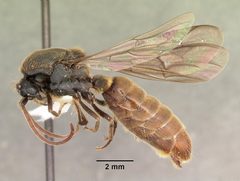
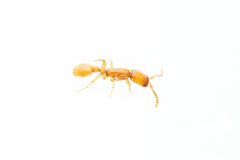
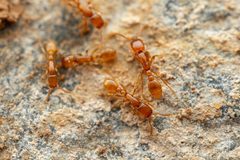
Neivamyrmex is a of New World army ants comprising approximately 129 . Colonies are nomadic, establishing temporary nightly rather than constructing permanent nests. Most species are predominantly subterranean, with occasional surface foraging at night or during overcast conditions. The genus is distinguished from related army ants by lacking a subapical tooth on the tarsal claw.
Pronunciation
How to pronounce Neivamyrmex: /ˌneɪvəˈmɜrmɛks/
These audio files are automatically generated. While they are not always 100% accurate, they are a good starting point.
Identification
distinguished from other New World army (Eciton, Labidus, Nomamyrmex, Cheliomyrmex) by the absence of a subapical tooth on the tarsal claw. Males separable by genitalic characters. Formerly placed in Labidus, N. mars was transferred to Neivamyrmex based on worker and UCE phylogenomics, though associated males were found to belong to Labidus proper. Many known only from male specimens, complicating identification.
Images
Habitat
Predominantly subterranean across diverse including desert-grasslands, dry-mesic oak/pine forests, and tropical environments. Surface activity occurs on trails, in glades, and open areas during emigrations or foraging. Temporary established in sheltered locations.
Distribution
Range extends from the central United States through Mexico and Central America to southern Argentina. Two (N. nigrescens and N. opacithorax) reach northern limits in Missouri glades. Fossil record includes N. ectopus preserved in 16-million-year-old Dominican amber.
Seasonality
Surface activity varies seasonally. Strictly in summer months; surface activity observed on cool, overcast fall days. Colony emigrations occur before dawn for approximately two weeks monthly in warmer periods, shifting to morning timing in cooler seasons. Activity ceases when temperatures drop reliably cold. Sexual and male occur seasonally, triggered by day length, humidity, and air pressure changes.
Diet
Specialized of other , particularly larvae and pupae. Documented prey includes ants of Veromessor, Pheidole, Solenopsis, and Formica. Foraging raids target nests of other ant species.
Host Associations
- Ulkeus intricatus - myrmecophileClown beetle (Histeridae: Hetaeriinae) found exclusively with Neivamyrmex colonies; relationship type unresolved, possibly mutualistic or kleptoparasitic
- Veromessor - prey targeted for larvae and pupae
- Pheidole - prey targeted for larvae and pupae
- Solenopsis - prey targeted for larvae and pupae
- Formica - prey targeted for larvae and pupae
Life Cycle
Colony foundation occurs when newly fertilized queens depart natal colonies with large cohorts. Mating may occur within colony (sibling mating) or via foreign males flying in from other colonies. Males possess wings and fly to lights at night; queens are flightless. Colonies undergo fission, with sexual production preceding colony division. Development includes , larva, pupa, and stages; workers exhibit precocial , participating in mass recruitment shortly after with adult stimulation required for full behavioral integration.
Behavior
Nomadic colony lifestyle with nightly establishment of temporary . Mass recruitment used for foraging and colony . display precocial behavior, joining foraging activities shortly after but requiring physical contact with for proper behavioral development. Emigration frequency is not directly triggered by local food depletion. Surface activity patterns shift seasonally from strictly to on cool overcast days.
Ecological Role
Keystone in tropical and subtropical , regulating of other . Specialized myrmecophagous habits create direct top-down effects on ant structure. Nomadic lifestyle and mass recruitment influence soil disturbance and nutrient cycling patterns.
Human Relevance
Rarely encountered by humans due to subterranean habits. Males occasionally attracted to lights at night, sometimes causing minor concern. Not considered household pests; beneficial as of other including some pest ants. Subject of scientific research on social insect evolution, army ant behavioral , and with Old World army ants.
Similar Taxa
- LabidusFormerly included N. mars; of L. mars transferred to Neivamyrmex based on eyeless subterranean and UCE phylogenomics. Labidus workers retain tarsal claw tooth; males properly assigned to Labidus differ genitalically.
- EcitonNew World army with possessing tarsal claw subapical tooth; surface-foraging habits more pronounced than in Neivamyrmex.
- NomamyrmexNew World army with possessing tarsal claw subapical tooth; specialized of fungus-growing ants.
- CheliomyrmexNew World army with possessing tarsal claw subapical tooth; distinctive mandibular .
More Details
Taxonomic instability
Many of the 129 described are known only from small numbers of male specimens, limiting biological knowledge. Most research derives from N. nigrescens, which may not represent -wide traits.
Phylogenetic revision
UCE phylogenomics demonstrated that Labidus mars belongs in Neivamyrmex, requiring taxonomic changes: N. mars (Forel 1912) new combination; L. nero revived from synonymy; L. denticulatus elevated to .
Fossil record
N. ectopus documented from 16-million-year-old Dominican amber, providing temporal calibration for evolution.
Sources and further reading
- BugGuide
- Wikipedia
- GBIF taxonomy match
- iNaturalist taxon
- NCBI Taxonomy
- Catalogue of Life
- Bug Eric: Flying Ants
- Bug Eric: A Couple of Weirdos
- Alydidae | Beetles In The Bush
- 9th Annual Fall Tiger Beetle Trip: Day 1 | Beetles In The Bush
- How One Entomologist Looks to Fossil Ants to Answer Big Biology Questions
- Army ants do not eat and run: Influence of food supply on emigration behaviour in Neivamyrmex nigrescens
- Behavioural ecology of mass recruitment in the army ant Neivamyrmex nigrescens
- Precocial behaviour of callow workers of the army ant Neivamyrmex nigrescens: Importance of stimulation by adults during mass recruitment
- Behavioral Ecology of the Army Ant Neivamyrmex nigrescens in a Desert-Grassland Habitat
- The Behavior and Biology of Certain Nearctic Doryline Ants Sexual Broods and Colony Division in Neivamyrmex nigrescens1
- Untangling the ant claws: the army ant Labidus mars is a Neivamyrmex (Formicidae: Dorylinae)