
Callirhytis quercusoperator
(Osten Sacken, 1862)
Woolly Catkin Gall Wasp
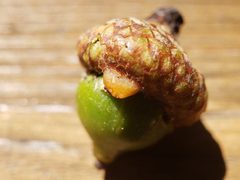
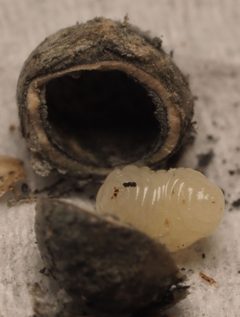
Callirhytis quercusoperator is a cynipid gall wasp that induces galls on oak catkins. The exhibits a complex with alternating , a common trait among Cynipidae. The galls produced by this species are characterized by a woolly or fuzzy appearance on catkins of oak trees. First described by Osten Sacken in 1862, it remains an active subject of observation with over 1,000 records on iNaturalist.

Pronunciation
How to pronounce Callirhytis quercusoperator: /ˌkæl.ɪˈraɪ.tɪs ˌkwɜːrkəsˌˌɒp.əˈreɪ.tɔːr/
These audio files are automatically generated. While they are not always 100% accurate, they are a good starting point.
Identification
The woolly catkin gall is distinctive among oak galls. The combination of: (1) location on catkins rather than leaves or stems, (2) fuzzy/woolly surface texture, and (3) association with oak (Quercus) separates this from Callirhytis quercuspunctata (gouty oak gall, which forms on twigs) and Callirhytis seminator (acorn plum gall, which forms on acorns). The gall's seasonal timing and succulent texture when young may help distinguish it from the harder, later-season galls of Callirhytis clavula.
Images
Habitat
Found in oak-dominated including deciduous forests, woodlands, and areas with Quercus present. The species requires access to flowering oak catkins for gall formation.
Distribution
Documented from North America, with observations spanning multiple regions. The has been recorded in northwestern Missouri and appears to have a broad distribution coinciding with its oak .
Seasonality
Activity is tied to oak catkin development. Based on related and the context of June observations in Missouri, the sexual likely emerges and forms galls in spring when catkins are present. The timing distinguishes it from fall-active generations of some related species.
Host Associations
- Quercus - gall inductionSpecific oak not documented in sources; forms galls on catkins
Life Cycle
Exhibits heterogony () typical of Cynipidae, with sexual and parthenogenetic producing different gall types on different plant tissues. The woolly catkin gall represents one generation; the alternate generation and its associated gall form are not specified in available sources.
Behavior
Females induce gall formation on oak catkins through oviposition. The gall provides nutrition and protection for developing larvae.
Ecological Role
As a gall inducer, modifies oak reproductive structures (catkins), potentially affecting pollen production and seed set. Serves as a food source for gall-inhabiting and , though specific associates are not documented.
Human Relevance
No documented economic or medical significance. Of interest to naturalists and entomologists studying gall wasp diversity and oak .
Similar Taxa
- Callirhytis quercuspunctataForms gouty oak galls on twigs rather than catkins; galls are woody and spherical, not woolly
- Callirhytis seminatorForms acorn plum galls on acorns, not catkins; gall is a single smooth swelling rather than woolly
- Callirhytis clavulaForms hard, woody galls in fall; lacks the succulent, woolly texture of C. quercusoperator galls
- Antistrophus spp.Induces stem galls on Silphium (rosinweed), not oak catkins; plant and gall location differ
More Details
Taxonomic history
Originally described as Cynips quercusoperator by Osten Sacken in 1862, later transferred to Callirhytis. The Callirhytis contains numerous oak-galling with complex that remain incompletely documented.
Observation record
The has accumulated over 1,000 observations on iNaturalist, indicating it is readily detectable by its distinctive gall and moderately common where oak occur.