
Callirhytis quercusfutilis
(Osten Sacken, 1861)
Oak Wart Gall Wasp
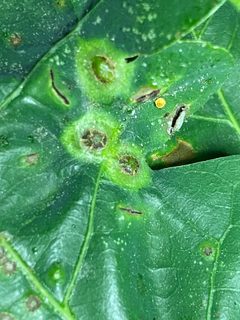
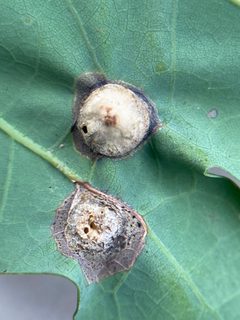
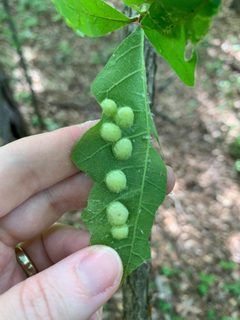
Callirhytis quercusfutilis is a cynipid gall wasp known for inducing distinctive wart-like galls on white oak group oaks. The exhibits a complex with alternating : an generation that develops in scurfy bark at the base of tree trunks or roots, and a sexual generation that produces leaf galls. The species is restricted to central and eastern North America and is specifically associated with oaks in the Quercus section Quercus (white oaks).
Pronunciation
How to pronounce Callirhytis quercusfutilis: /kælɪˈraɪtɪs kwɛrkəsˈfjuːtɪlɪs/
These audio files are automatically generated. While they are not always 100% accurate, they are a good starting point.
Identification
The is identified by its -specific association with white oak group oaks and the distinctive of its galls. Leaf galls of the sexual appear as small, rounded, wart-like projections between , differing from the larger, spongier oak apple galls of related species like Amphibolips quercusinanis. The generation's bark galls occur specifically at the trunk base or root crown, embedded in scurfy bark. The species is distinguished from Callirhytis quercuspunctata (gouty oak gall wasp) by gall position (leaves vs. twigs) and from Callirhytis clavula by the more succulent, less woody texture of young galls and absence of latex exudate.
Images
Habitat
Associated with deciduous forests and woodlands containing white oak . The sexual requires mature white oak trees with foliage suitable for gall induction. The generation occupies the interface between soil and tree trunk, specifically in the scurfy, flaky bark at the root crown or trunk base of host trees.
Distribution
Central and eastern North America. Specific range boundaries are not precisely documented, but the occurs throughout the geographic range of its white oak species in this region.
Seasonality
Sexual active in spring when white oaks produce new leaves, with gall formation occurring during leaf expansion. generation occupies bark galls year-round. Specific periods are not well documented in available sources.
Host Associations
- Quercus alba - white oak
- Quercus bicolor - swamp white oak
- Quercus lyrata - overcup oak
- Quercus macrocarpa - bur oak
- Quercus michauxii - swamp chestnut oak
- Quercus montana - chestnut oak
- Quercus prinoides - dwarf chinkapin oak
- Quercus stellata - post oak
Life Cycle
The exhibits heterogony, alternating between sexual and . The sexual generation develops in leaf galls, with emerging to mate and females ovipositing into bark tissue. The resulting asexual generation develops in scurfy bark galls at the trunk base or root crown. Asexual females emerge and oviposit into new leaf tissue, completing the cycle. The specific timing of and developmental duration for each generation has not been documented in detail.
Behavior
are known to induce gall formation through oviposition, triggering plant tissue proliferation that creates protected chambers for larval development. The demonstrates precise host location , with sexual females targeting specific leaf positions and generation females locating appropriate bark microhabitats at the trunk base.
Ecological Role
As a gall inducer, the functions as a herbivore that manipulates plant growth and nutrient allocation. The galls provide and food resources for a of associated organisms including and . The species contributes to oak-associated biodiversity and may influence host plant through resource , though specific ecological impacts have not been quantified.
Human Relevance
The has minimal direct economic impact. Leaf galls may be noticeable to observers but do not cause significant damage to healthy trees. The species is of interest to naturalists and entomologists studying gall wasp diversity and oak-associated . Bark galls of the are inconspicuous and rarely detected without deliberate examination.
Similar Taxa
- Callirhytis quercuspunctataAlso in Callirhytis and associated with white oaks, but induces gouty oak galls on twigs and branches rather than leaves. Gall and position distinguish the two .
- Callirhytis clavulaProduces similar oak galls, but young galls are less succulent and exude latex when damaged, features absent in C. quercusfutilis. Seasonal timing of gall development also differs.
- Amphibolips quercusinanisProduces larger, spongier oak apple galls on red oaks, with distinctly different gall structure and association.
More Details
Gall internal structure
The leaf galls contain a distinctive internal architecture with thin radiating fibers connecting the central larval chamber to the gall wall. These fibers are believed to facilitate nutrient transport from plant tissue to the developing larva.
Taxonomic history
The was originally described by Osten Sacken in 1861. The Callirhytis contains numerous oak-associated gall wasp species, many of which have complex that remain incompletely documented.