
Amphibolips quercusinanis
(Osten Sacken, 1862)
larger empty oak apple wasp
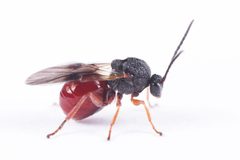
Amphibolips quercusinanis is a gall wasp in the Cynipidae that induces large, apple-sized galls on leaves of red oak in central and eastern North America. The species is notable for producing conspicuous, hollow galls that become brittle and empty after the emerges. It has been widely documented through citizen science observations.
Pronunciation
How to pronounce Amphibolips quercusinanis: //æmˈfɪbəlɪps ˌkwɜːrkjuːsɪˈnɑːnɪs//
These audio files are automatically generated. While they are not always 100% accurate, they are a good starting point.
Identification
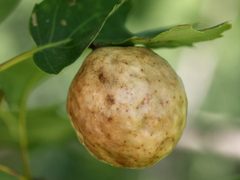
Distinguished from other oak apple gall wasps by the combination of: large size (up to 2 inches diameter), bumpy and spotted but hairless exterior, formation on red oak leaves (Quercus coccinea, Quercus rubra), and the characteristic hollow, brittle state of mature galls after . The 'larger empty oak apple wasp' refers to this post-emergence condition. Similar include other Amphibolips species that form oak apples, but A. quercusinanis is specifically associated with red oaks and produces notably large galls.
Images
Habitat
Deciduous forests and woodlands containing red oak , particularly Quercus coccinea (scarlet oak) and Quercus rubra (northern red oak). Gall formation occurs on leaf buds.
Distribution
Central and eastern North America. Specific range boundaries not detailed in available sources.
Seasonality
Gall formation occurs in spring on leaf buds. Timing of not specified in available sources.
Host Associations
- Quercus coccinea - larval scarlet oak; gall formation on leaves
- Quercus rubra - larval northern red oak; gall formation on leaves
Life Cycle
Larvae develop within galls induced on red oak leaf buds in spring. Galls mature over the growing season, changing from green to brown. emerge from mature galls, after which the gall becomes hollow and brittle as internal nutritive tissue disintegrates. Specific details regarding -laying, , and stages not documented in available sources.
Behavior
Larvae induce gall formation on leaf buds. The manipulates host plant tissue to create a protective structure with internal nutritive fibers that sustain the developing larva.
Ecological Role
As a gall inducer, modifies oak leaf tissue to create and food source for its own development. Mature, empty galls may provide shelter for other small , though this has not been documented for this specifically.
Human Relevance
Galls are conspicuous and may attract attention due to their large size and apple-like appearance. No economic or medical significance reported. Frequently documented by naturalists and citizen scientists.
Similar Taxa
- Other Amphibolips speciesForm similar oak apple galls, but A. quercusinanis is distinguished by its larger size, specific association with red oaks, and the characteristic hollow, brittle mature gall.
More Details
Gall structure
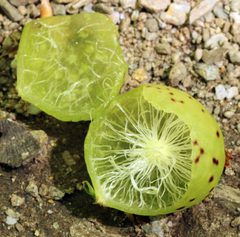
The internal architecture includes a central larval chamber connected to the vascular tissue via radiating white nutritive fibers. This specialized tissue actively transports nutrients from the host plant to the developing larva. After , these fibers break down, leaving the characteristic empty gall.