
Callirhytis perfoveata
(Kinsey, 1922)
leaf ball gall wasp
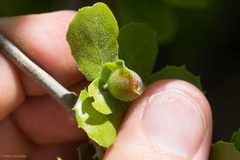
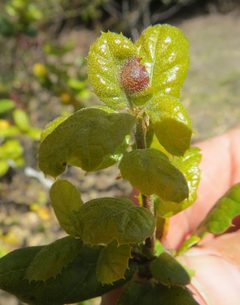
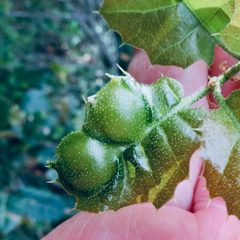
Callirhytis perfoveata is a cynipid gall wasp to California that induces distinctive spherical leaf galls on oak trees. Formerly classified as Andricus perfoveata, this specifically targets coast live oak (Quercus agrifolia), interior live oak (Q. wislizeni), and occasionally California black oak (Q. kelloggii). The galls form embedded within leaf tissue, appearing as roughly spherical structures that emerge bright green and mature to brown.
Pronunciation
How to pronounce Callirhytis perfoveata: /ˌkælɪˈraɪtɪs pəˌfoʊviˈeɪtə/
These audio files are automatically generated. While they are not always 100% accurate, they are a good starting point.
Identification
Distinguished from other California oak gall wasps by the combination of: spherical leaf galls embedded within leaf blade (not projecting as pouches or spangles); specific association with coast live oak, interior live oak, and California black oak; and geographic restriction to California. Differs from related Callirhytis by gall position (embedded in leaf vs. twig or petiole galls of other species) and specificity.
Images
Habitat
Oak woodlands and savannas in California dominated by ; specifically coast live oak forests, interior live oak woodlands, and mixed oak where California black oak occurs.
Distribution
to California, North America. Range coincides with distribution of primary oaks: coast live oak along coastal ranges, interior live oak in foothill regions, and California black oak in montane zones.
Seasonality
Gall formation timing not explicitly documented; gall development observed from initial green stage through brown maturation. period not specified in available sources.
Host Associations
- Quercus agrifolia - primary coast live oak
- Quercus wislizeni - primary interior live oak
- Quercus kelloggii - occasional California black oak
Life Cycle
details not explicitly documented; produces leaf galls in which larval development occurs. pattern (unisexual vs. bisexual generations) not specified for this .
Behavior
Female oviposit into oak leaf tissue, inducing gall formation through chemical secretions that redirect plant growth. Larvae develop within nutritive tissue of the gall.
Ecological Role
Gall formation creates microhabitat structure on oak leaves; galls may serve as food source for gall-inhabiting and vertebrate . Specific ecological interactions not documented for this .
Human Relevance
No documented economic or ecological impact; galls are primarily of biological interest for study of plant-insect interactions and gall .
Similar Taxa
- Callirhytis quercuspunctataAlso forms galls on California oaks, but produces distinct gall (gouty oak gall on twigs rather than embedded leaf galls)
- Neuroterus speciesProduce spherical oak leaf galls (spangle galls), but galls are typically detachable discs on leaf surface rather than embedded spheres
- Andricus speciesFormerly classified in this ; other Andricus produce diverse oak galls including oak apples and bullet galls with different morphologies and positions
More Details
Taxonomic History
Transferred from Andricus to Callirhytis based on revised generic concepts within Cynipidae; this reclassification reflects improved understanding of phylogenetic relationships among oak gall wasps.
Gall Development
Gall color change from green to brown likely indicates maturation and lignification of gall tissues; exit hole formation for not explicitly described but typical for cynipid galls.