
Callirhytis favosa
Honeycomb leaf gall wasp
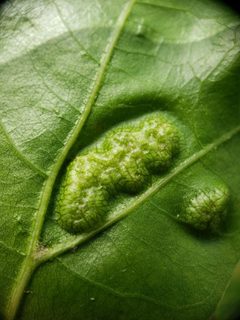
Callirhytis favosa is a gall wasp in the Cynipidae that induces distinctive honeycomb-patterned galls on oak leaves. The exhibits the complex typical of many cynipids, with alternating sexual and that produce different gall types on different oak tissues. The specific epithet 'favosa' refers to the honeycomb-like appearance of the galls.
Pronunciation
How to pronounce Callirhytis favosa: /ˌkælɪˈraɪtɪs fəˈvoʊsə/
These audio files are automatically generated. While they are not always 100% accurate, they are a good starting point.
Identification
Distinguished from other Callirhytis by the honeycomb-patterned galls on oak leaves. The galls differ from the bullet galls of C. quercuspunctata, the woolly galls of C. seminator, and the horned twig galls of C. cornigera. The sexual galls on leaves are structurally distinct from the generation galls produced by the same species.
Images
Habitat
Associated with oak trees (Quercus ), particularly white oaks. The species requires oak woodland or forest environments where trees are present.
Distribution
Eastern North America. Documented observations span from the northeastern United States through the Midwest, with records from Missouri and surrounding regions.
Seasonality
Activity follows the of oak trees. Sexual emerge in spring shortly after oak bud burst. generation development occurs through summer and fall, with timing varying by generation.
Diet
Larvae feed on nutritive plant induced within the gall tissue. have been observed feeding on sweet secretions produced by cynipid galls.
Host Associations
- Quercus - gall Specific oak not confirmed; likely white oak group based on -level patterns in Callirhytis
Life Cycle
Alternating with different gall forms: sexual generation produces leaf galls, generation produces distinct galls elsewhere on the plant. Development from to occurs within the gall. Larvae transform to pupae within a protective larval chamber inside the gall, emerging as adults by chewing exit holes.
Behavior
Females induce gall formation through -laying and subsequent chemical secretions that alter plant development. Larval movement within galls has been observed in related but not specifically documented for C. favosa.
Ecological Role
Gall formation creates microhabitats that support . Galls produce secretions that attract predatory and other insects. Serves as for wasps and that inhabit cynipid galls.
Similar Taxa
- Callirhytis quercuspunctataProduces bullet galls on oak twigs rather than honeycomb leaf galls; galls are hard, woody, and spherical with distinct exit holes
- Callirhytis seminatorProduces woolly or spongy galls; gall texture and structure differ markedly from honeycomb pattern
- Callirhytis cornigeraProduces horned oak galls on twigs with distinctive woody horns; gall location and differ
- Antistrophus speciesGall wasps in different that form stem galls on Silphium rather than leaf galls on oak