
Callirhytis balanacea
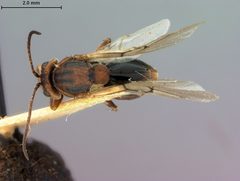
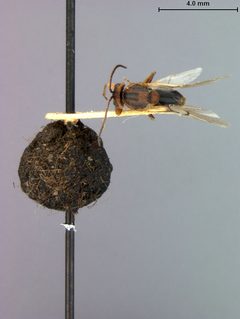
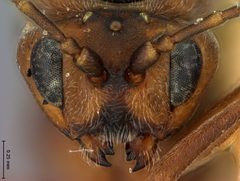
Callirhytis balanacea is a of cynipid in the Cynipidae, known for inducing pea-sized galls on oak trees. The species produces distinctive pip galls on oak , which exude sugary secretions that serve as food sources for other insects. It has been documented as a gall-forming insect with specific ecological interactions, including serving as a food source for butterflies that feed on gall exudates rather than nectar.
Pronunciation
How to pronounce Callirhytis balanacea: /kælɪˈraɪtɪs bæləˈneɪʃə/
These audio files are automatically generated. While they are not always 100% accurate, they are a good starting point.
Identification
Identified by the presence of its characteristic pip galls on oak . The galls are small (pea-sized), produce sugary exudates, and occur on oak . Distinguished from other Callirhytis species by gall and host association, though specific diagnostic features for identification require examination.
Images
Habitat
Associated with oak-dominated woodlands and forests. Documented from pine-oak woodlands in Massachusetts. trees include white oak (Quercus alba) and post oak.
Distribution
Documented from Massachusetts (Great Blue Hill area) in the northeastern United States. Range likely broader within eastern North American oak forests, but specific distribution records limited.
Seasonality
Galls observed and collected during summer months (June–July). timing not explicitly documented.
Host Associations
- Quercus alba - White oak; documented for gall induction.
- Quercus stellata - Post oak; inferred from context of associated research.
Life Cycle
Induces galls on oak tissue; exhibits typical cynipid with larval development occurring within gall structure. Specific details regarding , and sexual phases, or developmental timing not documented in available sources.
Behavior
Induces gall formation on oak . The resulting galls produce sugary exudates that attract non-nectar feeding insects.
Ecological Role
Gall-former that creates microhabitats and food resources within oak . The sugary secretions from galls provide alternative sources for insects in forest where nectar is scarce. Documented as a food source for Satyrium butterflies, representing a novel recorded interaction between New World lycaenids and cynipid gall exudates.
Human Relevance
No direct economic or medical significance documented. Of interest to entomologists studying gall wasp and insect-plant interactions. The contributed to research understanding the 'false rarity' of the northern oak hairstreak by revealing non-nectar feeding in forest insects.
Similar Taxa
- Callirhytis quercuspunctataAlso an oak-galling cynipid, but produces gouty oak galls with different and larger size; galls are woody and structurally distinct from the small, succulent pip galls of C. balanacea.
- Callirhytis clavulaInduces galls on oak, but produces harder, less succulent galls that lack the exudate characteristics and tender texture of C. balanacea galls; seasonal timing also differs.
- Antistrophus spp.Cynipid gall wasps on different plants (e.g., Silphium); galls occur on herbaceous stems rather than oak wood, with different gall structure and latex exudates in some .
More Details
Novel Ecological Interaction
First documented instance of a New World (Satyrium spp.) feeding at cynipid gall exudates, observed during 2013–2014 field research in Massachusetts. Four Satyrium were observed feeding on C. balanacea gall secretions.
Research Significance
This played a key role in understanding why the northern oak hairstreak (Satyrium favonius ontario) was perceived as rare— feed in forest on non-nectar sources including these gall exudates, rather than at ground-level flowers.