
Andricus pedicellatus
Kinsey, 1922
hair stalk gall wasp
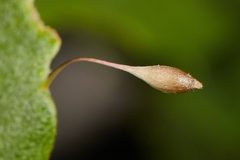
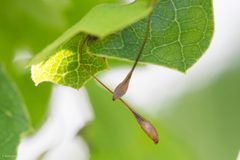
Andricus pedicellatus, commonly known as the hair stalk gall wasp, is a cynipid that induces distinctive long, spindly leaf galls on blue oaks (Quercus douglasii). The is fairly common along the Pacific coast of North America. Like other members of the Andricus, it exhibits high specificity, attacking only one or a few closely related oak species.
Pronunciation
How to pronounce Andricus pedicellatus: //ænˈdraɪ.kəs ˌped.ɪˈsɛl.ə.təs//
These audio files are automatically generated. While they are not always 100% accurate, they are a good starting point.
Identification
The hair stalk galls of A. pedicellatus are diagnostic—no other cynipid on blue oaks produces such elongated, spindly leaf galls. The galls can be distinguished from other Andricus by their slender, stalk-like form rather than the rounded, bullet-like, or clustered galls produced by such as A. dimorphus or A. pattoni. Close examination of gall on the leaf is sufficient for field identification.
Images
Appearance
The is tiny, typical of cynipid gall wasps. The is best recognized by the galls it produces: long, slender, hair-like stalks rising from the leaf surface. These spindly galls are distinctive in form and separate this species from other Andricus species that produce more rounded or clustered galls.
Habitat
Found in oak woodlands and savannas where blue oaks (Quercus douglasii) occur. The is associated with the Mediterranean-type climate of coastal California and Oregon, characterized by dry summers and moist winters. Galls develop on the leaves of trees in these open to semi-open oak-dominated landscapes.
Distribution
Pacific coast of North America, specifically California and Oregon, where blue oaks are native. The distribution corresponds to that of its primary , Quercus douglasii.
Host Associations
- Quercus douglasii - gall blue oak; produces long spindly leaf galls
Ecological Role
As a gall-inducer, the manipulates plant tissue to create a protected feeding and development chamber. The galls represent a form of plant-animal interaction where the insect directs host plant growth through chemical secretions. The ecological impacts of this interaction on individual tree or broader processes have not been quantified.
Similar Taxa
- Andricus dimorphusAlso an Andricus on oaks, but produces clustered midrib galls on chinquapin oak (Quercus muhlenbergii), not the long spindly stalk galls on blue oak
- Andricus pattoniProduces galls on post oak (Quercus stellata) leaves; gall differs from the hair stalk form of A. pedicellatus
- Disholcaspis quercusglobulusA cynipid gall wasp, but produces round, detachable twig galls on white oak (Quercus alba) rather than leaf galls
More Details
Gall formation mechanism
As with other cynipid , the female lays in leaf tissue using her ovipositor. The developing larva secretes plant growth-like that redirect plant development, causing the formation of the specialized gall structure in which the larva lives and feeds. The wasp eventually chews its way out of the mature gall.
Sources and further reading
- BugGuide
- Wikipedia
- NCBI Taxonomy
- Gall darn it! Gall insects on hickory, oak, and elm, Phylloxera caryaecaulis, Andricus palustris, Colopha ulmicola — Bug of the Week
- Cynipidae | Beetles In The Bush
- The Insects Behind the Weird Growths on Plants
- Ted C. MacRae | Beetles In The Bush | Page 8
- galls | Beetles In The Bush