
Andricus coronus
Andricus coronus is a cynipid gall wasp in the Cynipidae. Like other members of this , it induces characteristic galls on oak trees (Quercus spp.), serving as both shelter and food source for its developing larvae. The exemplifies the highly specialized relationships typical of gall wasps, where each species typically induces a distinct gall form on specific host plant tissues.
Pronunciation
How to pronounce Andricus coronus: /ˈæn.dri.kəs kəˈroʊ.nəs/
These audio files are automatically generated. While they are not always 100% accurate, they are a good starting point.
Identification
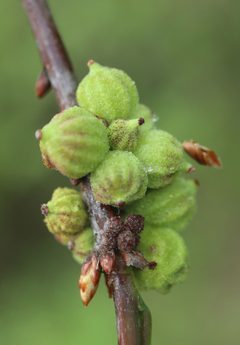
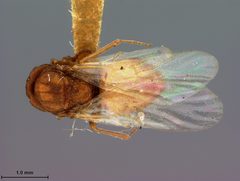
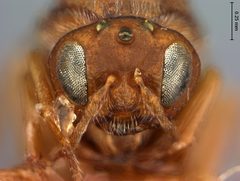
Andricus coronus can be distinguished from other Andricus by the specific of the gall it induces on oak . The is small and wasp-like, typical of cynipids, with reduced wing venation. Accurate identification to species level generally requires examination of the gall structure and host association, as adult wasps in this are morphologically similar and often require microscopic examination for definitive identification.
Images
Habitat
Found in supporting its oak trees, including deciduous forests, woodlands, and urban areas with oak plantings. The is associated with the presence of suitable Quercus species in temperate regions.
Distribution
Reported from North America based on iNaturalist observations. Specific range details beyond observation records are not well documented in available sources.
Seasonality
and oviposition timing follows patterns typical of temperate cynipid , with activity generally occurring during the growing season when oak leaves are available for gall induction. Exact for this is not well documented.
Host Associations
- Quercus - Gall induction on oak ; specific species not documented in available sources
Life Cycle
Andricus coronus exhibits the typical cynipid : females lay in oak tissues using their ovipositor, inducing gall formation. Larvae develop within the gall, feeding on specialized plant tissue. occurs within the gall, with adults emerging to reproduce. Many Andricus have complex life cycles involving alternating sexual and on different oak tissues or species, though this has not been explicitly documented for A. coronus.
Ecological Role
As a gall inducer, Andricus coronus manipulates oak plant growth to create and food resources for its offspring. The galls may serve as microhabitats for other organisms ( and ) in the oak-associated . The contributes to the exceptional diversity of gall-forming insects on oaks, which represents one of the most species-rich plant-insect interaction systems in North America.
Human Relevance
No significant direct human relevance documented. Like most cynipid , it cannot sting humans and poses no economic or health threat. The galls may be of interest to naturalists and students of plant-insect interactions.
Similar Taxa
- Andricus dimorphusAlso induces galls on oak leaves, specifically on Quercus muhlenbergii; distinguished by gall (clustered midrib galls) and specificity
- Andricus pattoniInduces galls on Quercus stellata; distinguished by gall and association
- Disholcaspis quercusglobulusForms twig galls rather than leaf galls on white oak; belongs to related with similar but different gall location
More Details
Taxonomic Note
The Andricus is one of the largest and most diverse in the Cynipidae, with hundreds of primarily associated with oaks in the Northern Hemisphere. Species-level in this group is challenging due to morphological similarity of and the taxonomic tradition of describing species based on gall characteristics.
Gall Biology
The mechanism of gall induction in cynipid involves the secretion of chemical cues that manipulate plant , causing localized proliferation and differentiation. The resulting gall structure is -specific and provides both nutrition and protection for the developing wasp larva.