
Andricus coortus
Weld, 1947
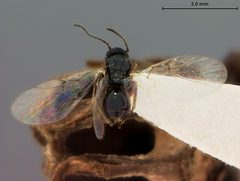
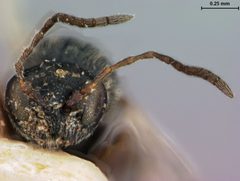
Andricus coortus is a of cynipid gall wasp described by Weld in 1947. It belongs to the Andricus, one of the most diverse genera of gall wasps associated with oaks. Species in this genus are known for inducing characteristic galls on various parts of oak trees, with each species typically producing a distinct gall on specific tissues. Like other Andricus species, A. coortus likely exhibits complex involving alternation between sexual and on different oak tissues, though specific details for this species remain poorly documented.
Pronunciation
How to pronounce Andricus coortus: /ˈændrɪkəs ˈkuːrtəs/
These audio files are automatically generated. While they are not always 100% accurate, they are a good starting point.
Identification
Identification of Andricus coortus requires examination of the specific gall it produces and its oak . The Andricus contains numerous species, many of which can only be reliably distinguished by the structure, location, and host-specificity of their galls. are small, typically 2-4 mm in length, with reduced wing venation characteristic of Cynipidae. Species-level identification of adults generally requires specialized taxonomic expertise and reference to original species descriptions.
Images
Habitat
is determined by the distribution of its oak . Andricus species are found in oak-dominated forests, woodlands, and savannas across temperate North America.
Distribution
Distribution records are sparse. Based on iNaturalist observations, the has been documented in North America, with occurrence records primarily from the eastern and central United States. The exact range boundaries remain poorly defined due to limited survey effort and taxonomic challenges in field identification.
Diet
Larvae feed on nutritive tissue within the gall structure induced on oak plants. do not feed; their mouthparts are reduced or non-functional.
Host Associations
- Quercus - gall induction ; specific host unconfirmed for A. coortus. Other Andricus species show high host specificity at the species or section level within Quercus.
Life Cycle
details specific to A. coortus are undocumented. The Andricus typically exhibits heterogony, with alternating sexual and parthenogenetic (agamic) that often produce different gall types on different plant tissues. Sexual generation galls typically form on leaves or catkins in spring, while generation galls form on buds, twigs, or acorns in summer or fall. Which generation corresponds to the name A. coortus remains unknown without reference to type material and original description.
Behavior
Females inject into oak tissue using a slender ovipositor, triggering gall formation through mechanisms involving plant manipulation. Larvae develop within the protective gall structure, pupating inside before . Adults chew exit holes to escape the gall.
Ecological Role
As a gall inducer, the creates microhabitats that support a of , , and hyperparasitoids. Galls may also influence resource allocation in oaks, though impacts are generally minor on healthy trees.
Human Relevance
No direct economic or agricultural significance. Like other cynipid gall wasps, it contributes to oak biodiversity and serves as a model system for studying plant-insect interactions and developmental .
Similar Taxa
- Andricus pattoniAnother Andricus inducing leaf galls on white oaks; distinguished by gall and specificity.
- Andricus dimorphusProduces clustered midrib galls on chinquapin oak; differs in gall structure and position on leaf.
- Disholcaspis quercusglobulusTwig-galling cynipid on white oak; belongs to different with detachable, bullet-shaped galls rather than integrated leaf or bud galls.
More Details
Taxonomic Note
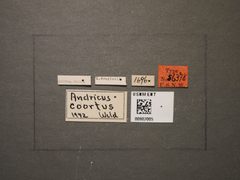
The was described by Lewis H. Weld in 1947, a prolific describer of North American Cynipidae. Many Andricus species described in this era are known only from type material and original descriptions, with limited subsequent biological study. Verification of current taxonomic status may require examination of and comparison with recent molecular phylogenetic studies of the .
Research Needs
Basic of A. coortus including gall , , type (sexual or ), and remain undocumented in accessible literature. Field observation linked to voucher specimens and would advance understanding of this species.