
Amphibolips confluenta
(Harris, 1841)
spongy oak apple gall wasp
Amphibolips confluenta, commonly known as the spongy oak apple gall wasp, is a of gall wasp in the Cynipidae. The species induces characteristic galls on oak trees (Quercus spp.) and has been recorded from multiple oak species across eastern North America. Its range extends from Ontario and Quebec in Canada through much of the eastern United States.
Pronunciation
How to pronounce Amphibolips confluenta: //æmˈfɪbəlɪps kɒnˈflʊɛntə//
These audio files are automatically generated. While they are not always 100% accurate, they are a good starting point.
Identification
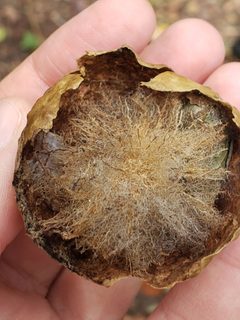
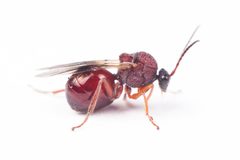
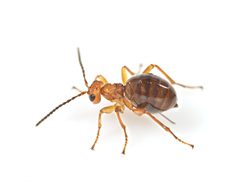
The is distinguished by the spongy oak apple galls it produces on oaks. These galls are typically rounded, fleshy structures that develop on oak leaves or twigs. The itself is small, as is typical for cynipid gall wasps, with rarely observed directly. Positive identification requires association with the characteristic gall or rearing of adults from collected galls.
Images
Habitat
Found in oak-dominated woodlands and forests where oak occur. The is dependent on the presence of suitable oak host trees for gall formation and larval development.
Distribution
Eastern North America, including Ontario and Quebec in Canada, and much of the eastern United States. The distribution corresponds closely with the combined ranges of its documented oak .
Host Associations
- Quercus buckleyi - gall documented
- Quercus coccinea - gall documented
- Quercus falcata - gall documented
- Quercus ilicifolia - gall documented
- Quercus marilandica - gall documented
- Quercus rubra - gall documented
- Quercus shumardii - gall documented
- Quercus velutina - gall documented
Life Cycle
As with other cynipid gall wasps, the involves alternation between a sexual and an (parthenogenetic) generation, though the specific details for this have not been fully documented. Larvae develop within the protective gall tissue, feeding on plant material and emerging as to mate and initiate new galls.
Behavior
females induce gall formation on oak plants through chemical and mechanical stimulation during oviposition. The resulting galls provide both nutrition and protection for developing larvae.
Ecological Role
The galls induced by this represent a form of plant manipulation that creates novel microhabitats. These structures may provide shelter for other organisms and alter resource allocation within oak trees, though specific ecological impacts have not been quantified.
Human Relevance
The spongy oak apple galls are occasionally conspicuous on ornamental oaks but are generally considered harmless to tree health. The has no significant economic impact and is primarily of interest to naturalists and entomologists studying plant-insect interactions.
Similar Taxa
- Other Amphibolips speciesSimilar gall-forming habits on oaks; identification requires examination of gall and association
- Other Cynipidae oak gall waspsNumerous cynipid induce oak galls; A. confluenta is distinguished by the spongy texture and structure of its galls
More Details
Gall characteristics
The 'spongy oak apple' gall is typically larger and more fleshy than many other oak galls, with a distinctive soft, spongy interior when mature. This structure differs from the hard, woody galls produced by many related .
Taxonomic history
The was first described by Harris in 1841 and has remained in the Amphibolips, one of the larger genera of oak gall wasps in North America.