
Larrina
Latreille, 1810
larrine wasps
Genus Guides
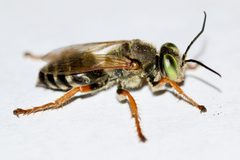
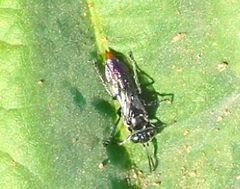
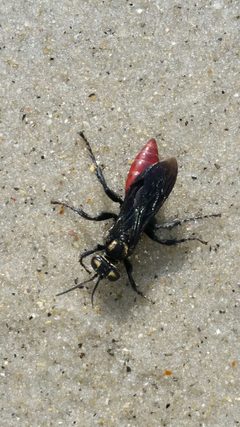
2Larrina is a subtribe of digger wasps within the Crabronidae, tribe Larrini. These solitary are characterized by reduced simple (ocelli) that appear as scars rather than functional eyes. Members of this group nest in soil and provision their young with paralyzed insect prey. The subtribe includes such as Tachytes and the remarkable giant wasp Megalara garuda from Indonesia.
Pronunciation
How to pronounce Larrina: /lɑːˈriːnə/
These audio files are automatically generated. While they are not always 100% accurate, they are a good starting point.
Identification
Members of Larrina can be distinguished from other Crabronidae by the reduction of ocelli to scar-like structures. In some such as Tachytes, these ocellar scars are distinctly shaped like golf clubs with long 'tails' running partway down the . Many have large , particularly males, with some genera such as Tachytes exhibiting vivid green that serve as a conspicuous field mark.
Images
Habitat
Soil-dwelling; nests constructed in various soil types including sand. Some utilize pre-existing burrows made by rodents, lizards, or other insects.
Distribution
Worldwide distribution with representatives on multiple continents including North America, South America, Europe, Asia, and Australia.
Diet
Females hunt and paralyze insects to provision nest . Prey includes grasshoppers (Acrididae), pygmy grasshoppers (Tetrigidae), nymphs (Tettigoniidae), and pygmy mole crickets (Tridactylidae). Prey selection varies by .
Life Cycle
Solitary nesting . Females excavate burrows ranging from 7 centimeters to nearly one meter in length, with depths of 7.5 to 70 centimeters. Multiple are arranged along the main shaft or at ends of branching tunnels. Each cell receives one to thirteen paralyzed prey items, with an laid on the final victim.
Behavior
Females hunt prey, paralyze victims with venom, grasp prey by with , and fly back to nests. Males emerge before females and initially defend small territories near female sites, later shifting to defend territories around nesting sites and nectar resources. Males perch on stones, leaves, flowers, or twigs to scan for females or rivals. Courtship involves males pouncing on females, pinning their wings, and waving antennae over the female's . Some are active at night.
Ecological Role
of orthopteran insects and related groups; may help regulate of grasshoppers and crickets.
Human Relevance
Generally docile and rarely sting humans unless handled. Some larger such as Tachytes are conspicuous and observable, providing opportunities for natural history observation and photography.
Similar Taxa
- Other CrabronidaeLarrina distinguished by reduced ocellar scars versus functional ocelli in related groups
- Other LarriniSubtribe level distinguished by specific ocellar reduction patterns and associated morphological traits