
Larra
Fabricius, 1793
Mole Cricket Hunters
Species Guides
2- Larra analis(square-headed wasp)
- Larra bicolor(mole cricket hunter)
is a of in the Crabronidae, commonly known as hunters. These wasps are distributed throughout tropical regions worldwide and have gained prominence as agents for mole cricket pests. The genus was established by Fabricius in 1793 and belongs to the Crabroninae within the tribe Larrini.
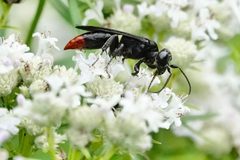
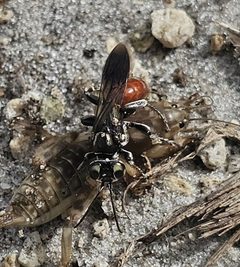
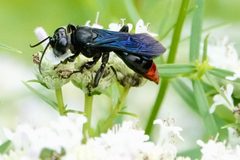
Pronunciation
How to pronounce Larra: /ˈlar.ra/
These audio files are automatically generated. While they are not always 100% accurate, they are a good starting point.
Identification
can be distinguished from other crabronid wasps by their specialized association with . Members of this possess the general morphological features of the Larrini tribe, including adaptations for hunting orthopteran prey. Specific diagnostic characteristics for the genus require examination of wing venation, antennal structure, and other fine morphological details that separate it from related genera such as Liris and Tachytes.
Images
Habitat
Tropical and subtropical regions where mole crickets ( Gryllotalpidae) occur. The are found in diverse terrestrial including grasslands, agricultural fields, and natural areas with suitable .
Distribution
Found throughout the tropics worldwide, with occurring in tropical regions of the Americas, Africa, Asia, and Oceania.
Diet
feed on nectar. Larvae are that develop on mole crickets ( Gryllotalpidae), with females provisioning nests with paralyzed prey.
Host Associations
- Gryllotalpidae - Mole crickets are the exclusive for larval development
Life Cycle
Females hunt mole crickets, paralyze them with venom, and provision underground nests with the immobilized prey. are laid on or near the paralyzed . Larvae feed externally or internally on the host, eventually killing it. Development completes with in the soil.
Behavior
Solitary hunting with specialized prey capture techniques adapted for subterranean prey. Females excavate burrows to access mole crickets in their tunnels.
Ecological Role
Important agents of mole crickets, which are significant agricultural pests in many tropical and subtropical regions. The help regulate in natural and agricultural .
Human Relevance
Used in programs for of mole crickets, particularly in turfgrass and pasture systems. The introduced Larra bicolor has been successfully established in the southeastern United States for control of species.
Similar Taxa
More Details
Biological Control Use
in this , particularly Larra bicolor, have been deliberately introduced to regions outside their native range for of species. These introductions have been documented as successful in reducing pest in managed turf and pasture systems.
Sources and further reading
- BugGuide
- Wikipedia
- GBIF taxonomy match
- iNaturalist taxon
- NCBI Taxonomy
- Catalogue of Life
- Primary Type List | Entomology Research Museum
- Global Plant Conservation’s Phase 1: The world checklist of hornworts and liverworts | Blog
- plant conservation | Blog
- flora | Blog - Part 3
- ecology | Blog - Part 16
- Pensoft blog - Part 110