
Trichiosoma
Leach, 1817
Hairy-clubhorn Sawflies
Species Guides
2- Trichiosoma lanuginosum
- Trichiosoma triangulum(Giant Birch Sawfly)
Trichiosoma is a of large-bodied in the Cimbicidae, comprising more than 30 described . These insects are commonly known as Hairy-clubhorn Sawflies, reflecting their robust, often hairy appearance. are active during summer months and are associated with woody vegetation. Larvae are solitary herbivores that feed on leaves.
Pronunciation
How to pronounce Trichiosoma: /traɪˈkaɪəsəmə/
These audio files are automatically generated. While they are not always 100% accurate, they are a good starting point.
Identification
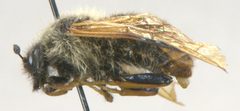
Members of Trichiosoma are large, robust with a notably hairy or velvety body surface. They possess the characteristic clubbed or thickened typical of Cimbicidae, which distinguishes them from most other sawfly . The can be separated from the related Cimbex by generally smaller size and more compact body proportions. Females have a prominent saw-like ovipositor for inserting into plant tissue.
Images
Habitat
Associated with forested and wooded environments, particularly areas containing willows, poplars, and other deciduous trees that serve as larval plants. are often found on or near host vegetation.
Distribution
Recorded from northern Europe (Denmark, Norway, Sweden) and North America including the northeastern United States (Vermont). The has a Holarctic distribution pattern.
Seasonality
are active in early to mid-summer; observations from Colorado indicate June activity.
Diet
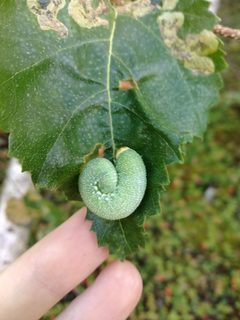
Larvae are folivorous, feeding on leaves of woody plants including willows (Salix) and poplars (Populus). do not feed.
Host Associations
- Salix - larval plantwillows
- Populus - larval plantpoplars
Life Cycle
Females insert into leaves using their saw-like ovipositor. Larvae develop as solitary feeders on foliage, resembling caterpillars in appearance and feeding . occurs in soil. emerge in summer.
Behavior
are non-aggressive and do not sting despite their -like appearance. Females are observed seeking suitable leaves for oviposition.
Ecological Role
Larvae function as herbivores in forest and riparian , consuming leaf tissue of deciduous trees. They serve as prey for various including birds and .
Human Relevance
Occasional minor defoliator of ornamental willows and poplars. are harmless and can be approached closely. Of interest to entomologists and naturalists.
Similar Taxa
More Details
Taxonomic note
Trichiosoma Leach, 1817 is the accepted name in Cimbicidae. The name has occasionally been applied in other contexts (e.g., Prosevania trichiosoma in Evaniidae), but these represent unrelated taxonomic homonyms.
Observation frequency
The is moderately well-documented on citizen science platforms, with over 3,000 observations recorded.