Leucospis affinis affinis
Say, 1824
Leucospis affinis affinis is a in the , notable for being among the largest members of its superfamily. Females are distinguished by an that curves over the , used to drill into wood and parasitize solitary nesting in pre-existing cavities. The is primarily a of bees including leafcutter bees (Megachile), (Osmia), and resin bees (Dianthidium). develop as external parasites attached to bee larvae, completing development in approximately 7–12 days before pupating within the host's .
Pronunciation
How to pronounce Leucospis affinis affinis: //luːˈkɒspɪs əˈfɪnɪs əˈfɪnɪs//
These audio files are automatically generated. While they are not always 100% accurate, they are a good starting point.
Identification
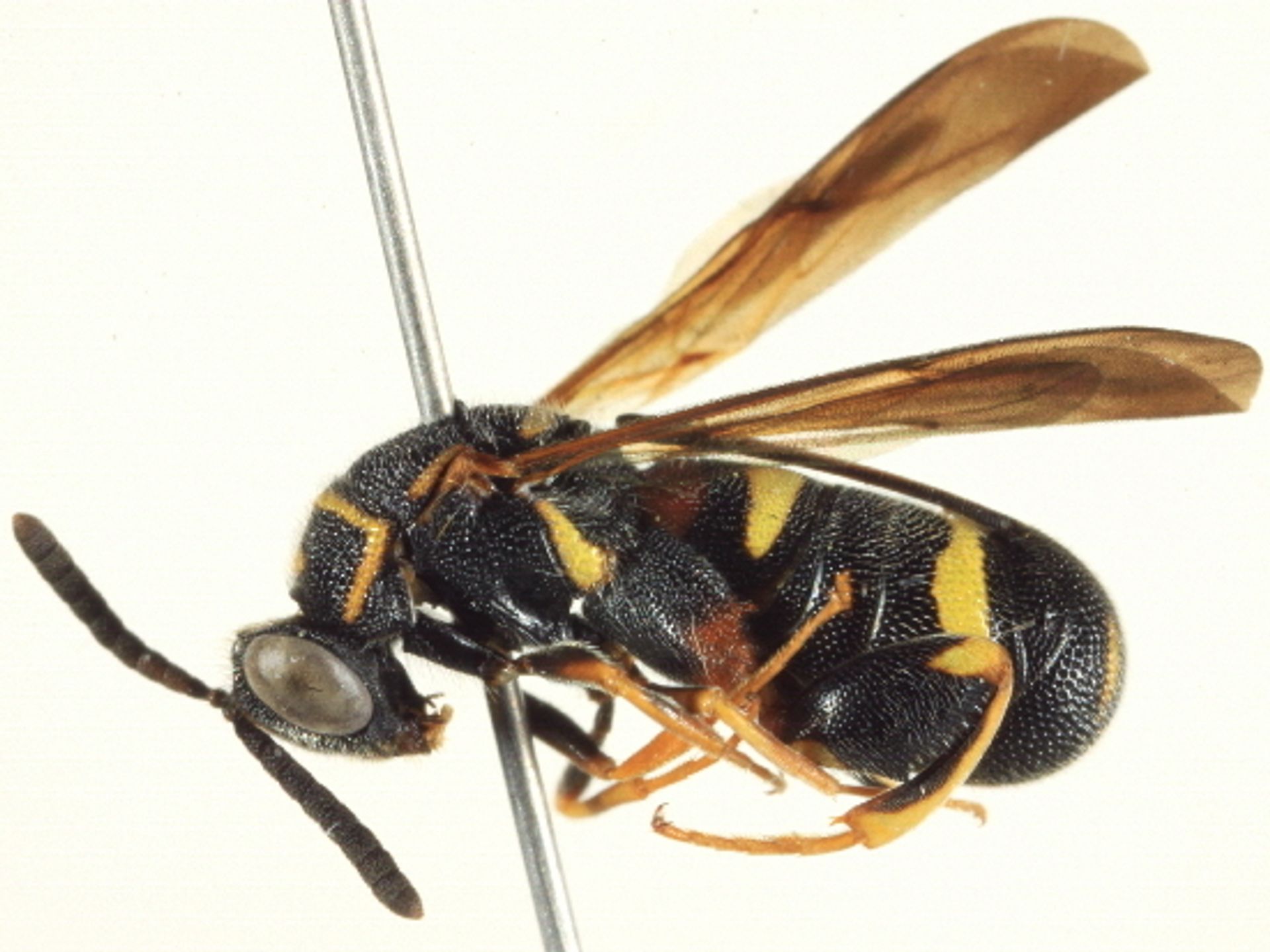
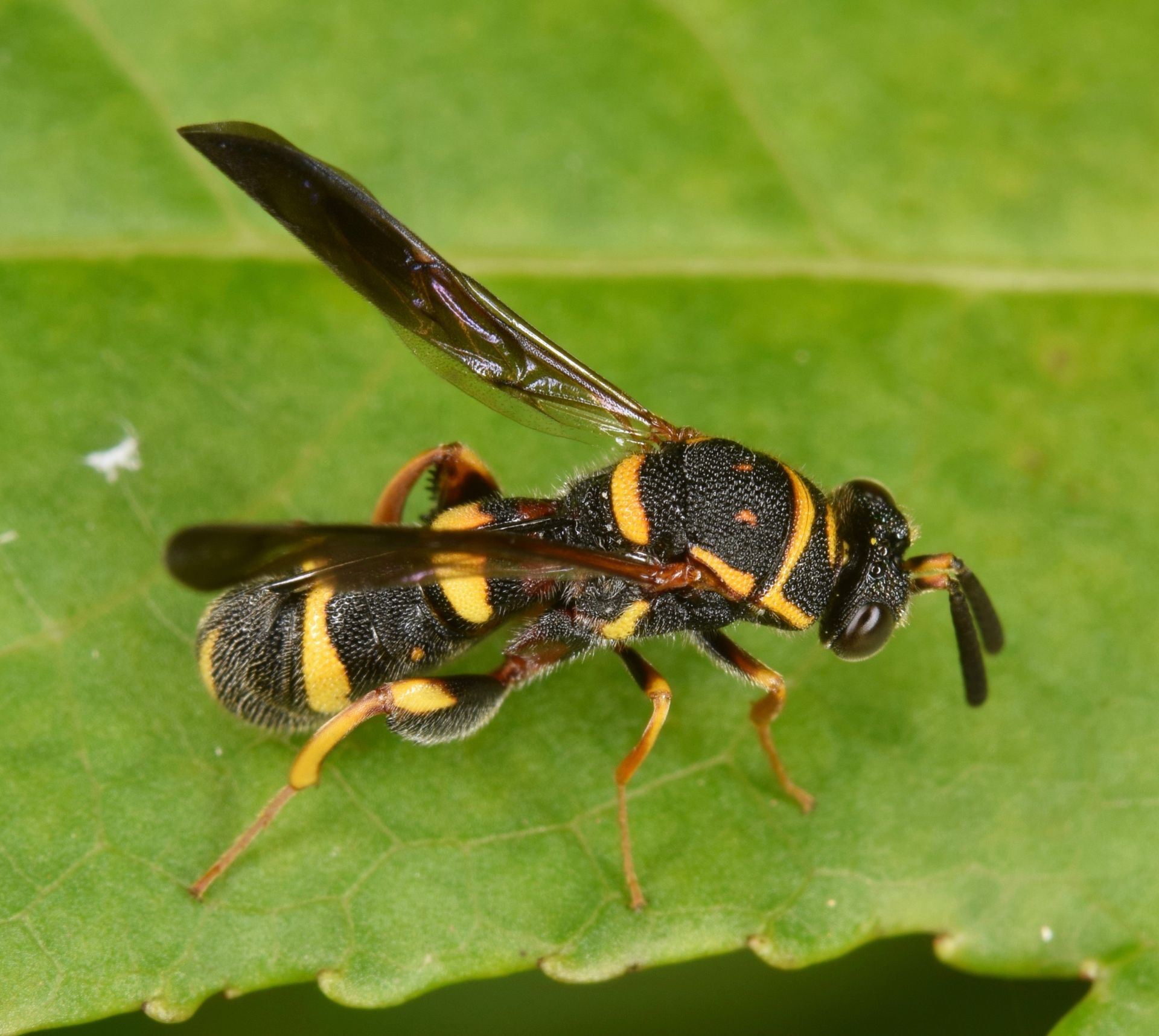
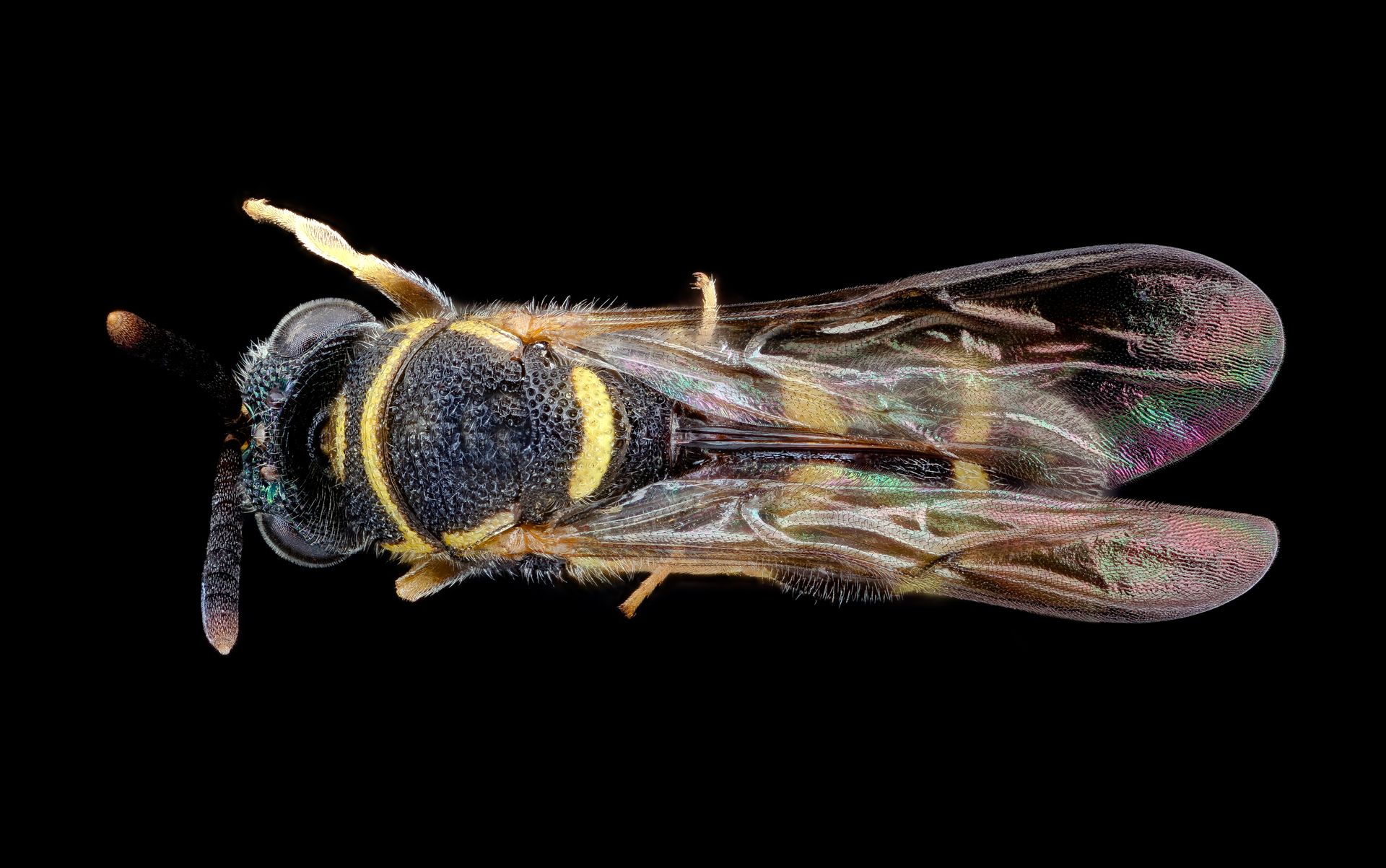
Distinguished from other by its relatively large size (3–14 mm), black and coloration resembling , and the diagnostic swollen, toothed hind characteristic of . Females possess a long, slender that curls dorsally over the —unique among chalcidoids—while males lack this structure and are smaller. fold longitudinally when at rest. Often mistaken for wasps due to similar color patterns and -folding , but the enlarged hind femora and ovipositor (in females) confirm identification.
Images
Habitat
Associated with containing nesting sites for solitary , particularly areas with dead wood, hollow twigs, and pre-existing cavities in wooden structures. Frequently observed at wooden walls, sheds, and bee hotels where (Xylocopa virginica) and establish nests. visit flowers for nectar, including wild carrot and other umbellifers.
Distribution
North America. Documented from Canada (Alberta, British Columbia, Manitoba) and the United States. The shows northward range expansion patterns, with increasing records in southeastern regions. GBIF records include Brazil (Pará), though these may represent misidentifications or related given the primarily Nearctic distribution of the .
Seasonality
active primarily in late spring through summer, coinciding with the nesting period of . In the northeastern United States, peak activity observed in September. Multiple per year possible; late-season individuals may overwinter as within host .
Diet
feed on nectar from flowers. are obligate of solitary larvae, specifically those of bees including leafcutter bees (Megachile), (Osmia), and resin bees (Dianthidium). The first larva to hatch in a destroys competing or larvae before attaching to and consuming the host bee larva.
Host Associations
- Megachile - leafcutter
- Osmia -
- Dianthidium - resin
- Xylocopa virginica - nest associateabandoned nests used by
Life Cycle
Female drills through wood or other nesting substrate using her to directly into . Eggs hatch in 2–3 days; attach externally to host bee larvae and feed as . Larval development completes in 7–12 days, followed by within 5 days inside the host's . occurs 9–14 days after pupation, or may overwinter for late-season . Developmental timing varies with host size—adult size correlates with host larva size.
Behavior
Females locate nests by tapping against wood surfaces and drumming , apparently detecting larval location through substrate vibration or chemical cues. involves drilling through solid wood up to several millimeters thick to reach host . Females may parasitize multiple host nests sequentially. When threatened, can be observed opening and closing the abdomen, possibly related to positioning. (Chrysis spp.) may attempt to parasitize leucospid in shared host nests.
Ecological Role
Significant of solitary , potentially impacting of such as and leafcutter bees. Part of a complex parasitic associated with cavity-nesting bees, including and other chalcidoids. May influence bee nesting success and in artificial bee hotels and natural cavity .
Human Relevance
Occasionally encountered by beekeepers and naturalists maintaining colonies or hotels, where it may reduce production. Not considered a pest of economic importance, but of interest in bee contexts. Provides opportunities for citizen science observation and documentation of .
Similar Taxa
- Leucospis spp.Other North share enlarged hind and general body plan; distinguished by subtle morphological differences in color pattern, body proportions, and associations. L. affinis is the most common and widespread .
- Monobia quadridensFour-toothed shares black and coloration and longitudinal -folding; distinguished by lack of swollen hind , different shape, and nest-building (rather than parasitic) .
- Vespidae (mason and potter wasps)Convergent coloration and posture; distinguished by Leucospis having only one in , enlarged hind , and (in females) the distinctive dorsally-curved .
- Chrysis spp. share metallic coloration in some and parasitic lifestyle; distinguished by rounded, compact body form, ability to roll into defensive ball, and different relationships.
More Details
Parasitoid success and host defense
The effectiveness of L. affinis is limited by length relative to substrate depth. in central cavities of wooden logs or deep in bee hotels remain beyond reach, providing a that maintains host despite pressure.
Taxonomic note
GBIF lists this as a synonym, suggesting potential taxonomic revision or consolidation with nominate L. affinis. The subspecific status requires verification against current taxonomic treatments.