
Chrysocharis prodice
(Walker, 1839)
Chrysocharis prodice is a minute in the Eulophidae, first described by Francis Walker in 1839. The Chrysocharis comprises known as parasitoids of leaf-mining insects, particularly flies (Diptera: Agromyzidae). This species is recorded from multiple Canadian provinces, indicating a northern distribution pattern. Like other eulophids, it likely plays a role in regulating of herbivorous insects in forest and agricultural .
Pronunciation
How to pronounce Chrysocharis prodice: /ˌkɹɪsoʊˈkaɹɪs proʊˈdaɪsi/
These audio files are automatically generated. While they are not always 100% accurate, they are a good starting point.
Identification
Distinguished from other Chrysocharis by combination of: metallic green-blue coloration with coppery reflections; specific antennal proportions (exact ratios require microscopic examination); wing venation patterns with specific arrangement of setae on . Separation from congenerics requires examination of male genitalia and female ovipositor structure. Distinguished from similar eulophid (e.g., Closterocerus, Derostenus) by antennal club structure and propodeal position.
Images
Appearance
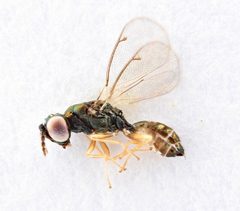
Minute , body length approximately 1–2 mm. Body predominantly metallic green or blue-green, with coppery or bronze reflections typical of the . short, with 3-segmented club. Wings reduced venation characteristic of Eulophidae, with reduced costal . Mesosoma compact; metasoma short, often appearing or with very short petiole. Legs pale yellow to light brown. large relative to size. Ocelli arranged in a triangle on vertex.
Habitat
Associated with supporting leaf-mining Diptera. Recorded from forested and semi-open environments across Canadian provinces. Likely occurs in deciduous and mixed woodlands where leaf-miners are abundant. Specific microhabitat requirements not documented.
Distribution
Canada: Alberta, British Columbia, Manitoba, New Brunswick. Distribution records suggest transcontinental northern range, though precise southern limits unknown. Absence of records from United States may reflect limited sampling rather than true absence.
Host Associations
- Agromyzidae - probable Chrysocharis is known to parasitize agromyzid leaf-miners; specific records for C. prodice not confirmed
Ecological Role
Probable of leaf-mining flies, contributing to natural of herbivorous insects in forest and potentially agricultural .
Human Relevance
Potential value in programs targeting agromyzid pests, though specific applications not documented. No known negative impacts.
Similar Taxa
- Chrysocharis nephereusCongeneric with similar metallic coloration; requires microscopic examination of antennal proportions and genitalia for separation
- Chrysocharis pentheusOverlapping distribution and similar appearance; distinguished by subtle differences in wing setation and body proportions
- Closterocerus spp.Similar minute metallic eulophids; separated by antennal club segmentation and propodeal position
More Details
Taxonomic History
Originally described by Francis Walker in 1839. Walker described numerous Chalcidoidea from material in the British Museum; type locality not specified in original description. Modern revision of North American Chrysocharis needed to clarify species boundaries.
Identification Challenges
-level identification in Chrysocharis requires specialized taxonomic expertise and access to or authoritative revisionary works. External often insufficient for definitive identification.