
Paranomada velutina
Linsley, 1939
Black-velvet Flat-Nomad
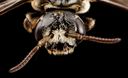
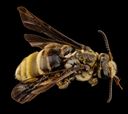
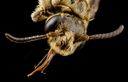
Paranomada velutina is a cuckoo bee in the Apidae, described by Linsley in 1939. It belongs to the Nomadinae, a group of bees that are (nest ) of other bees. The is known from the southwestern United States and Mexico. Like other nomadine bees, it lacks pollen-collecting structures and relies on bees to provision its young.
Pronunciation
How to pronounce Paranomada velutina: /ˌpæɹəˈnɒməˌdɑː vɪˈluːtɪnə/
These audio files are automatically generated. While they are not always 100% accurate, they are a good starting point.
Identification
Members of Paranomada can be distinguished from related nomadine by their relatively flat or depressed facial profile (hence 'Flat-Nomad' in the ) and specific details of wing venation and body sculpturing. P. velutina specifically may be separated from by subtle differences in coloration, , and possibly geographic distribution, though precise diagnostic features require examination.
Images
Habitat
Arid and semi-arid regions of the southwestern United States and adjacent Mexico. Specific associations are poorly documented, but nomadine bees generally occur in areas where their bees are active.
Distribution
United States (southwestern states) and Mexico. GBIF records indicate presence in Middle America and North America.
Host Associations
- Unknown - As a member of Nomadinae, P. velutina is a nest (cuckoo bee) that lays in the nests of other . The specific (s) are not documented in available sources. Related Paranomada species are associated with ground-nesting bees in the Apidae.
Behavior
As a cleptoparasitic , females likely enter nests to lay in provisioned by the host. The larva consumes the host's pollen/nectar provisions and typically kills the host egg or larva. are likely active during the period of their host .
Ecological Role
Acts as a regulator of its . Like other cleptoparasitic bees, it contributes to bee dynamics and may influence host nesting and distribution.
Similar Taxa
- Other Paranomada species share the flat facial profile and general body form. Differentiation requires examination of subtle morphological characters.
- Other Nomadinae (cuckoo bees)Many nomadine bees have similar slender, -like appearance and dark coloration with pale markings. Paranomada is distinguished by its depressed and facial structure.
- TriepeolusAnother of nomadine cuckoo bees with similar size and coloration; differs in facial profile and specific wing venation details.
More Details
Taxonomic history
Described by E. Gorton Linsley in 1939. The Paranomada was established to accommodate with a notably flattened or depressed facial region compared to related nomadine genera.
Observation rarity
Only 9 observations recorded on iNaturalist as of the knowledge cutoff, suggesting either genuine rarity, cryptic habits, or under-sampling of its arid range.
Sources and further reading
- BugGuide
- Wikipedia
- GBIF taxonomy match
- iNaturalist taxon
- NCBI Taxonomy
- Catalogue of Life
- About That Yellow-Legged Hornet Detected in Georgia | Bug Squad
- What is the Asian hornet invasion going to cost Europe? | Blog
- A single Asian hornet sparked the spread across Europe
- 🌿 Botanizing w/ the Webster Groves Nature Study Society (WGNSS) Botany Group at Fults Hill Prairie Nature Preserve — 27 Oct 2025 | Beetles In The Bush
- January | 2022 | Beetles In The Bush
- Campanulaceae | Beetles In The Bush