
Brachynomadini
cuckoo bees
Genus Guides
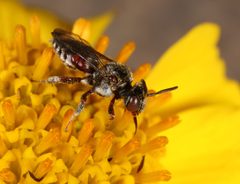
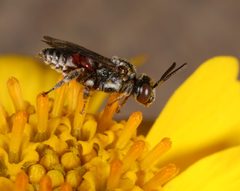
3Brachynomadini is a tribe of cleptoparasitic cuckoo bees within the Nomadinae of Apidae. The tribe contains at least five and approximately 20 described . Members are that lay in the nests of other species, primarily within the family Apidae.
Pronunciation
How to pronounce Brachynomadini: //ˌbrækɪnoʊməˈdɪnaɪ//
These audio files are automatically generated. While they are not always 100% accurate, they are a good starting point.
Identification
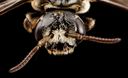
Brachynomadini can be distinguished from other Nomadinae tribes by a combination of morphological features including reduced scopae (pollen-collecting hairs), slender -like bodies, and often banded or spotted abdominal coloration. The tribe is distinguished from related tribes such as Nomadini by subtle differences in wing venation and male genitalia structure. Species-level identification requires examination of microscopic morphological characters.
Images
Distribution
Members of Brachynomadini occur in North America, with records from the United States and Mexico. The distribution spans arid and semi-arid regions including deserts and scrublands of the southwestern United States.
Host Associations
- Centris - parasitizes for Brachynomada
- Anthophora - parasitizes for some Brachynomada
- Exomalopsis - parasitizes for Paranomada
- Melissodes - parasitizes for Triopasites
Life Cycle
Brachynomadini are obligate . Females enter nests and lay in provisioned by the host. Larvae consume the host's pollen and nectar stores, and typically kill the host egg or larva. Development occurs within the host cell, with emerging to seek mates and new host nests.
Behavior
females actively search for nests, often detecting them through chemical or physical cues. They lack pollen-carrying structures and do not construct nests or provision . Males patrol areas near host nesting to locate females.
Ecological Role
As specialized , Brachynomadini regulate of their bees. They contribute to dynamics and may influence host nesting and distribution.
Human Relevance
Brachynomadini have no direct economic importance to humans. They are of interest to pollination ecologists and taxonomists studying cleptoparasitic evolution.
Similar Taxa
- Nomadinialso cleptoparasitic cuckoo bees in Nomadinae; distinguished by wing venation patterns and male genitalia
- Epeolinicleptoparasitic tribe in Nomadinae; typically parasitize different and show differences in body
- Ammobatinicleptoparasitic tribe in Nomadinae; distinguished by associations and subtle morphological differences in leg structure
More Details
Genera
The tribe comprises five : Brachynomada (the largest genus), Kelita, Paranomada, Triopasites, and the genus Brachynomada. Triopasites is notable for its highly specialized of Melissodes.
Conservation Status
No in Brachynomadini have been formally assessed for conservation status. Many species are rarely collected due to their parasitic lifestyle and dependence on specific .