
Triopasites
Linsley, 1939
Species Guides
1Triopasites is a of cuckoo bees in the Apidae, Nomadinae, and tribe Brachynomadini. The genus was described by Linsley in 1939 and contains at least two described : T. penniger (Cockerell, 1894) and T. spinifera (Rozen, 1997). As cleptoparasitic bees, species in this genus do not construct their own nests but instead lay in the nests of bees.
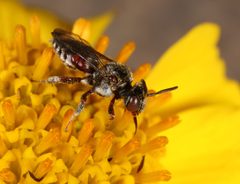
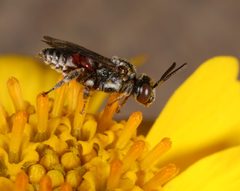
Pronunciation
How to pronounce Triopasites: /tri.oʊˈpæsɪtiːz/
These audio files are automatically generated. While they are not always 100% accurate, they are a good starting point.
Identification
Members of Triopasites can be distinguished from other Brachynomadini by specific morphological characters, though detailed diagnostic features require examination of . The genus is characterized within its tribe by particular combinations of integumental sculpturing and male genitalia structure. Definitive identification to level requires reference to the original descriptions by Cockerell (1894) for T. penniger and Rozen (1997) for T. spinifera.
Images
Distribution
The is known from North America. Triopasites penniger has been recorded from the western United States, while T. spinifera is known from more restricted localities. Specific range boundaries for both remain poorly documented due to limited collection records.
Host Associations
- Perdita - Triopasites are presumed to be of Perdita bees (Andrenidae), based on tribe-level associations in Brachynomadini, though direct records for Triopasites specifically are not well documented.
Behavior
As cleptoparasitic bees, females are expected to enter nests and deposit in provisioned by the host. The Triopasites larva likely consumes the host's pollen provisions and may kill the host egg or larva. Specific behavioral observations for this have not been published.
Ecological Role
Triopasites functions as a within , potentially influencing of its . Its role in pollination is minimal or absent, as do not collect pollen for provisioning.
Human Relevance
No direct economic or agricultural significance is documented. The is of interest primarily to systematists and researchers studying cleptoparasitic evolution in Apidae.
Similar Taxa
- BrachynomadaBoth belong to tribe Brachynomadini and share cleptoparasitic habits and general body form. Brachynomada generally differ in male genitalia structure and specific patterns of integumental punctation.
- ParanomadaAnother in Brachynomadini with which Triopasites may be confused. Paranomada typically show differences in facial markings and pronotal structure.
- NomadaThe largest and most diverse of Nomadinae; superficially similar in appearance as cleptoparasitic bees with reduced scopae. Nomada belong to tribe Nomadini and differ in wing venation, facial fovea presence, and other structural characters.
More Details
Taxonomic history
The was established by Linsley in 1939 to accommodate previously placed elsewhere in Nomadinae. The type species is Triopasites penniger, originally described as Nomada penniger by Cockerell in 1894. The second species, T. spinifera, was described by Rozen in 1997 based on material from California.
Research needs
Basic biological data including confirmed associations, nesting , and detailed distribution records are lacking for both described . The is rarely collected, with only 14 observations documented on iNaturalist as of the knowledge cutoff.