
Epeoloides
Giraud, 1863
Macropis Cuckoo Bee
Species Guides
1- Epeoloides pilosulus(Macropis Cuckoo Bee)
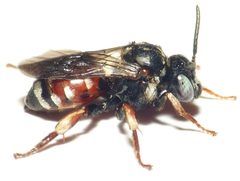
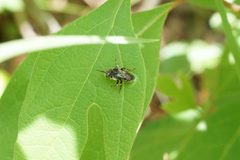
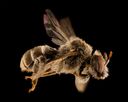
Epeoloides is a of kleptoparasitic (cuckoo) bees in the Apidae, tribe Osirini. The genus comprises two known : Epeoloides coecutiens (Fabricius, 1775) in Europe and Epeoloides pilosulus (Cresson, 1878) in North America. Both species are nest of oil-collecting bees in the genus Macropis (Melittidae), which themselves are specialized of oil-producing flowers in the genus Lysimachia. This tripartite ecological dependency—between flower, , and parasite—makes Epeoloides one of the rarest and most vulnerable bee genera in the Holarctic region.
Pronunciation
How to pronounce Epeoloides: /ˌɛpiːoʊˈlaɪdiːz/
These audio files are automatically generated. While they are not always 100% accurate, they are a good starting point.
Identification
Epeoloides can be distinguished from other cleptoparasitic bees by their association with Macropis and their relatively large size among Osirini. The two species are geographically separated: E. coecutiens occurs in Europe while E. pilosulus is restricted to North America. Females of Epeoloides possess adaptations for locating host nests by detecting floral oil odors, a trait suggested by studies of related European species.
Images
Habitat
Distribution
Holarctic distribution with two disjunct : Epeoloides coecutiens in Europe (including Finland, Estonia, and other parts of northwestern Europe, with range expansion noted since approximately 1970), and Epeoloides pilosulus in North America. E. pilosulus has been recorded from Nova Scotia, Ontario, Alberta, Connecticut, New York, Maine, and Michigan, with rediscoveries in the early 2000s after being presumed extinct in some regions.
Diet
Host Associations
- Macropis - obligate nest Principal ; E. coecutiens associated with M. europaea and M. fulvipes in Europe, E. pilosulus with M. nuda and M. patellata in North America
- Lysimachia - indirect dependency plant of Macropis bees; Epeoloides indirectly dependent on oil-producing Lysimachia flowers
Life Cycle
Behavior
Ecological Role
regulator of Macropis bees; functions as a tertiary consumer in a specialized linking oil-producing plants, oil-collecting bees, and cleptoparasitic bees. The serves as an indicator of intact, specialized pollination systems involving Lysimachia flowers.
Human Relevance
Epeoloides pilosulus is classified as Endangered by the State of Connecticut and has been assessed by COSEWIC (Committee on the Status of Endangered Wildlife in Canada). The exemplifies the conservation challenges facing specialized with complex ecological dependencies. Rediscoveries of E. pilosulus in multiple North American locations have prompted increased monitoring efforts for rare bees.
Similar Taxa
- EpeolusBoth are cleptoparasitic bees in Apidae, but Epeolus parasitizes Colletes (polyester bees) rather than Macropis, and occurs in different without the specialized Lysimachia association
- NomadaAnother cleptoparasitic , but Nomada parasitize Andrena and other , not Macropis, and lack the oil-dependency chain
Sources and further reading
- BugGuide
- Wikipedia
- GBIF taxonomy match
- iNaturalist taxon
- NCBI Taxonomy
- Catalogue of Life
- conservation | Blog - Part 13
- pollinators | Blog - Part 2
- entomology | Blog - Part 10
- Biology of the Cleptoparasitic Bee Epeoloides coecutiens (Hymenoptera: Apidae: Osirini)
- The Rare Cleptoparasitic Bee Epeoloides pilosula (Hymenoptera: Apoidea: Apidae) Discovered in Nova Scotia, Canada, with Distributional Notes
- Epeoloides pilosulus (Cresson) Rediscovered in Michigan, with Notes on the Distribution and Status of its Macropis hosts.
- A new western Canadian record of Epeoloides pilosulus (Cresson), with discussion of ecological associations, distribution and conservation status in Canada
- Distribution and co-existence of the <i>Macropis</i> species and their cleptoparasite <i>Epeoloides coecutiens</i> (Fabr.) in NW Europe (Hymenoptera: Apoidea, Melittidae and Apidae)
- Description of immature stages of cleptoparasitic bees <i>Epeoloides coecutiens</i> and <i>Leiopodus trochantericus</i> (Hymenoptera: Apidae: Osirini, Protepeolini) with remarks to their unusual biology
- Figure 1 from: Sheffield C, Heron J (2018) A new western Canadian record of Epeoloides pilosulus (Cresson), with discussion of ecological associations, distribution and conservation status in Canada. Biodiversity Data Journal 6: e22837. https://doi.org/10.3897/BDJ.6.e22837
- Figure 2 from: Sheffield C, Heron J (2018) A new western Canadian record of Epeoloides pilosulus (Cresson), with discussion of ecological associations, distribution and conservation status in Canada. Biodiversity Data Journal 6: e22837. https://doi.org/10.3897/BDJ.6.e22837
- Figure 6b from: Sheffield C, Heron J (2018) A new western Canadian record of Epeoloides pilosulus (Cresson), with discussion of ecological associations, distribution and conservation status in Canada. Biodiversity Data Journal 6: e22837. https://doi.org/10.3897/BDJ.6.e22837
- Figure 3 from: Sheffield C, Heron J (2018) A new western Canadian record of Epeoloides pilosulus (Cresson), with discussion of ecological associations, distribution and conservation status in Canada. Biodiversity Data Journal 6: e22837. https://doi.org/10.3897/BDJ.6.e22837
- Figure 4 from: Sheffield C, Heron J (2018) A new western Canadian record of Epeoloides pilosulus (Cresson), with discussion of ecological associations, distribution and conservation status in Canada. Biodiversity Data Journal 6: e22837. https://doi.org/10.3897/BDJ.6.e22837
- Figure 7 from: Sheffield C, Heron J (2018) A new western Canadian record of Epeoloides pilosulus (Cresson), with discussion of ecological associations, distribution and conservation status in Canada. Biodiversity Data Journal 6: e22837. https://doi.org/10.3897/BDJ.6.e22837
- Supplementary material 1 from: Sheffield C, Heron J (2018) A new western Canadian record of Epeoloides pilosulus (Cresson), with discussion of ecological associations, distribution and conservation status in Canada. Biodiversity Data Journal 6: e22837. https://doi.org/10.3897/BDJ.6.e22837
- Supplementary material 2 from: Sheffield C, Heron J (2018) A new western Canadian record of Epeoloides pilosulus (Cresson), with discussion of ecological associations, distribution and conservation status in Canada. Biodiversity Data Journal 6: e22837. https://doi.org/10.3897/BDJ.6.e22837
- Figure 6a from: Sheffield C, Heron J (2018) A new western Canadian record of Epeoloides pilosulus (Cresson), with discussion of ecological associations, distribution and conservation status in Canada. Biodiversity Data Journal 6: e22837. https://doi.org/10.3897/BDJ.6.e22837