
Bactericera antennata
(Crawford, 1910)
Rudbeckia Triozid
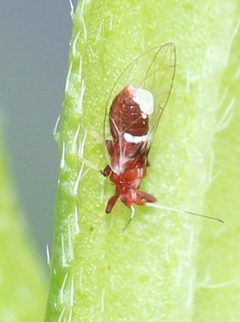
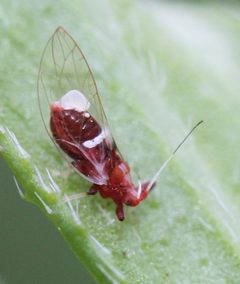
Bactericera antennata is a in the Triozidae, commonly known as the Rudbeckia Triozid. It is a small, plant-feeding insect in the order Hemiptera, related to aphids and whiteflies. The species is distributed across much of North America with records from numerous U.S. states and Canadian provinces. As with most psyllids, it feeds by penetrating plant phloem and sucking sap.
Pronunciation
How to pronounce Bactericera antennata: //bækˈtɛrɪˌsɛrə ænˈtɛnətə//
These audio files are automatically generated. While they are not always 100% accurate, they are a good starting point.
Images
Distribution
Widespread across North America. Documented in the United States from Alabama, Arizona, Arkansas, California, Colorado, Delaware, Florida, Georgia, Idaho, Illinois, Indiana, Iowa, Kansas, Kentucky, Louisiana, Maine, Massachusetts, Michigan, Minnesota, Mississippi, Missouri, Montana, Nebraska, Nevada, New Hampshire, New Jersey, New Mexico, New York, North Carolina, North Dakota, Ohio, Oklahoma, Oregon, Pennsylvania, Rhode Island, South Carolina, South Dakota, Tennessee, Texas, and Wyoming. Also recorded in Canada from Alberta, Ontario, and the Northwest Territories.
Host Associations
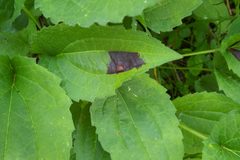
- Rudbeckia - plant 'Rudbeckia Triozid' suggests association with this
Sources and further reading
- BugGuide
- GBIF taxonomy match
- iNaturalist taxon
- Catalogue of Life
- UC Davis Researcher Targeting Zebra Chip: It's Not a Chip You Want | Bug Squad
- Bug Eric: It's Always Something....
- Psyllid Movements Revealed Via Gut Content Analysis
- Wasps Used to Combat Citrus Greening Disease are Unlikely to Threaten Non-target Insects
- Phocus on Phyllobrotica | Beetles In The Bush
- When is a locust borer not a locust borer? | Beetles In The Bush