
Arytaina genistae
(Latreille, 1804)
Broom Psyllid
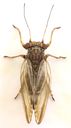
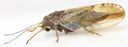
Arytaina genistae, commonly known as the Broom Psyllid, is a jumping plant louse in the Psyllidae. The is native to Europe and has been introduced to North America, where it has become established across much of the United States. It is associated with brooms (Genista and Cytisus species) as its plants. The species is of interest both as a potential agent for brooms and as a pest of ornamental and cultivated broom species.
Pronunciation
How to pronounce Arytaina genistae: /ˌæɹ.ɪˈteɪ.nə dʒɪˈnɪs.teɪ/
These audio files are automatically generated. While they are not always 100% accurate, they are a good starting point.
Images
Habitat
Associated with broom plants (Fabaceae: Genista and Cytisus ), occurring in open, sunny including heathlands, grasslands, roadsides, and disturbed areas where plants grow.
Distribution
Native to Europe (including Austria, Belarus, Bulgaria); introduced and established in North America with records from across the continental United States including Alabama, Alaska, Arizona, Arkansas, California, Colorado, Delaware, Florida, Georgia, Idaho, Illinois, Indiana, Iowa, Kansas, Kentucky, Louisiana, Maine, Massachusetts, Michigan, Minnesota, Montana, Maryland, Mississippi, Missouri, North Carolina, North Dakota, Nebraska, Nevada, New Hampshire, New Jersey, New Mexico, New York, Ohio, Oklahoma, Oregon, Pennsylvania, Rhode Island, South Carolina, South Dakota, Tennessee, and Texas.
Diet
Feeds on phloem sap of broom plants (Genista and Cytisus , Fabaceae).
Host Associations
- Genista - primary
- Cytisus - primary
Ecological Role
Herbivore specialized on broom plants; may contribute to of its plants. In introduced ranges, may affect broom or become pest of native and ornamental brooms.
Human Relevance
Studied as a potential agent for Scotch broom (Cytisus scoparius) and related weedy brooms. May also damage ornamental broom plantings.
Similar Taxa
- Arytainilla spartiophilaAlso feeds on brooms; A. genistae can be distinguished by morphological features of the genitalia and wing venation, though field identification is difficult.
- Other Arytaina species-level characters include forewing with distinct pterostigma and Rs reaching wing margin; identification requires examination of male parameres and female proctiger.