
Arytainilla spartiophila
(Foerster, 1848)
Broom psyllid
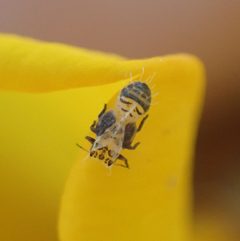
Arytainilla spartiophila is a (Hemiptera: Psyllidae) introduced as a agent for Scotch broom (Cytisus scoparius). It feeds on phloem sap of its plant and has been subject to post-establishment host specificity studies to assess safety and efficacy. The is native to Europe and has been introduced to other regions for biocontrol purposes.
Pronunciation
How to pronounce Arytainilla spartiophila: /ˌɛərɪˈteɪnɪlə ˌspɑːrtɪˈɒfɪlə/
These audio files are automatically generated. While they are not always 100% accurate, they are a good starting point.
Identification
A small requiring microscopic examination for definitive identification; distinguished from and other psyllids by association with Cytisus scoparius and specific morphological characters of the Psyllidae .
Images
Habitat
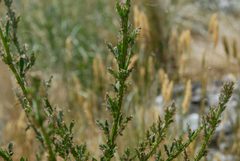
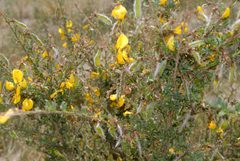
Vegetation dominated by Scotch broom (Cytisus scoparius), the sole known plant.
Distribution
Native to Europe; introduced to regions where Scotch broom is , including parts of Australia (AUTAU), New Zealand, and North America.
Diet
Phloem-feeding on Scotch broom (Cytisus scoparius).
Host Associations
- Cytisus scoparius - primary Scotch broom; sole confirmed for development and
Ecological Role
agent for Scotch broom (Cytisus scoparius), reducing plant through feeding damage.
Human Relevance
Used intentionally as a agent to manage Scotch broom, an plant in multiple countries. Subject to regulatory assessment for specificity before and after establishment.
Similar Taxa
- Arytainilla genistae with similar ; distinguished by plant associations (Genista spp. vs. Cytisus scoparius)
- Other Arytainilla speciesRequire morphological examination and plant verification for differentiation