
Ctenarytaina spatulata
Taylor, 1997
Rose Gum Psyllid
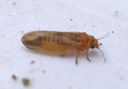
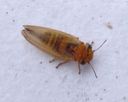
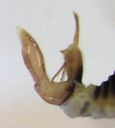
Ctenarytaina spatulata is a in the Aphalaridae, described by Taylor in 1997. It is associated with Eucalyptus and has been introduced to multiple continents beyond its native Australian range. The species has established in Europe, North America, South America, and Oceania. It is one of numerous insects linked to global forestry trade, particularly involving eucalyptus plantations.
Pronunciation
How to pronounce Ctenarytaina spatulata: /tɛnəɹɪˈtaɪnə spætˈjuːlətə/
These audio files are automatically generated. While they are not always 100% accurate, they are a good starting point.
Images
Distribution
Native to Australia (New South Wales, South Australia, Tasmania, Victoria). Introduced to Europe (France, Italy, Portugal, Spain), North America (USA, California), South America (Brazil, Paraná, Uruguay), and New Zealand. GBIF records indicate additional presence in numerous US states.
Host Associations
- Eucalyptus - -level association; specific Eucalyptus not specified in available sources
Human Relevance
Documented as an insect established in Chile and other countries, associated with forestry and agriculture . Part of the broader pattern of Hemiptera introductions linked to global eucalyptus trade.
More Details
Invasion History Context
Ctenarytaina spatulata is among approximately 600 non-native insect established in continental Chile, with most corresponding to Hemiptera from Palaearctic origin linked to agriculture and forestry. Non-native insect introductions to Chile began immediately after European arrival and accelerated markedly after 1950, coinciding with post-World War II agricultural and forestry development and increased intercontinental air traffic.