
Phylloxerina nyssae
(Pergande, 1904)
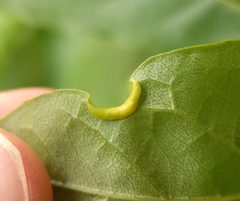
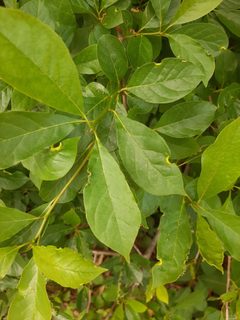
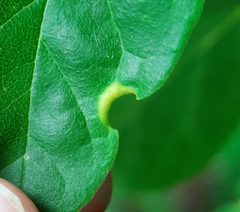
Phylloxerina nyssae is a minute gall-forming phylloxerid that induces distinctive yellowish-white crescent-shaped galls along the leaf margins of Nyssa sylvatica (black tupelo or sour gum). are approximately 1 mm in length with sucking mouthparts positioned between the first pair of legs. The reproduces asexually within galls, with females producing dozens of pill-shaped translucent . occurs as wax-covered individuals concealed in bark crevices and craggy trunk folds. While the gall formation causes cosmetic damage to foliage, the tree remains otherwise healthy.
Pronunciation
How to pronounce Phylloxerina nyssae: /fɪloʊˈzɛrɪnə ˈnɪsi/
These audio files are automatically generated. While they are not always 100% accurate, they are a good starting point.
Identification
Look for yellowish-white crescent-shaped galls along leaf margins of Nyssa sylvatica, typically at branch tips. Galls are hollow pockets containing tiny yellow insects. individuals appear as small white waxy tufts on bark. Distinguished from other gall-forming insects by specificity to Nyssa and the characteristic marginal leaf curl galls rather than stem or petiole galls.
Images
Habitat
Associated with Nyssa sylvatica (black tupelo, sour gum) in eastern North American forests and managed landscapes; stages occupy protected bark crevices and rough trunk patches.
Distribution
Eastern North America, where tree Nyssa sylvatica occurs.
Seasonality
Galls form early in the growing season on new leaf growth; wax-covered stages present on bark during autumn through winter.
Diet
Feeds on sap from leaf of Nyssa sylvatica using .
Host Associations
- Nyssa sylvatica - gall formation on leavesInduces crescent-shaped marginal galls; causes cosmetic damage but tree remains healthy
Life Cycle
within galls; females produce without male contribution. stage consists of wax-covered individuals on bark. Spring leads to gall formation on new foliage.
Ecological Role
Gall formation creates protected microhabitats for the ; limited impact on tree health.
Human Relevance
Minor pest of ornamental Nyssa sylvatica; causes aesthetic damage through leaf distortion but does not threaten tree survival.
Similar Taxa
- Phylloxera vitifoliaeCongeneric grape phylloxera; differs in (Vitis spp.) and root/stem gall formation rather than leaf marginal galls
- Grylloprociphilus imbricatorWoolly beech aphid with similar waxy appearance; differs in (Fagus) and lack of discrete crescent leaf galls