
Grylloprociphilus imbricator
(Fitch, 1851)
Beech Blight Aphid, Woolly Beech Aphid, Boogie-Woogie Aphid
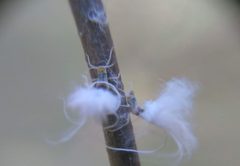
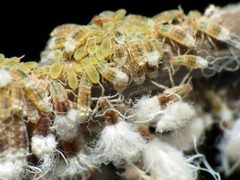
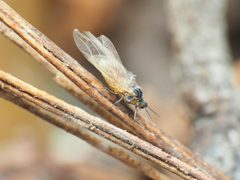
Grylloprociphilus imbricator, commonly known as the beech blight aphid or boogie-woogie aphid, is a small sap-feeding insect in the Aphididae. It forms dense colonies on American beech trees (Fagus grandifolia), covering branches with thick blankets of fluffy white wax produced from specialized abdominal glands. The exhibits a complex involving both beech and cypress , with parthenogenetic on beech and root-feeding stages on cypress. When disturbed, colonies perform a distinctive synchronized swaying that gives rise to their .
Pronunciation
How to pronounce Grylloprociphilus imbricator: /ɡrɪloʊproʊˈsɪfɪləs ˌɪmbrɪˈkeɪtər/
These audio files are automatically generated. While they are not always 100% accurate, they are a good starting point.
Identification
Identified by dense colonies on American beech branches covered with exceptionally thick, fluffy white wax. Distinguished from other woolly aphids by specificity (American beech), the extreme abundance of wax production, and the characteristic "boogie-woogie" swaying when disturbed. The fungus Scorias spongiosa often forms conspicuous black sponge-like masses beneath colonies, providing an indirect identification cue.
Images
Habitat
Deciduous forests dominated by American beech (Fagus grandifolia). Colonies establish on small branches and undersides of leaves. Some complete part of their on roots of swamp cypress (Taxodium ) in wetland environments.
Distribution
Eastern North America, associated with the range of American beech (Fagus grandifolia). Documented from Vermont and broadly distributed across the United States within the tree's range.
Seasonality
overwinter on beech bark. Nymphs hatch in spring, developing through wingless and winged stages. Colonies grow from small numbers in spring to thousands by late autumn. Activity ceases with onset of winter.
Diet
Phloem sap from vascular tissues of trees, specifically American beech (Fagus grandifolia) for aerial colonies and cypress (Taxodium ) roots for subterranean stages.
Host Associations
- Fagus grandifolia - Primary Aerial colonies on branches and leaves; site of sexual and parthenogenetic
- Taxodium - Secondary Root-feeding stage; winged migrants settle on roots in soil
Life Cycle
Complex with alternation. Begins with on beech bark. Eggs hatch into nymphs that develop into wingless parthenogenetic females on beech. These produce offspring that develop into winged . Some winged adults remain on beech and continue parthenogenetic ; others migrate to swamp cypress, enter soil, and feed on roots. Root-feeding stages reproduce parthenogenetically. Return to beech occurs, with producing overwintering eggs.
Behavior
When disturbed, colonies perform a synchronized swaying or "dancing" , rhythmically waving wax-covered in the air. This group response is thought to confuse or distract . Wingless nymphs and also function as soldiers, attacking intruders with their . Soldiers have been observed stabbing caterpillars and other threats, causing them to fall from branches. The defensive stinging sensation has been reported in human encounters.
Ecological Role
Primary consumer converting beech phloem sap into . Honeydew supports growth of fungus Scorias spongiosa, which forms dense sponge-like masses that may reduce in trees and suppress beech seedling survival beneath infested trees. Serves as prey for various , though waxy secretions and defensive provide protection.
Human Relevance
Not a direct agricultural or medical pest. can cause aesthetic damage to ornamental beech trees through accumulation. Dense colonies and associated fungal growth may impact forest by reducing survival of beech seedlings. The defensive sting from soldier aphids can cause burning and stinging sensations upon contact. Subject of scientific interest due to complex , specialized relationships, and remarkable collective defensive .
Similar Taxa
- Other woolly aphids (Eriosomatinae)Produce waxy secretions but differ in associations, wax , and lack the distinctive synchronized swaying
- Prociphilus speciesRelated in same tribe but associated with different trees and lacking the extreme wax production and defensive dancing
More Details
Defensive soldiers
Wingless nymphs serve as soldiers that attack and intruders with stylets, a rare among aphids that has been experimentally documented against caterpillars
Sooty mold symbiosis
The fungus Scorias spongiosa depends on honeydew and forms unique sponge-like fruiting bodies; this interaction may represent a specialized three-way relationship with cascading effects on forest dynamics