
Phylloxerina
Börner, 1908
Species Guides
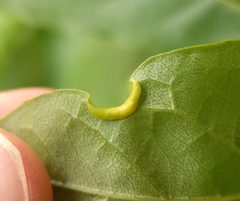
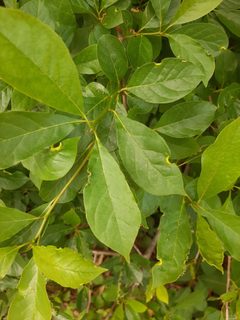
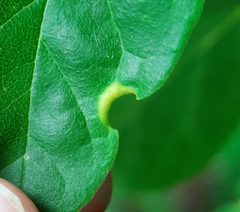
1Phylloxerina is a of phylloxerids—small, sap-sucking true bugs in the Phylloxeridae. These insects are closely related to aphids and are known for inducing distinctive leaf galls on plants. The genus includes such as Phylloxerina nyssae, which forms crescent-shaped galls on black tupelo (Nyssa sylvatica). Phylloxerids are morphologically unusual among Sternorrhyncha, with wax-covered bodies and complex involving both gall-dwelling and bark-dwelling . The genus is native to northern North America.
Pronunciation
How to pronounce Phylloxerina: //ˌfɪl.ɒkˈsɪə.rɪ.nə//
These audio files are automatically generated. While they are not always 100% accurate, they are a good starting point.
Identification
Distinguished from aphids (Aphididae) by the position of mouthparts between the forelegs rather than on the surface of the . Differs from adelgids (Adelgidae) by gall-forming on broadleaf trees rather than conifers. Identification to level requires examination of gall and association: Phylloxerina nyssae produces distinctive crescent-shaped marginal leaf galls on Nyssa sylvatica, while other species are associated with willows (Salix) and other hosts.
Images
Habitat
Deciduous forests and managed landscapes where trees occur. Gall-dwelling develop within curled leaf margins; generations inhabit protected bark crevices and rough patches on trunks and branches.
Distribution
Northern North America, including the United States and southern Canada. Records from Sweden and Norway suggest possible introduced or broader native range in northern Europe.
Seasonality
Gall-forming activity occurs during spring and early summer when leaves are developing. as wax-covered stages on bark, with timed to leaf flush in subsequent growing season.
Diet
Phloem sap extracted from plants using .
Host Associations
- Nyssa sylvatica - obligateForms crescent-shaped marginal leaf galls; primary for Phylloxerina nyssae
- Salix - obligate for Phylloxerina capreae and related
Life Cycle
Complex with multiple . predominates: females within galls produce parthenogenetically. Early season gall-dwelling generations develop within curled leaf margins, feeding and reproducing in protected pockets. As autumn approaches, specialized forms migrate to bark, where they secrete protective wax and enter . may occur in some , though this remains poorly documented.
Behavior
Induces gall formation by manipulating plant development through chemical cues released during feeding. Gall formation redirects leaf growth to create hollow, enclosed chambers that protect developing insects from and environmental stress. individuals aggregate in bark crevices and produce conspicuous wax tufts.
Ecological Role
Herbivore that induces plant galls, creating localized nutrient sinks and altering leaf architecture. Serves as prey for and , though gall structure provides substantial protection. Honeydew production may support growth and attendance, though this is less pronounced than in aphids.
Human Relevance
Minor aesthetic concern in ornamental plantings of black tupelo due to gall-induced leaf distortion; does not cause significant tree damage or mortality. No economic importance in agriculture or forestry.
Similar Taxa
- AphididaeSimilar small size and sap-feeding habit; distinguished by mouthpart position and typically more complex cornicle structures
- AdelgidaeSimilar wax-covered bodies and ; distinguished by association with conifers rather than broadleaf trees, and by absence of gall formation on most
- PhylloxeraCongeneric in same ; distinguished by associations (grape, hickory, pecan) and gall