
Phylloxera querceti
Pergande, 1904
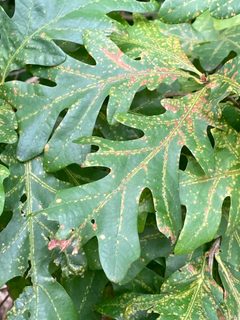
Phylloxera querceti is a gall-forming insect in the Phylloxeridae, closely related to aphids. The induces abnormal plant growths (galls) on oak species (Quercus), within which it develops and feeds. Like other phylloxerans, it has a complex involving both sexual and parthenogenetic , with hatching in spring to produce fundatrices that initiate gall formation. The specific associations and gall distinguish it from such as the economically significant grape phylloxera (Daktulosphaira vitifoliae).
Pronunciation
How to pronounce Phylloxera querceti: //ˌfɪlɒkˈsɪərə kwɜːrˈseɪtaɪ//
These audio files are automatically generated. While they are not always 100% accurate, they are a good starting point.
Identification
Distinguished from other Phylloxera primarily by association with oaks (Quercus spp.) rather than pecans, hickories, or grapes. Gall and location on host plant may provide additional diagnostic characters. Molecular identification may be required to separate from morphologically similar . The Phylloxera is separated from Daktulosphaira (grape phylloxera) by taxonomic revision; P. querceti remains in Phylloxera sensu stricto.
Images
Appearance
Tiny, soft-bodied insect with . are minute, typically less than 1 mm in length. Winged forms possess delicate, membranous wings. Body form is generally pear-shaped to oval, resembling small aphids. Coloration varies by life stage and form, with nymphs and forms often pale yellow to greenish.
Habitat
Associated with oak forests and woodlands where Quercus occur. Found on leaves, twigs, and young growth of oak trees. Specific microhabitat requirements relate to presence of suitable host tissue for gall induction, typically new growth during spring bud break.
Distribution
Native to North America. Distribution corresponds with range of oak . Specific locality records are sparse; documented observations exist in the United States. Precise range boundaries are poorly documented due to limited survey effort and taxonomic confusion with related species.
Seasonality
hatch in spring coincident with bud break. Gall formation occurs during spring and early summer. Winged emerge from galls in late spring to summer. Sexual forms and egg-laying occur in late summer to fall, with eggs deposited in bark crevices to overwinter.
Diet
Phloem sap of oak (Quercus). Feeding occurs within protective galls induced on plant tissues. Nymphs and extract plant fluids using .
Host Associations
- Quercus - obligate plant for gall formation and development; specific oak not definitively documented in available sources
Life Cycle
Complex heterogonic with alternating parthenogenetic and sexual . hatch in spring to produce fundatrices (stem mothers) that induce galls on new oak growth. Fundatrices reproduce parthenogenetically within galls, producing offspring that develop into winged forms. These disperse and produce additional generations. Sexual forms appear in fall, mate, and females deposit overwintering eggs in bark crevices. Multiple generations may occur within a growing season depending on climate and availability.
Behavior
Induces gall formation through chemical secretions during feeding on plant tissue. Lives enclosed within galls for most of , feeding on phloem sap. Winged emerge from cracked galls to disperse to new host tissue. Limited mobility outside of host plant; primarily occurs via winged forms.
Ecological Role
Gall formation creates and food source for and . Galls may serve as sensitive bioindicators of environmental pollutants. Phylloxeran feeding can reduce plant vigor in heavy , though oaks generally tolerate galling without significant long-term damage. Contributes to biodiversity of gall-associated .
Human Relevance
No direct economic significance documented. Not a pest of cultivated crops. Research interest in gall formation mechanisms and potential use of galls as pollution bioindicators. May be confused with economically important phylloxerans during identification.
Similar Taxa
- Phylloxera caryaecaulisAlso in Phylloxera, but associated with hickory (Carya) rather than oak; gall and plant separate the
- Phylloxera notabilisPecan-feeding causing shoot and nut galls; distinguished by association with Carya illinoinensis
- Phylloxera devastratrixAnother pecan leaf phylloxera; differs in gall location (leaves only) and specificity
- Daktulosphaira vitifoliaeFormerly classified in Phylloxera; grape phylloxera is devastating vineyard pest, distinguished by (Vitis) and taxonomic revision to separate
More Details
Taxonomic History
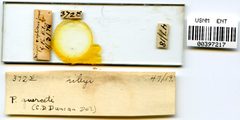
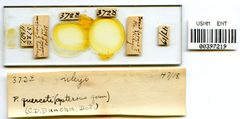
P. querceti was described by Pergande in 1904. The Phylloxera has undergone significant taxonomic revision, with the grape phylloxera removed to Daktulosphaira. boundaries within remaining Phylloxera remain poorly resolved and may require molecular study.
Research Potential
Galls induced by phylloxerans and other insects concentrate environmental contaminants, making them potentially useful as bioindicators of heavy metal and pollutant accumulation in forest .
Sources and further reading
- BugGuide
- GBIF taxonomy match
- iNaturalist taxon
- Catalogue of Life
- Insects and mites that feed on leaves - AgriLife Extension Entomology
- Managing Insect and Mite Pests of Commercial Pecans in Texas - AgriLife Extension Entomology
- Meet 'The Moth Man' at Bohart Museum's Moth Night | Bug Squad
- A Victory for the Bees | Bug Squad
- Gall darn it! Gall insects on hickory, oak, and elm, Phylloxera caryaecaulis, Andricus palustris, Colopha ulmicola — Bug of the Week
- grape phylloxera Archives - Entomology Today