
Phylloxera caryaeglobuli
Walsh, 1863
hickory phylloxeran, hickory phylloxera
Phylloxera caryaeglobuli is a small, soft-bodied, gall-forming insect closely related to aphids. It induces distinctive globular galls on hickory leaves and petioles, particularly on mockernut hickory. The has a complex involving parthenogenetic within galls and winged stages. It overwinters as deposited on bark or near old galls.
Pronunciation
How to pronounce Phylloxera caryaeglobuli: //fɪˈlɒksərə ˌkɛriəˈɡloʊbjuːlaɪ//
These audio files are automatically generated. While they are not always 100% accurate, they are a good starting point.
Identification
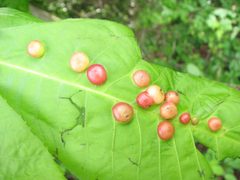
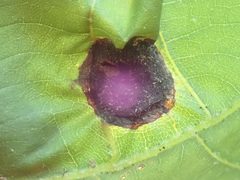
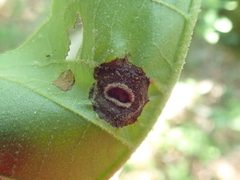
Identified primarily by the characteristic globular, marble-shaped galls on hickory leaves and petioles. Galls are green to reddish, hollow, and range from small swellings to prominent globes. The galls split open in late May to release winged . Distinguished from other phylloxera by specificity (hickory) and gall .
Images
Appearance
Tiny, soft-bodied sucking insect with needle-like mouthparts. are winged during phases. Nymphs are minute and pale. The is most readily identified by the galls it produces rather than direct examination of the insect itself.
Habitat
Deciduous forests and landscapes containing hickory trees, particularly mockernut hickory (Carya tomentosa). Occurs on leaf blades and petioles of trees. Requires expanding leaf tissue for gall initiation during spring bud break.
Distribution
Eastern North America; documented on hickory trees in regions where mockernut hickory and related occur. Specific range boundaries not detailed in available sources.
Seasonality
hatch during spring bud break. Galls form as leaves expand. Winged emerge from galls in late May. Second develops on leaf undersurfaces. Sexual forms mate and lay eggs in late season.
Diet
Phloem sap extracted from hickory leaf and petiole tissue using .
Host Associations
- Carya tomentosa - mockernut hickory; primary documented
- Carya spp. - hickory generally
Life Cycle
Overwinters as on bark or near old galls. Spring coincides with bud break. Fundatrices (foundress females) initiate galls on expanding leaves and reproduce parthenogenetically, laying hundreds to over a thousand eggs within the hollow gall. Nymphs develop inside galls, eventually becoming winged forms that exit when galls split open in late May. These disperse to leaf undersurfaces and produce additional eggs. Final produces sexual males and females that mate and deposit eggs.
Behavior
Fundatrix females settle on rapidly expanding leaf tissue and initiate gall formation through feeding. Chemical secretions from feeding stimulate abnormal plant growth, creating protective galls. Winged disperse from splitting galls to colonize new leaf surfaces. Parthenogenetic occurs within galls.
Ecological Role
Induces gall formation that provides food and shelter for the insect at the expense of plant tissue. Galls typically cause minimal lasting harm to established trees. Serves as prey for natural enemies, though specific and not documented in sources.
Human Relevance
Primarily of ecological and entomological interest. Not a significant agricultural pest. Galls may cause minor aesthetic concern but generally require no management. Provides example of complex insect-plant chemical interactions and gall induction.
Similar Taxa
- Phylloxera devastatrixAnother phylloxera attacking pecans; distinguished by preference (pecan vs. hickory) and gall location (shoots and nuts vs. leaves and petioles)
- Phylloxera notabilisPecan leaf phylloxera; forms galls on pecan leaves only, distinguished by specificity
- Andricus spp. (oak gall wasps)Also produce spherical galls on oaks; distinguished by plant (oak vs. hickory), (Cynipidae vs. Phylloxeridae), and gall structure details
More Details
Gall chemistry
The insect secretes potent chemicals that derail normal plant developmental processes, causing undifferentiated plant tissues to form the characteristic globular galls. This represents a sophisticated manipulation of plant physiology.
Reproductive output
A single fundatrix within a gall can produce hundreds to more than a thousand parthenogenetically, demonstrating extraordinary reproductive capacity.
Sources and further reading
- BugGuide
- Catalogue of Life
- Insects and mites that feed on leaves - AgriLife Extension Entomology
- Managing Insect and Mite Pests of Commercial Pecans in Texas - AgriLife Extension Entomology
- Meet 'The Moth Man' at Bohart Museum's Moth Night | Bug Squad
- A Victory for the Bees | Bug Squad
- Gall darn it! Gall insects on hickory, oak, and elm, Phylloxera caryaecaulis, Andricus palustris, Colopha ulmicola — Bug of the Week
- grape phylloxera Archives - Entomology Today