
Margarodidae
ground pearls, cottony cushion scales, giant coccids, giant scale insects
Genus Guides
1- Margarodes(Cyst-forming Coccids)
, commonly known as ground pearls or , is a of scale insects within the superfamily Coccoidea. The family has undergone significant taxonomic revision, with many former (including Monophlebidae, Matsucoccidae, Xylococcidae, and others) now elevated to family status. The current Margarodidae sensu stricto is monophyletic and includes such as Margarodes, Porphyrophora, and Eurhizococcus. Members exhibit diverse , with some being subterranean root feeders and others above-ground foliar feeders. Several species are economically important as agricultural pests or historically as sources of natural dyes.
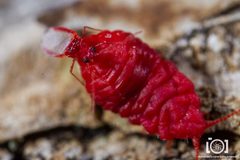
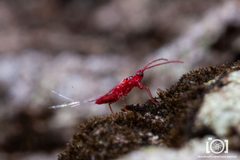
Pronunciation
How to pronounce Margarodidae: //mɑːɡəˈroʊdɪdiː//
These audio files are automatically generated. While they are not always 100% accurate, they are a good starting point.
Images
Habitat
Highly variable across the . Some (e.g., Eurhizococcus, Margarodes) are subterranean, inhabiting the root zone of plants. Others (e.g., Porphyrophora ) feed on above-ground plant parts. Specific preferences vary by genus and host association.
Distribution
Worldwide distribution with concentration in temperate and tropical regions. Documented from Australia (native range of Icerya purchasi), California, Florida, Brazil (multiple states including Rio Grande do Sul, Santa Catarina, São Paulo, Pernambuco), Mexico, Argentina, Greece, Israel, and the Russian Far East. Many have been introduced beyond native ranges through human activity.
Human Relevance
Several have significant economic importance. The cottony cushion scale (Icerya purchasi, now placed in Monophlebidae) was a major citrus pest in California, controlled by the introduced vedalia beetle (Rodolia cardinalis), a landmark case in . Porphyrophora species (Polish cochineal, Armenian cochineal) were historically exploited for red dye production. Eurhizococcus brasiliensis causes economic losses in Brazilian viticulture. Marchalina hellenica is the main honeydew-producing insect of pine trees in Greece, important for apiculture.
Similar Taxa
- MonophlebidaeFormerly treated as a of (Monophlebilinae), now elevated to status. Contains giant scale insects including Icerya purchasi, previously classified in Margarodidae.
- MatsucoccidaeFormerly a (Matsucoccinae) of , now recognized as a distinct . Includes conifer-associated such as Matsucoccus acalyptus and M. josephi.
- XylococcidaeFormerly a (Xylococcinae) of , elevated to status based on phylogenetic studies.
- Pseudococcidae (mealybugs)Superficially similar waxy appearance in some life stages, but distinguished by morphological and molecular characters; not closely related within Coccoidea.
Sources and further reading
- BugGuide
- Wikipedia
- iNaturalist taxon
- NCBI Taxonomy
- Catalogue of Life
- Publications | Entomology Research Museum
- Bug Eric: Pinyon Problems? Maybe, Maybe Not
- ID Challenge #17 | Beetles In The Bush
- Sexual behavior ofMatsucoccus josephi (Homoptera: Margarodidae)
- Cottony Cushion Scale, Icerya purchasi Maskell (Insecta: Hemiptera: Margarodidae)
- Eurhizococcus brasiliensis Wille, 1922 (Hemiptera: Margarodidae) molecular profile
- Seasonal development and ovipositing behavior of Marchalina hellenica (Hemiptera: Margarodidae)
- New Margarodid species (Homoptera: Coccoidea : Margarodidae : Monophlebinae) from New Guinea
- An updated checklist of the scale insects (Hemiptera: Coccoidea) of the Margarodidae sensu lato group
- Biology of the root coccid,Neomargarodes chondrillae [Hem.: Margarodidae], living onChondrilla juncea and related plants
- On the taxonomy and distribution of some Neotropical giant scale insects (Homoptera: Coccinea: Margarodidae s. l.)
- A new Monophlebine genus (Homoptera : Coccoidea : Margarodidae : Monophlebinae) on Melaleuca L. in Australia
- A new species of Brethesiella (Hymenoptera: Encyrtidae) from California, USA, a parasitoid of Steatococcus tabernicolus (Hemiptera: Margarodidae)
- Identification and Characterization of Olfactory Genes in the Cochineal Scale Insect, Porphyrophora sophorae (Hemiptera: Margarodidae).