
Unaspis
MacGillivray, 1921
Species Guides
2- Unaspis citri(Citrus Snow Scale)
- Unaspis euonymi(Euonymus Scale)
Unaspis is a of armored scale insects ( Diaspididae) containing economically significant agricultural and horticultural pests. The genus includes at least 19 described , with several species infesting citrus crops (U. citri, U. yanonensis) and ornamental plants (U. euonymi). Species in this genus are characterized by their protective waxy coverings and phytophagous feeding habits on plant tissues.
Pronunciation
How to pronounce Unaspis: /juːˈnæspɪs/
These audio files are automatically generated. While they are not always 100% accurate, they are a good starting point.
Identification
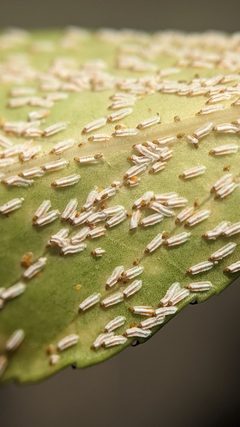
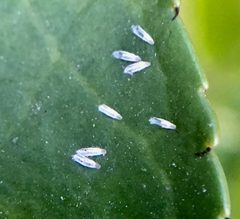
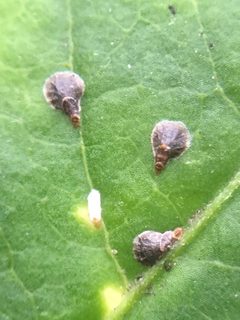
Unaspis are armored scales distinguished by their hard, protective test (covering) formed from and wax secretions. The can be differentiated from related genera by morphological features of the female test and body structure; a key to all 19 Unaspis species has been published. Specific identification requires examination of microscopic characters including pygidial margin structures and duct arrangements. U. citri produces a conspicuous white, elongated test on citrus bark, while U. euonymi shows with females producing a brown, oyster-shaped test and males producing a narrower white covering.
Images
Habitat
occur in agricultural, horticultural, and urban environments where their plants grow. U. citri and U. yanonensis inhabit citrus groves and orchards. U. euonymi occurs in urban landscapes, gardens, and nurseries on ornamental shrubs. U. mabilis and U. lansivora infest lanzones (Lansium domesticum) trees in the Philippines.
Distribution
The has a broad global distribution corresponding to plant ranges. U. citri occurs in citrus-growing regions worldwide including North, Central, and South America, Europe (Azores), Africa, Asia (China, Southeast Asia), Australasia (Australia, New Zealand, Pacific Islands). U. euonymi is established in Europe, Asia, North Africa, and North and South America. U. yanonensis is distributed in East Asia (China, Japan, Korea) and has been reported in France. U. mabilis and U. lansivora are known from the Philippines.
Diet
Phytophagous; feed on plant sap from tissues. U. citri and U. yanonensis feed on Citrus species. U. euonymi feeds on Euonymus species, Prunus, Hibiscus, and other ornamentals. U. mabilis and U. lansivora feed on Lansium domesticum (lanzones).
Host Associations
- Citrus - primary U. citri, U. yanonensis
- Lansium domesticum - primary U. mabilis, U. lansivora
- Euonymus - primary U. euonymi
- Prunus - U. euonymi
- Hibiscus - U. euonymi
Ecological Role
As phytophagous pests, heavy cause premature leaf , defoliation, reduced fruit production, and tree mortality. U. lansivora has been documented causing tree death in lanzones plantations. The serves as prey for introduced and native agents including predatory beetles (Chilocorus kuwanae, Cybocephalus nipponicus) and (Aphytis yanonensis, Coccobius fulvus, Aspidiotiphagus spp., Encarsia spp.).
Human Relevance
Several are economically significant agricultural pests. U. citri (citrus snow ) and U. yanonensis (arrowhead scale) threaten citrus production globally. U. euonymi is a major pest of ornamental Euonymus in urban landscapes. U. lansivora has emerged as a damaging pest of lanzones in the Philippines with potential plant significance. Management relies on , monitoring, and chemical interventions.
Similar Taxa
- AulacaspisBoth are in Diaspididae with similar ; molecular data shows U. mabilis has 87.4% COI sequence similarity to Aulacaspis tubercularis, but phylogenetic analysis places Unaspis as a distinct monophyletic clade.
- LepidosaphesU. lansivora was initially misidentified as Lepidosaphes ulmi before being recognized as a distinct Unaspis ; both produce elongated coverings but differ in pygidial and duct .
- ChionaspisU. euonymi was previously classified as Chionaspis euonymi; the Unaspis was erected based on distinct morphological features separating it from Chionaspis.
Sources and further reading
- BugGuide
- Wikipedia
- GBIF taxonomy match
- iNaturalist taxon
- NCBI Taxonomy
- Catalogue of Life
- Unaspis euonymi . [Distribution map].
- Unaspis yanonensis . [Distribution map].
- Unaspis citri . [Distribution map].
- Unaspis lansivora sp. n. (Hemiptera: Diaspididae), a new pest of Lansium domesticum (Meliaceae), and a key to Unaspis species
- Distribution of Natural Enemies of Euonymus Scale, Unaspis euonymi (Comstock), in Virginia
- Release of Aphytis yanonensis DeBach et Rosen and Coccobius fulvus Compere et Anneke, parasitoids of Unaspis yanonensis Kuwana introduced to Nagasaki prefecture. Effect on the control of Unaspis yanonensis Kuwana.
- Host selection in arrowhead scaleUnaspis yanonensis: Can arrowhead scale infest KawanonatsudaidaiCitrus natsudaidai?
- Citrus Snow Scale Unaspis citri (Comstock) (Insecta: Hemiptera: Coccoidea: Diaspididae)
- DNA barcode of the Lanzones scale insect, Unaspis mabilis Lit & Barbecho (Hemiptera: Diaspididae)
- Biology of the Euonymus scale Unaspis euonymi (Hemiptera: Diaspididae) in Urban Areas of Ankara, Turkey
- Distribution Patterns of the Number of Unaspis yanonensis Individuals between Trees and within a Tree
- EUONYMUS SCALE, UNASPIS EUONYMI (COMSTOCK) (HOMOPTERA: DIASPIDIDAE): EFFECTS OF HOST CULTIVAR AGE, AND LOCATION ON INFESTATION LEVELS1
- Use of Host Plant Resources by the Euonymus Scale, Unaspis euonymi (Homoptera: Diaspididae)