
Pulvinaria acericola
(Walsh & Riley, 1868)
Cottony Maple Leaf Scale
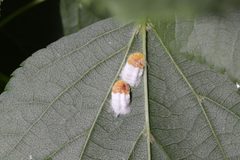
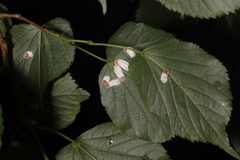
Pulvinaria acericola, commonly known as the Cottony Maple Leaf , is a soft scale insect ( Coccidae) native to North America. Like other Pulvinaria , the female produces a conspicuous white, cottony ovisac that houses . The species is associated with maple and other woody plants, where nymphs and adults feed on phloem sap using . Heavy can lead to honeydew accumulation and subsequent growth.
Pronunciation
How to pronounce Pulvinaria acericola: /pʊl.vɪˈnɛə.ri.ə əˈsɛr.ɪˌkoʊ.lə/
These audio files are automatically generated. While they are not always 100% accurate, they are a good starting point.
Identification
Distinguished from other Pulvinaria by association with maple (Acer) and specific morphological features of the female cover and body. The ovisac is elongate-oval and cottony white, attached to the underside of leaves. Adult females are , oval, and brownish, concealed beneath the waxy cover. Specific identification requires examination of microscopic features including the arrangement of spiracular pores and other taxonomically significant characters.
Images
Habitat
Found on deciduous trees, particularly maple (Acer). Occurs in urban, suburban, and natural woodland settings where trees are present.
Distribution
North America; documented from the United States and Canada.
Diet
Phloem sap of plants, obtained through piercing-sucking stylets inserted into vascular tissue.
Host Associations
- Acer - primary maple
Behavior
females are and remain fixed on leaves after settling. Males develop wings and are mobile, flying to locate females for mating. Produces copious honeydew during feeding.
Human Relevance
Considered a minor pest of ornamental maples and shade trees. Heavy can cause aesthetic damage through growth on foliage and reduced plant vigor. Rarely causes severe economic damage.
Similar Taxa
- Pulvinaria flocciferaAlso produces conspicuous white cottony ovisacs and is found on woody ornamentals including hollies and camellias, but differs in preference and specific morphological characters.
- Pulvinaria innumerabilisCottony maple scale, similar and maple association; distinguished by differences in female and ovisac structure.
More Details
Taxonomic note
The specific epithet 'acericola' refers to the association with maple (Acer). The was described by Walsh and Riley in 1868.
Collection records
Specimens and records of Pulvinaria , including related , are present in major entomological collections such as the UCR Entomology Research Museum.