
Parthenolecanium
Šulc, 1908
soft scales, lecanium scales
Species Guides
1- Parthenolecanium quercifex(oak lecanium scale)
Parthenolecanium is a of soft scale insects in the Coccidae. These hemipterans are dome-shaped, sap-feeding pests of woody plants including oaks, fruit trees, and grapevines. Several are significant urban tree pests, notably P. quercifex (oak lecanium ) and P. corni (European fruit lecanium scale). The genus exhibits variation in reproductive mode: some species reproduce by , while P. corni reproduces sexually (gamogenesis). Many species have been documented as of grapevine viruses.
Pronunciation
How to pronounce Parthenolecanium: //ˌpɑrθənoʊˈlɛkəniəm//
These audio files are automatically generated. While they are not always 100% accurate, they are a good starting point.
Identification
females can be distinguished from similar soft scales by their dome shape and heavily sclerotized body. P. corni and P. quercifex are frequently confused; first-instar nymphs provide reliable diagnostic characters, with P. corni lacking large (>5 μm) pores present in P. quercifex. Identification to often requires examination of association and microscopic features of stages.
Images
Appearance
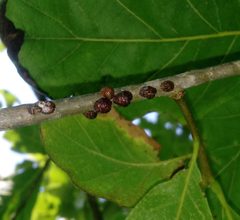
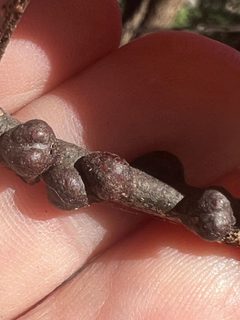
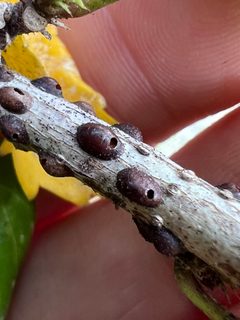
females are dome-shaped, convex, and often brown or tan in color, resembling small bumps on branches. The body is heavily sclerotized and may show -induced morphological dimorphism. First-instar nymphs () are tiny, mobile, and lack the protective covering of adults. Males are rarely observed and do not feed as adults.
Habitat
Urban and suburban landscapes, orchards, vineyards, and natural woodlands. in this are particularly abundant on street trees in cities, where urban heat island effects and reduced natural enemy favor population growth. They occur on a wide range of woody plants including oaks (Quercus), maples (Acer), grapes (Vitis), and various fruit and nut trees.
Distribution
Europe, Asia, North America, South America, Africa, and Australia. Individual vary in range: P. corni occurs across Europe, Asia, North America, and South America; P. quercifex is native to North America; P. persicae has a broad distribution including Europe, Asia, Africa, and the Americas. The has been introduced to regions outside its native range through human activity.
Seasonality
in this typically have one per year. appear in spring (April-May in temperate regions), with emerging in mid-summer (June-July). Second-instar nymphs overwinter on twigs and branches. Specific timing varies with latitude and local climate.
Diet
Phloem sap extracted from woody plants using . Feeding occurs on leaves during the and first-instar stages, then shifts to twigs and branches for nymphs and .
Host Associations
- Quercus spp. - primary P. quercifex is specifically associated with oaks, particularly willow oak and pin oak in urban settings
- Vitis vinifera - P. corni and P. persicae feed on grapevines and transmit grapevine leafroll-associated viruses
- Prunus spp. - stone fruits including peach, plum, cherry
- Malus spp. - apple
- Corylus spp. - filbert/hazelnut
- Acer spp. - maples
- Ulmus spp. - elm
Life Cycle
Hemimetabolous development with three life stages: , nymph, and . Females lay eggs beneath their body in a protective ovisac; each female may produce 1000+ eggs. First-instar nymphs () are mobile and disperse to leaves. After feeding, they to second instar and return to twigs to overwinter. In spring, they mature to adults. Some reproduce parthenogenetically; P. corni reproduces sexually.
Behavior
exhibit , moving from branches to leaves in spring and returning to branches in autumn before leaf-fall. are and permanently attached to tissue. Heavy feeding produces copious honeydew , which attracts stinging insects and supports growth. The has been shown to support natural enemy in urban landscapes through its role as prey and host for .
Ecological Role
Herbivore and engineer in urban environments. Moderate support diverse of natural enemies including lady beetles, lacewings, spiders, and . Honeydew production provides supplemental food for non-predatory arthropods. Heavy infestations can cause tree stress, branch dieback, and reduced growth. Some act as for plant , particularly grapevine viruses.
Human Relevance
Economic pest of orchards, vineyards, and urban trees. P. corni and P. persicae transmit grapevine leafroll-associated viruses and grapevine virus A, causing significant damage to wine industries. Urban create nuisance problems through honeydew production (attracting , causing ) and aesthetic damage to street trees. Some provide honeydew harvested by bees for apiculture. Management is complicated by the trade-off between pest control and conservation of beneficial natural enemies.
Similar Taxa
- Melanaspis tenebricosaGloomy is another dome-shaped scale on urban trees but is in Diaspididae (armored scales) and has a protective cover separate from the body
- Coccus hesperidumBrown soft scale is similar in appearance and but has a more flexible, less sclerotized body and different range
- Toumeyella liriodendriTuliptree scale is another large soft on hardwoods but is restricted to Liriodendron and has distinct morphological features
- Ceroplastes spp.Wax scales produce conspicuous waxy coverings unlike the smooth or slightly waxy dome of Parthenolecanium
More Details
Virus Transmission
P. corni has been confirmed as a of grapevine leafroll-associated virus 1 (GLRaV-1) and grapevine virus A (GVA), with transmission varying by instar. Second-instar nymphs are more efficient vectors than first instars. Virus retention can extend to 30-50 days, unusually long for non-circulative semi-persistent transmission. P. persicae has not been confirmed as a virus vector in controlled studies.
Urban Heat Island Effect
Research at North Carolina State University found P. quercifex 8-12 times more abundant on urban trees in heat islands compared to cooler locations. Warmer temperatures increase nymphal survival by approximately 20% and accelerate female development, potentially allowing -laying before can suppress .
Reproductive Mode Variation
Within the , reproductive strategy varies: P. corni reproduces by gamogenesis (), while P. fletcheri, P. pomeranicum, and P. rufulum reproduce by . This variation has implications for genetics and management strategies.
Sources and further reading
- BugGuide
- Wikipedia
- GBIF taxonomy match
- iNaturalist taxon
- NCBI Taxonomy
- Catalogue of Life
- Bumpy, sticky times for oaks in cities: Oak lecanium scale, Parthenolecanium quercifex — Bug of the Week
- Parthenolecanium quercifex Archives - Entomology Today
- Why a Little Bit of This Tree Pest is a Good Thing in Urban Landscapes
- Archive — Bug of the Week
- scale insects on trees - Entomology Today
- Encyrtus fuscus - Entomology Today
- Parthenolecanium corni . [Distribution map].
- Parthenolecanium corni . [Distribution map].
- Parthenolecanium persicae . [Distribution map].
- Descriptions and Illustrations of the First Instars of Parthenolecanium corni (Bouché) and Parthenolecanium quercifex (Fitch) (Hemiptera: Coccidae)
- Species of the genus Parthenolecanium (Hemiptera: Coccidae) in urban environments in Serbia
- Within-plant distribution of Parthenolecanium corni (Bouché) (Hemiptera: Coccidae) on grapevine
- Vector Biology of the Soft Scales Parthenolecanium corni (Bouché) and Parthenolecanium persicae (Fabricius) (Hemiptera: Coccidae) With Grapevine Leafroll‐Associated Viruses and Grapevine Virus A
- PARTHENOLECANIUM CORNI (BOUCHÉ) (HEMIPTERA COCCIDAE) IN VINEYARDS IN PORTUGAL: MORPHOLOGY, SEASONAL DEVELOPMENT, LIFE CYCLE AND REPRODUCTION
- Parthenolecanium corni (Bouche), an orchard scale pest producing honeydew foraged by bees in Greece
- Determination of the distribution, biology and natural enemies of Parthenolecanium rufulum (Cockerell) (Hemiptera: Coccidae) on chestnut trees in İzmir and Manisa provinces in Turkey
- Correction to: A new species of Microterys (Hymenoptera: Encyrtidae) from Northeast China, parasitoid of Parthenolecanium corni (Bouché) (Hemiptera: Coccidae)
- Life History of Parthenolecanium spp. (Hemiptera: Coccidae) in Urban Landscapes of the Southeastern United States
- Transmission of Grapevine Leafroll-Associated Viruses and Grapevine Virus A by Vineyard-Sampled Soft Scales (Parthenolecanium corni, Hemiptera: Coccidae)
- Synopsis of biological control for European fruit lecanium (Parthenolecanium corni) by parasitoids in North America and preliminary findings in hybrid hazelnut orchards
- Metaphycus parthenolecaniisp. n. (Hymenoptera: Encyrtidae), a parasitoid ofParthenolecanium corni(Hemiptera: Coccidae) in Iran