
Hormaphis
Osten-Sacken, 1861
witch hazel aphids, palm aphids
Species Guides
1- Hormaphis hamamelidis(Witch-hazel Cone Gall Aphid)
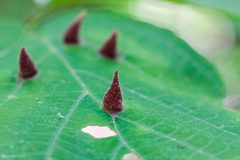
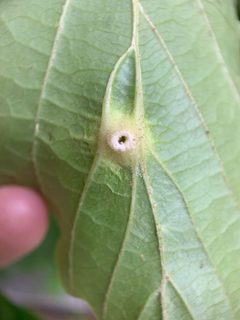
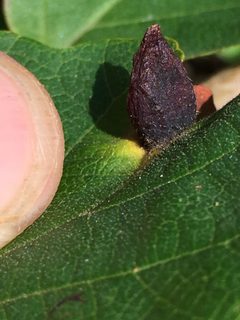
Hormaphis is a of gall-forming aphids in the Aphididae, containing at least three described distributed mainly in eastern North America. The genus includes the witch hazel cone gall (H. hamamelidis), which induces distinctive cone-shaped galls on witch hazel (Hamamelis virginiana). Species in this genus exhibit complex plant manipulation, including alteration of host phenolic metabolism to create favorable gall environments. The involves a strategy where hatch before host budbreak to ensure gall formation opportunities.
Pronunciation
How to pronounce Hormaphis: /hɔrˈmæfɪs/
These audio files are automatically generated. While they are not always 100% accurate, they are a good starting point.
Images
Habitat
Associated with deciduous forest understory, specifically on plants Hamamelis virginiana (witch hazel) and palms; galls formed on leaves of host plants
Distribution
Eastern North America; records include Vermont and surrounding regions
Seasonality
hatch in early spring before budbreak; gall formation occurs during leaf development; activity tied to host
Diet
Phloem sap from plants Hamamelis virginiana and palms; feeding induces gall formation on host leaves
Host Associations
- Hamamelis virginiana - primary witch hazel; induces leaf galls
- palms - specific palm not identified in sources
Life Cycle
hatch in early spring, often before budbreak as a conservative strategy. Founding females (fundatrices) induce galls on developing leaves and reproduce within them. Gall development precedes and supports . Later gall formation correlates with higher fundatrix , contrary to typical patterns in temperate forest herbivores.
Behavior
Fundatrices manipulate plant phenolic metabolism, increasing condensed tannins and decreasing hydrolyzable tannins in galls. Gall size correlates with reproductive success; fundatrices actively promote gall growth through physiological manipulation. hatch timing is decoupled from tight synchrony with host budbreak, representing a risk-spreading strategy.
Ecological Role
Gall formation creates localized carbon sinks on plants; altered phenolic chemistry in galls may affect herbivore interactions and decomposition processes
Sources and further reading
- BugGuide
- Wikipedia
- GBIF taxonomy match
- iNaturalist taxon
- NCBI Taxonomy
- Catalogue of Life
- The Life Cycle of Hormaphis Hamamelidis
- Hormaphis hamamelidis Fundatrices Benefit by Manipulating Phenolic Metabolism of Their Host
- Hormaphis hamamelidis and gall size: a test of the plant vigor hypothesis
- Opposing survivorship and fecundity effects of host phenology on the gall‐forming aphid Hormaphis hamamelidis
- Geographic variation and evolution in the life cycle of the witch-hazel leaf gall aphid, Hormaphis hamamelidis