
Myzocallis
Passerini, 1860
Oak and Chestnut Aphids
Species Guides
12- Myzocallis agrifolicola(California Oak Aphid)
- Myzocallis asclepiadis(Common Milkweed Aphid)
- Myzocallis atropunctata
- Myzocallis bella
- Myzocallis castaneae(Chestnut Gay Louse)
- Myzocallis coryli(Hazel Aphid)
- Myzocallis discolor(Eastern dusky-winged oak aphid)
- Myzocallis granovskyi(Longtailed oak aphid)
- Myzocallis meridionalis(Hamburger oak aphid)
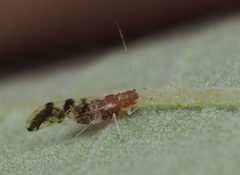
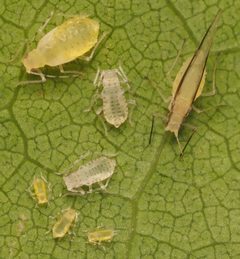
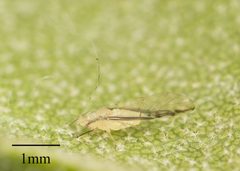
Myzocallis is a of aphids (Aphididae) comprising over 40 with diverse associations. Species feed on woody plants including oaks (Quercus), chestnuts (Castanea), hazelnuts (Corylus), myrtle (Myrica), and milkweeds (Apocynaceae). The genus exhibits host-specificity at the species level, with some restricted to single host genera. Several species are minor agricultural pests, particularly of hazelnut and chestnut. The genus has a distribution with notable diversity in the Palearctic region.
Pronunciation
How to pronounce Myzocallis: /ˌmaɪzoʊˈkælɪs/
These audio files are automatically generated. While they are not always 100% accurate, they are a good starting point.
Identification
Myzocallis are distinguished from related by combinations of morphological features including chaetotaxy (hair pattern), antennal segment ratios, and rostral segment proportions. Species-level identification requires examination of microscopic characters such as the ratio of the last rostral joint to the second hind tarsomere, siphuncular , and caudal structure. Subgeneric classification (Agrioaphis, Myzocallis s.str., Castaneomyzocallis, etc.) reflects associations and morphological affinities. females typically show pale coloration with variable pigmentation patterns.
Images
Habitat
inhabit forest , orchards, and natural stands of woody plants. include oak forests, chestnut groves, hazelnut orchards, and shrubland with Berberis or Myrica. occur on woody branches, typically on twigs approximately 1 cm in diameter. Active colonies develop on buds, young leaves, and shoots of host plants during the growing season.
Distribution
distribution with records from North America, Europe, Asia (Turkey, Iran, Pakistan, India), and North Africa (Algeria). European records include widespread occurrence across western, central, and southern Europe. North American distribution spans eastern and western United States and Canada. Palearctic diversity is particularly high, with multiple described from southern Europe, Turkey, Iran, and Pakistan.
Seasonality
as ; hatching occurs from late January to mid-March depending on temperature, with optimal hatching at approximately 22°C. increase rapidly through spring, peak by late June, and may show secondary increases in early November. Sexual forms appear mid-October to late November, with females laying overwintering eggs. Seasonal timing varies with latitude and plant .
Diet
Phloem sap feeding on woody angiosperms. Documented associations include: Quercus (oaks), Castanea (chestnuts), Corylus (hazelnut/filbert), Myrica (myrtle/wax myrtle), Berberis (barberry), and Apocynaceae (milkweed ). Feeding occurs on buds, young leaves, and shoots; some are monophagous or oligophagous on single host .
Host Associations
- Quercus - PRIMARY_HOSTMultiple including oaks in Europe, Asia, and North America
- Castanea - PRIMARY_HOSTChestnut-specific and documented
- Corylus avellana - PRIMARY_HOSTMyzocallis coryli; major for this
- Myrica - PRIMARY_HOSTType for subgenus Agrioaphis
- Berberis vulgaris - PRIMARY_HOSTMyzocallis (Agrioaphis) aptera from India
- Apocynaceae - PRIMARY_HOSTMyzocallis asclepiadis and related
Life Cycle
Holocyclic (sexual) inferred for most based on plant deciduousness and collection of sexual morphs. as on woody branches. In spring, fundatrices hatch and reproduce parthenogenetically on host plants, producing multiple of and females. Sexual forms ( females and males) produced in autumn, mate, and deposit overwintering eggs. One species (M. macrolepidis) has undescribed sexual morphs but presumed holocycle based on host deciduousness.
Behavior
Colony formation on new growth of plants. from sites on branches to buds, then to young leaves after foliation. Temperature-dependent hatching with reduced success at high temperatures (26°C). possible, with rapid increase to damaging densities in early summer. between host plants during growing season.
Ecological Role
Herbivores that can reach pest densities in managed systems. Prey for diverse natural enemy including coccinellid beetles (seven documented for M. coryli alone, including Adalia bipunctata, Coccinella septempunctata, Propylaea quatuordecimpunctata), syrphid flies, and (Braconidae, including Lysiphlebus fabarum). Contribution to forest as prey and as honeydew producers supporting mutualisms and growth.
Human Relevance
Minor agricultural pests of hazelnut (M. coryli in Turkey, Iran) and potentially chestnut. Damage from sap feeding and honeydew deposition can reduce crop quality. Subject to by naturally occurring ; effectiveness appears limited in some . Taxonomic importance as a model for and -association evolution.
Similar Taxa
- TherioaphisSame tribe (Therioaphidini); distinguished by associations (often Leguminosae) and morphological details of siphunculi and cauda
- CalaphisRelated Calaphidinae ; differs in antennal structure and range, typically on Betulaceae
- TinocallisOak-feeding aphids with similar ; distinguished by wing venation and abdominal patterns
Sources and further reading
- BugGuide
- Wikipedia
- GBIF taxonomy match
- iNaturalist taxon
- NCBI Taxonomy
- Catalogue of Life
- Myzocallis walshii . [Distribution map].
- A SYNOPSIS OF THE WORLD FAUNA OFMYZOCALLIS(HOMOPTERA: APHIDIDAE)
- OBSERVATIONS ON BIOLOGY OF THE FILBERT APHID (MYZOCALLIS CORYLI, HOMOPTERA: APHIDIDAE) IN HAZELNUT ORCHARDS
- Seasonal Population Dynamics and Spatial Distribution of Myzocallis coryli Goetze on Corylus avellana in Iran
- LE GENREMYZOCALLISPASSERINI, 1860: CLASSIFICATION MONDIALE DES SOUS-GENRES ET NOUVELLES ESPÈCES PALÉARCTIQUES (HOMOPTERA: APHIDIDAE)
- MYZOCALLIS (AGRIOAPHIS) APTERA, A NEW BERBERIS-INFESTING APHID FROM INDIA (HOMOPTERA: APHIDIDAE)
- Description of a new Myzocallis (Hemiptera Aphididae) living on Valonia oak in Southern Italy with DNA barcoding accounts on allied species-group
- Diversity of aphids and their natural enemies in forest areas of northwestern Algeria, with a new record of Myzocallis schreiberi