
Chlorochroa
Stål, 1869
shield bugs, stink bugs
Species Guides
18- Chlorochroa belfragii(Belfragi's chlorochroan bug)
- Chlorochroa congrua
- Chlorochroa dismalia(Dismal Swamp Stink Bug)
- Chlorochroa faceta
- Chlorochroa granulosa
- Chlorochroa kanei
- Chlorochroa ligata(conchuela bug)
- Chlorochroa lineata
- Chlorochroa norlandorum
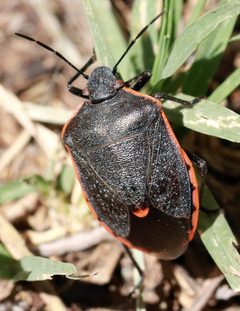
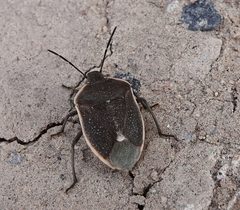
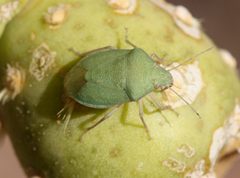
Chlorochroa is a of shield bugs (stink bugs) in the Pentatomidae, containing approximately 19-20 described distributed across Europe and North America. range from 8-19 mm in length and are broadly oval in shape. The genus is notable for its variable coloration, with adults typically green to brownish or almost black, often with a pale red, yellow, or whitish marginal band around the body. Several species are significant agricultural pests, feeding on a wide range of crops including apple, cotton, grape, alfalfa, and various fruits. Species within the genus are morphologically similar and are distinguished primarily by male genitalia structure and geographic distribution.
Pronunciation
How to pronounce Chlorochroa: /klɔːrəˈkrɒə/
These audio files are automatically generated. While they are not always 100% accurate, they are a good starting point.
Identification
Different of Chlorochroa are morphologically very similar and difficult to distinguish based on external features alone. Reliable identification requires examination of male genitalia structure. Geographic distribution provides secondary supporting evidence for species determination. The combination of the pale marginal band, triangular scutellum with possible basal bumps, and overall body shape helps distinguish Chlorochroa from other Pentatomidae .
Images
Appearance
are broadly oval, 8-19 mm long. Coloration varies from green to brownish or almost black, with a characteristic pale red, yellow, or whitish margin around the body excluding the . The scutellum is long and triangular, sometimes with three bumps along the base, and the tip is usually paler than the rest. The forewing is often translucent. Nymphs are mostly black with a yellow/white margin around the body excluding the head, similar to adults. Some exhibit geographic color variation, being darker in southern and greener in northern populations.
Habitat
Inland saline wetlands, agricultural areas, and natural vegetation zones. Specific occupy distinct : C. belfragii and C. faceta occur in inland saline wetlands of the western United States; other species are found in diverse habitats including juniper/oak/pinyon woodlands, sand dune areas, and agricultural landscapes.
Distribution
Europe and North America. In North America, occur across the western United States including Wyoming, Colorado, New Mexico, Texas, and adjacent regions. Some species have more restricted ranges, such as C. belfragii and C. faceta in western saline wetlands.
Seasonality
Activity patterns vary by and latitude. are active during growing seasons when plants are available. Specific seasonal data for most species is limited, but activity generally coincides with host plant flowering and fruiting periods.
Diet
Phytophagous; feeds on a wide range of plants including apple, cotton, grape, English holly, Himalayan blackberry, hawthorn, arborvitae, groundsel, clover, alfalfa, cocklebur, and various grasses. Specific documented grasses for C. belfragii and C. faceta include Distichlis spicata (saltgrass), Puccinellia nuttalliana (Nuttall's alkali grass), and Leymus cinereus (basin wildrye for C. belfragii).
Host Associations
- Distichlis spicata - plantsaltgrass; documented for C. belfragii and C. faceta
- Puccinellia nuttalliana - plantNuttall's alkali grass; documented for C. belfragii and C. faceta
- Leymus cinereus - plantbasin wildrye; documented for C. belfragii only
- Malus domestica - plantapple
- Gossypium spp. - plantcotton
- Vitis spp. - plantgrape
- Ilex aquifolium - plantEnglish holly
- Rubus armeniacus - plantHimalayan blackberry
- Crataegus spp. - planthawthorn
- Thuja occidentalis - plantarborvitae
- Senecio spp. - plantgroundsel
- Trifolium spp. - plantclover
- Medicago sativa - plantalfalfa
- Xanthium strumarium - plantcocklebur
- Prosopis glandulosa - planthoney mesquite; documented for C. ligata
Life Cycle
The consists of three stages: , nymph, and . There are five nymphal instars. Developmental timing varies with temperature and plant availability. Under favorable conditions, multiple may occur annually.
Behavior
and nymphs feed by piercing plant tissues with their mouthparts and sucking sap. When disturbed, they may release defensive secretions characteristic of stink bugs. Some are attracted to lights at night. Mating pairs have been observed on plant seedpods.
Ecological Role
Herbivores that feed on native and cultivated plants. Some are significant agricultural pests. They serve as prey for various including predatory such as Astata unicolor, which has been documented paralyzing Chlorochroa ligata to provision nests.
Human Relevance
Several are agricultural pests causing damage to fruits, vegetables, and field crops. C. ligata (conchuela ) is a notable pest in the Coastal Bend region of Texas, affecting alfalfa, corn, cotton, peppers, sorghum, and tomatoes. The has been studied for chemical , with research identifying compounds in metathoracic glands and abdominal glands. No species are currently used for .
Similar Taxa
- Nezara viridulaSouthern green stink bug; similar shield shape but lacks pale marginal band and has different coloration pattern
- Chinavia hilarisGreen stink bug; similar size and general form but lacks the characteristic marginal coloration of Chlorochroa
- Halyomorpha halysBrown marmorated stink bug; with different color pattern and white banding on
More Details
Chemical Ecology
Research has identified specific compounds in the metathoracic glands of and abdominal glands of nymphs in C. uhleri, C. sayi, and C. ligata. Male-produced have been characterized for C. sayi.
Taxonomic Challenges
The presents significant identification challenges due to morphological similarity among . Male genitalia examination is required for reliable species determination, and geographic distribution provides important secondary evidence.
Subgeneric Classification
Some have been placed in subgenus Rhytidolomia, including C. belfragii and C. faceta, based on morphological characteristics and associations.
Sources and further reading
- BugGuide
- Wikipedia
- GBIF taxonomy match
- iNaturalist taxon
- NCBI Taxonomy
- Catalogue of Life
- Soybean Insects: Late-Season Pests (R1 to R7) - AgriLife Extension Entomology
- Insects that feed on developing grain in the head - AgriLife Extension Entomology
- Publications | Entomology Research Museum
- Oregon Researchers Find a Native Wasp With a Taste for Stink Bugs
- Mantispidae | Beetles In The Bush
- July | 2024 | Beetles In The Bush
- Characterization of mycobiont adaptations in the foliose lichen Xanthoparmelia chlorochroa (Parmeliaceae)
- Analysis of Salazinic, Norstictic, and Usnic Acids in Xanthoparmelia chlorochroa by Ultra-Performance Liquid Chromatography/Tandem Mass Spectrometry
- Host Grasses of the Little-Known Stink Bugs Chlorochroa (Rhytidolomia) belfragii (Stål) and C. (R.) faceta (Say) (Hemiptera: Pentatomidae) in Inland Saline Wetlands
- Experimental Reproduction of Tumbleweed Shield Lichen (Xanthoparmelia Chlorochroa) Poisoning in a Domestic Sheep Model