
Pangaeus
Stål, 1862
burrower bugs
Species Guides
4- Pangaeus bilineatus(peanut burrower bug)
- Pangaeus congruus
- Pangaeus punctilineus
- Pangaeus tuberculipes
Pangaeus is a of burrower bugs in the Cydnidae (Hemiptera), comprising approximately 14 described . Members are insects adapted for subterranean life, with species distributed across the Americas. The genus includes significant agricultural pests, most notably P. bilineatus, which damages peanut crops in the southeastern United States. Species exhibit morphological adaptations for burrowing, including stout, spiny forelegs.
Pronunciation
How to pronounce Pangaeus: //pænˈdʒiːəs//
These audio files are automatically generated. While they are not always 100% accurate, they are a good starting point.
Identification
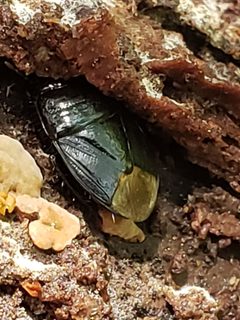
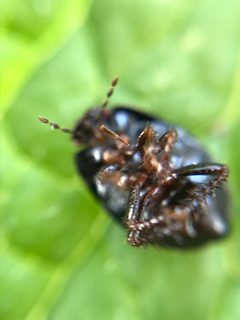
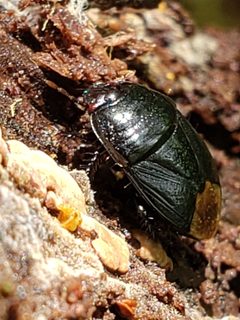
Distinguished from other Cydnidae by adaptations: stout, spiny forelegs modified for digging in soil. typically 6 mm in length. Some (e.g., P. bilineatus) display diagnostic coloration with two pale yellow to cream-colored longitudinal stripes on the dark pronotum. Identification to species level requires examination of genitalia and detailed morphological characters.
Images
Habitat
Soil-dwelling; primarily subterranean. Agricultural fields, particularly peanut areas. Weedy field margins and areas with friable soil suitable for burrowing. Some associated with specific plants: P. bilineatus with peanuts, P. serripes with figs (Ficus spp.) in Mexico.
Distribution
Americas. P. bilineatus: southeastern United States (Florida, Georgia, Alabama, peanut-producing regions). P. serripes: Mexico. Additional distributed across the Neotropics and Nearctic regions.
Host Associations
- Arachis hypogaea - pestP. bilineatus feeds on developing peanut pods and kernels underground
- Ficus spp. - associatedP. serripes associated with figs in Mexico
- legume crops - pestP. bilineatus reported on other legume crops
Behavior
(burrowing) using modified forelegs for digging in soil. capable of ; P. bilineatus attracted to light and exhibits phototactic responses to LED stimuli. Aggregates in favorable soil microhabitats. Feeding occurs exclusively underground on subterranean plant parts.
Ecological Role
Agricultural pest: P. bilineatus reduces peanut yield and quality through direct feeding on kernels, causing grade reduction and potential aflatoxin via wound sites. Limited documented role as soil or seed in non-agricultural contexts.
Human Relevance
Economic pest of peanut production in the southeastern United States. Infested peanuts may be discounted by up to 50% of market price due to weight and quality losses. Management involves cultural practices, soil-applied , , and research into and fungi.
Similar Taxa
- Other Cydnidae generaLack the pronounced leg modifications and burrowing specialization of Pangaeus; many feed on above-ground plant parts or have different associations
- Pangaeus bilineatus vs. P. serripesDifferent associations (peanuts vs. figs) and geographic ranges (southeastern US vs. Mexico), though morphological distinction requires detailed examination
Sources and further reading
- BugGuide
- GBIF taxonomy match
- iNaturalist taxon
- NCBI Taxonomy
- Catalogue of Life
- Immature stages ofPangaeus(Pangaeus)serripes(Westwood) (Hemiptera-Heteroptera: Cydnidae: Cydninae), associated with figs in Mexico
- The Peanut Burrower Bug, Pangaeus bilineatus (Say) (Hemiptera: Cydnidae)
- Pangaeus bilieatus (Hemiptera: Cydnidae) Behavioral Response to Light-Based Stimuli in the Laboratory
- Evaluation of chemical and microbial control options for Pangaeus bilineatus (Say) (Hemiptera: Cydnidae) infesting peanut crop
- Biology and management of the peanut burrower bug (Pangaeus bilineatus) in Southeast United States runner-type peanut